
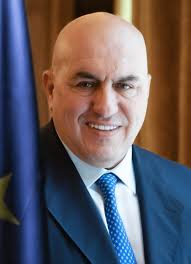
Guido Crosetto is a prominent figure in Italian politics and business, known for his role as one of the founders of the political party Fratelli d’Italia and his influential positions in both government and industry. Born on September 19, 1963, in Cuneo, Italy, Crosetto has built a career that spans decades, marked by significant contributions to both the public and private sectors. This article explores the life, achievements, and challenges faced by Guido Crosetto, providing detailed insights into his rise to fame and his enduring impact on Italian politics and industry.
Early Life and Career Beginnings
Guido Crosetto was born into a family deeply rooted in the industrial sector, particularly in metalworking. This early exposure to business and industry would later influence his career path. After completing his secondary education, Crosetto enrolled in the Faculty of Economics and Commerce at the University of Turin in 1982. During his university years, he became involved with the Christian Democratic Youth, a political movement aligned with the Christian Democracy (DC) party, which was one of Italy’s major political forces at the time.
However, Crosetto’s academic journey was interrupted by the untimely death of his father in 1987. Faced with the responsibility of managing the family business, Crosetto decided to abandon his studies to focus on the company. This decision, though pragmatic, would later become a point of controversy when official documents mistakenly listed him as holding a degree he never completed.
Despite this setback, Crosetto’s involvement in politics continued to grow. He served as the regional secretary for the Christian Democratic Youth, a position he held for six years, establishing himself as a rising star within the party.
Political Career in the 1990s
The 1990s marked a significant period in Crosetto’s political career. In 1990, he was elected as the mayor of Marene, a small town in the province of Cuneo. Running as an independent candidate on a civic list, Crosetto served as mayor for over a decade. His tenure was characterized by a focus on local development and infrastructure improvements, earning him the respect and support of his constituents.
During this time, Crosetto also sought higher political office. He ran for the presidency of the Province of Cuneo with the backing of Forza Italia, a center-right political party founded by Silvio Berlusconi. Although he did not win the presidency, his alignment with Forza Italia marked the beginning of a significant chapter in his political career.
Parliamentary Career with Forza Italia
In 2000, Guido Crosetto officially joined Forza Italia and quickly rose through the party ranks. His political acumen and business background made him an attractive candidate for the party, which was keen on integrating successful entrepreneurs into its fold. In the 2001 general elections, Crosetto was elected to the Italian Chamber of Deputies, representing the constituency that included Alba and the Roero region. His success in this election solidified his position as a key player within Forza Italia.
Crosetto was re-elected in 2006 and again in 2008, demonstrating his popularity and effectiveness as a legislator. During this period, he became known for his work on economic and defense issues, areas where his business experience proved invaluable. In 2003, together with Carlo Petrini, Crosetto co-founded the University of Gastronomic Sciences in Pollenzo, a unique institution dedicated to the study of food culture and sustainability.
His prominence within Forza Italia continued to grow, leading to his appointment as the regional coordinator for the party in Piedmont. This role allowed him to shape the party’s strategy and policies in one of Italy’s most economically important regions.
Government Roles and Tensions
Guido Crosetto’s influence within the center-right coalition led to his appointment as Undersecretary of State for Defense in the fourth government of Silvio Berlusconi. This role placed him at the heart of Italy’s defense policy during a period marked by significant international challenges, including Italy’s involvement in various NATO missions and the global fight against terrorism.
However, Crosetto’s tenure in government was not without controversy. He frequently clashed with Giulio Tremonti, the Minister of Economy and Finance, over the direction of Italy’s fiscal and economic policies. Crosetto was particularly critical of Tremonti’s austerity measures, arguing that they were detrimental to Italy’s long-term economic growth. This tension came to a head in July 2011, when Crosetto led an internal revolt within the government, expressing his dissatisfaction with Tremonti’s approach.
Crosetto also became increasingly critical of the European Union’s fiscal policies, particularly the Fiscal Compact, which he saw as overly restrictive and damaging to Italy’s sovereignty. His opposition to these policies put him at odds with the European Central Bank, led at the time by Mario Draghi.
As the political situation in Italy grew more complex, Crosetto’s disagreements with the Berlusconi government became more pronounced. When Forza Italia decided to support the technocratic government led by Mario Monti in late 2011, Crosetto openly opposed the decision. He consistently voted against the Monti government, believing that its policies were not in the best interest of the Italian people.
Founding of Fratelli d’Italia
In 2012, following his growing disillusionment with Forza Italia and its direction under Berlusconi, Guido Crosetto took a bold step by co-founding a new political movement: Fratelli d’Italia (Brothers of Italy). Joining him in this endeavor were Giorgia Meloni, a former Minister of Youth, and Ignazio La Russa, a prominent figure from the right-wing Alleanza Nazionale.
Fratelli d’Italia positioned itself as a conservative nationalist party, advocating for greater Italian sovereignty, stricter immigration controls, and a more assertive role for Italy within the European Union. The party sought to revive the values of the Italian right, distancing itself from the compromises and scandals that had plagued Berlusconi’s Forza Italia.
The 2013 general elections were a significant test for the new party. Unfortunately, Fratelli d’Italia failed to surpass the electoral threshold required to enter the Senate, and Crosetto was not elected. Despite this setback, the party continued to grow in influence, gradually building a solid base of support across Italy.
Shift to Business and Industry
Following his temporary departure from frontline politics, Guido Crosetto shifted his focus back to the business sector. He took on a leadership role within Confindustria, Italy’s largest employers’ association, specifically in the defense and security sectors. In this capacity, Crosetto worked to strengthen Italy’s defense industry, advocating for policies that would enhance the competitiveness of Italian firms on the global stage.
Despite stepping back from active politics, Crosetto remained a close advisor to Giorgia Meloni, providing strategic guidance as Fratelli d’Italia continued to grow. His influence was instrumental in the party’s eventual success, particularly in the 2022 general elections, where Fratelli d’Italia emerged as the largest party in the center-right coalition.
Return to Politics and Ministerial Role
The electoral success of Fratelli d’Italia in 2022 marked a significant turning point for Guido Crosetto. With the party now in a position of power, Crosetto returned to active politics, taking on the role of Minister of Defense in the government led by Giorgia Meloni. His appointment was seen as a recognition of his long-standing commitment to the party and his expertise in defense matters.
As Minister of Defense, Crosetto has faced numerous challenges, including navigating Italy’s role within NATO, managing defense spending, and addressing the complex security environment in the Mediterranean region. His tenure has been characterized by a focus on modernizing Italy’s military capabilities and strengthening the country’s alliances with key partners.
Personal Life and Legacy
Guido Crosetto’s personal life is marked by both triumphs and challenges. He was first married to a Czech volleyball player, with whom he has a son born in 1997. Following the dissolution of his first marriage, Crosetto married Gaia Saponaro, with whom he has two more children.
In addition to his political and business careers, Crosetto has continued to manage the family business, expanding its operations beyond metalworking into real estate and tourism. His ability to juggle multiple roles—politician, businessman, and family man—has earned him respect both in Italy and abroad.
Conclusion
Guido Crosetto is a multifaceted figure whose career spans the realms of politics, business, and industry. From his early days as a young Christian Democrat to his role as a founding member of Fratelli d’Italia and his current position as Italy’s Minister of Defense, Crosetto’s journey reflects a deep commitment to his country and its future.
His influence on Italian politics, particularly within the center-right, is undeniable. As a politician, Crosetto has shown a willingness to challenge the status quo, often taking bold and sometimes controversial stances on key issues. As a businessman, he has demonstrated a keen understanding of the economic challenges facing Italy, advocating for policies that support growth and innovation.
As Guido Crosetto continues to navigate the complex landscape of Italian and European politics, his legacy is still being written. However, one thing is clear: Crosetto’s impact on Italy’s political and economic life will be felt for years to come.


