
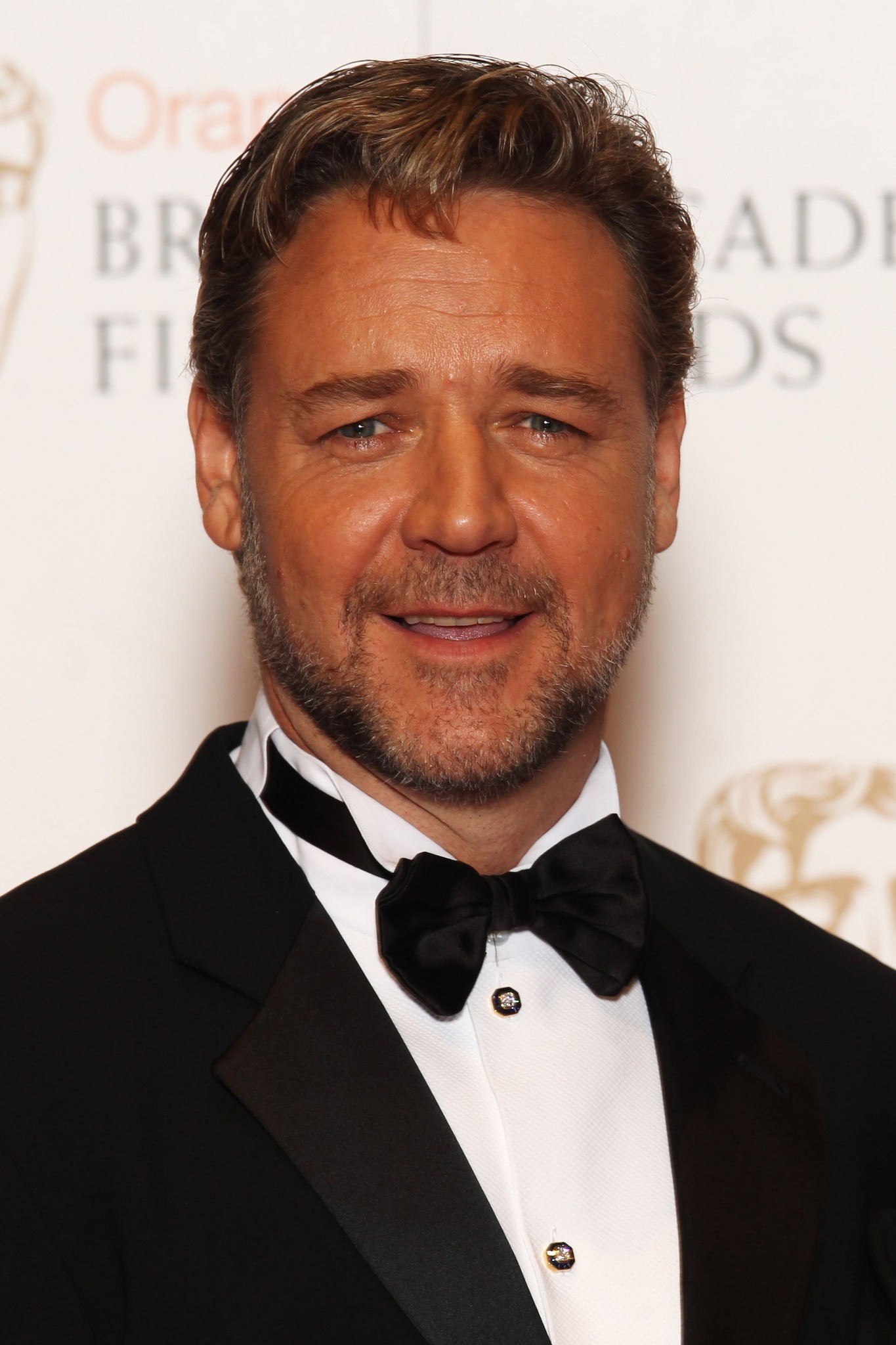
Russell Crowe is a name that resonates with cinematic greatness, often associated with some of the most intense and charismatic performances in modern film history. This article delves into the life of Russell Crowe, exploring his age, rise to fame, and the key highlights that have defined his illustrious career. From his early beginnings in New Zealand to becoming one of Hollywood’s most sought-after actors, Crowe’s journey is one of relentless passion and unwavering dedication to his craft.
Early Life and Background
Russell Ira Crowe was born on April 7, 1964, in Strathmore Park, a suburb of Wellington, New Zealand. Of Maori descent through his maternal great-grandmother, Crowe has always maintained a connection to his heritage, retaining the right to vote in the Maori electoral roll in New Zealand. His family had close ties to the entertainment industry; his parents, Alex and Jocelyn, were in the catering business, often working on film sets. This early exposure to the world of cinema undoubtedly influenced Crowe’s future career.
At the tender age of four, Crowe moved with his family to Australia. His childhood was marked by frequent visits to film sets, where he often accompanied his parents. By the age of six, Crowe had already appeared in the Australian TV series “Spyforce,” and by twelve, he was featured in “Young Doctors.” These early experiences would lay the foundation for what would become a remarkable acting career.
The Beginnings of a Career
Crowe’s passion for the performing arts extended beyond acting; during his teenage years, he developed a strong interest in music. At 14, when the family moved back to New Zealand, Crowe began his first musical endeavors. Under the pseudonym Russ Le Roq, he released several songs, one of which was the intriguingly titled “I Want to Be Like Marlon Brando.” At 17, Crowe left school to pursue a career in both music and acting, taking on various odd jobs to support himself.
His perseverance paid off when he landed a role in a local production of the musical “Grease,” showcasing not just his acting talent but also his musical abilities. This led to a touring role in “The Rocky Horror Show,” further establishing his presence in the performing arts scene in Australia and New Zealand.
Rise to Stardom
Crowe’s breakthrough in the Australian film industry came in 1988 when he was cast as a co-lead in a theatrical production of “Blood Brothers.” His performance garnered attention and led to a role in the film “The Crossing,” where he met Danielle Spencer, who would later become his long-term partner. However, his first film role was in “Blood Oath,” where he played a soldier. His portrayal of complex characters soon became a hallmark of his career.
The early 1990s marked Crowe’s rise to fame in Australia with his role in the controversial film “Romper Stomper” (1992). The film, which tackled themes of Nazism and racism, earned Crowe the Australian Film Institute Award for Best Actor. This film solidified his status as a major actor in Australia and caught the attention of international filmmakers.
Hollywood and Global Recognition
Crowe’s transition to Hollywood was marked by his role in “The Quick and the Dead” (1995), where he starred alongside Sharon Stone, Gene Hackman, and Leonardo DiCaprio. Although the film received mixed reviews, it opened doors for Crowe in the American film industry. His next significant role was in “Virtuosity” (1995), where he played a virtual serial killer opposite Denzel Washington. While not a critical success, it allowed Crowe to demonstrate his versatility as an actor.
The late 1990s brought Crowe critical acclaim with “L.A. Confidential” (1997), where his portrayal of Officer Bud White was widely praised. The film’s success at the Cannes Film Festival and its multiple Oscar nominations put Crowe on the map as a serious actor in Hollywood.
However, it was the year 2000 that truly catapulted Crowe to global stardom. His role as Maximus Decimus Meridius in Ridley Scott’s “Gladiator” became iconic, earning him an Academy Award for Best Actor. The film was a massive success, both commercially and critically, and remains one of Crowe’s most celebrated performances. The role required Crowe to undergo significant physical transformation, shedding the weight he had gained for his previous role in “The Insider” (1999), a film that had already earned him an Oscar nomination.
Continued Success and Acclaimed Roles
Following “Gladiator,” Crowe continued to deliver powerful performances. In 2001, he starred in “A Beautiful Mind,” directed by Ron Howard. His portrayal of John Nash, the Nobel Prize-winning economist, garnered widespread acclaim and another Oscar nomination. Although he did not win the Academy Award, Crowe received a Golden Globe and a Screen Actors Guild Award for his performance. “A Beautiful Mind” remains one of Crowe’s most critically acclaimed films, showcasing his ability to portray complex and deeply human characters.
Crowe’s dedication to his roles was further evident in “Cinderella Man” (2005), where he played the Depression-era boxer James J. Braddock. The film, also directed by Ron Howard, was a personal project for Crowe and demonstrated his commitment to bringing authentic and inspiring stories to the screen.
Expanding Horizons: Directing and Producing
As Crowe’s career progressed, he began exploring other facets of filmmaking. In 2014, he made his directorial debut with “The Water Diviner,” a film in which he also starred. The film, set in the aftermath of World War I, was a testament to Crowe’s passion for storytelling and his ability to lead a project both in front of and behind the camera.
Crowe has also been involved in various projects as a producer, with a focus on bringing Australian stories to the global stage. One such project is “The Long Green Shore,” a film based on John Hepworth’s novel about Australia’s involvement in World War II. Crowe’s dedication to this project reflects his desire to use his influence to highlight significant moments in Australian history.
Personal Life and Legacy
Beyond his professional achievements, Russell Crowe’s personal life has also garnered significant attention. In 2003, he married Danielle Spencer, his long-time partner. The couple has two sons, and despite their separation in 2012, Crowe and Spencer have remained close, co-parenting their children.
Crowe’s love for his native Australia is evident in his personal life as well. He owns a farm near Coff’s Harbour, where he raises Angus cattle. The farm serves as a retreat from the pressures of Hollywood, a place where Crowe can reconnect with nature and his roots.
Throughout his career, Crowe has been known for his intense dedication to his craft, his versatility as an actor, and his willingness to take on challenging and diverse roles. His journey from a young boy in New Zealand to a Hollywood icon is a testament to his talent and determination.
Crowe’s Influence on Modern Cinema
Russell Crowe’s impact on modern cinema cannot be overstated. His ability to embody a wide range of characters, from historical figures to complex antiheroes, has earned him a place among the greatest actors of his generation. Crowe’s performances are marked by a raw emotional intensity that few actors can match, and his influence can be seen in the work of younger actors who strive to bring a similar depth to their roles.
Moreover, Crowe’s willingness to take on roles that challenge societal norms, such as his portrayal of a gay plumber in “The Sum of Us” (1994), highlights his commitment to using his platform to tell diverse and meaningful stories. His work continues to inspire audiences and filmmakers alike, cementing his legacy as one of the most influential actors of the 21st century.
Conclusion
Russell Crowe’s journey from a small suburb in New Zealand to the heights of Hollywood fame is a story of talent, perseverance, and a relentless pursuit of excellence. With a career spanning over three decades, Crowe has left an indelible mark on the world of cinema. His roles in films such as “Gladiator,” “A Beautiful Mind,” and “Cinderella Man” have become iconic, and his contributions to the film industry continue to be celebrated worldwide.
As Crowe continues to explore new roles and opportunities, both in front of and behind the camera, his influence on the film industry shows no signs of waning. For fans of cinema, Russell Crowe remains a symbol of what it means to be a true artist, dedicated to the craft of storytelling and the pursuit of cinematic excellence.


