
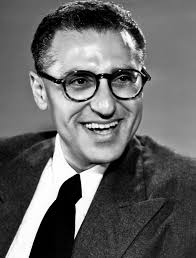
George Cukor, born on July 7, 1899, in New York City, was a towering figure in Hollywood, renowned for his unparalleled ability to direct some of the most iconic films in American cinema history. Often referred to as the “director of women,” Cukor’s work elevated female characters, giving them a complexity and grace that was rarely seen in early Hollywood. His style was a blend of elegance, wit, and a profound understanding of human emotions, particularly the nuanced experiences of women.
Early Life and Beginnings in Theater
Cukor’s journey into the world of entertainment began on the stage. He started as a theater director, working with renowned actors like Ethel Barrymore and Jeanne Eagels. His early experiences in the theater honed his skills in storytelling, character development, and pacing—elements that would later define his success in Hollywood.
In 1929, as Hollywood was transitioning from silent films to “talkies,” Cukor made his move to the film industry. He was initially hired as a screenwriter by Paramount Pictures, where he contributed to some of the early sound films. One of his notable early projects was working on the screenplay for the war film “All Quiet on the Western Front” (1930), directed by Lewis Milestone, which remains a classic of its genre.
Transition to Film Directing
Cukor’s talent and intelligence quickly caught the attention of Hollywood executives, and it wasn’t long before he was given the opportunity to direct. His directorial debut came with the 1931 film “Tarnished Lady,” starring Tallulah Bankhead. Although the film did not achieve significant commercial success, it marked the beginning of Cukor’s illustrious career as a director.
A pivotal moment in Cukor’s career came when he was asked to direct “One Hour With You” (1932), a romantic comedy originally intended for the legendary director Ernst Lubitsch. Though Lubitsch had provided some guidance, Cukor’s distinct style began to emerge in this film, characterized by a fast-paced, elegant, and irreverent approach. The success of “One Hour With You” solidified Cukor’s reputation in Hollywood, but tensions with Lubitsch over credit for the film’s success led Cukor to leave Paramount for RKO Pictures.
The Hepburn Collaboration and Romantic Comedies
One of the most significant collaborations of Cukor’s career was with Katharine Hepburn, a partnership that would produce some of the most memorable films of the 1930s and 1940s. Cukor first directed Hepburn in the 1932 film “A Bill of Divorcement,” a touching drama that showcased Hepburn’s talent and established her as a major star. The duo would go on to create a series of films that combined wit, romance, and social commentary.
Among their most celebrated works were “Holiday” (1938) and “The Philadelphia Story” (1940). Both films are prime examples of the sophisticated comedy genre, where Cukor’s lively direction and Hepburn’s sharp performances captured the essence of American high society while simultaneously satirizing it. “The Philadelphia Story,” in particular, is often regarded as one of the finest romantic comedies ever made, with Hepburn delivering a performance that perfectly balanced humor and depth.
Cukor’s work with Hepburn extended to her collaborations with Spencer Tracy, with whom she formed one of Hollywood’s most beloved on-screen pairs. Films like “Adam’s Rib” (1949) and “Pat and Mike” (1952) explored the dynamics of male-female relationships, blending romantic tension with Cukor’s signature wit and charm.
Exploring the Female Experience
George Cukor had a unique ability to depict the lives of women with authenticity and sensitivity. His films often focused on the experiences, struggles, and triumphs of female characters, reflecting his deep respect for and understanding of women. A prime example of this is the film “Dinner at Eight” (1933), an acerbic comedy that delved into the hypocrisies and vanities of the American upper class. The film featured a stellar cast, including John Barrymore and Jean Harlow, and is still celebrated for its sharp dialogue and social commentary.
Perhaps the most definitive example of Cukor’s dedication to representing women on screen is the 1939 film “The Women.” This satirical comedy, featuring an all-female cast, including stars like Norma Shearer, Joan Crawford, and Rosalind Russell, was groundbreaking in its portrayal of women’s lives, friendships, and rivalries. The film’s sardonic screenplay, written by Anita Loos, combined with Cukor’s elegant direction, made “The Women” a landmark in cinematic history.
Literary Adaptations and Period Pieces
While Cukor was most at ease directing contemporary comedies and dramas, he also ventured into the realm of literary adaptations and period pieces. His adaptation of Charles Dickens’ “David Copperfield” (1935) was a critical success, praised for its faithfulness to the novel and its richly detailed production. Another notable work was “Camille” (1936), based on Alexandre Dumas’s novel “La Dame aux Camélias.” In this film, Cukor directed Greta Garbo in one of her most iconic roles, portraying the tragic heroine with a depth and sensitivity that only a director of Cukor’s caliber could achieve.
Although Cukor occasionally struggled with historical and costume dramas, his work in this genre still produced some memorable films. “Romeo and Juliet” (1936) is one example where Cukor’s direction, while not universally praised, showcased his ability to handle the complexities of Shakespearean drama on screen.
Satire of Hollywood and the American Dream
Cukor’s work often reflected his keen observations of Hollywood and American society. His 1932 film “What Price Hollywood?” offered a biting satire of the star-making machinery of Hollywood, foreshadowing themes that would later be explored in greater depth in his 1954 masterpiece “A Star is Born.” This musical drama, starring Judy Garland, is widely considered one of Cukor’s finest achievements. Garland’s portrayal of a rising star, whose success comes at a tremendous personal cost, was a tour de force performance that earned her critical acclaim. Cukor’s direction was instrumental in eliciting one of Garland’s most powerful and poignant performances.
Late Career and Legacy
As Hollywood evolved, so did George Cukor’s career. In the 1950s, he worked as an independent director, taking on a variety of projects that continued to showcase his versatility and talent. His collaboration with Judy Holliday in films like “Born Yesterday” (1950) demonstrated his ability to direct comedic performances with a light touch and a deep understanding of character.
One of Cukor’s most celebrated late-career successes was the 1964 musical “My Fair Lady.” Based on George Bernard Shaw’s play “Pygmalion,” the film starred Audrey Hepburn as Eliza Doolittle and Rex Harrison as Professor Henry Higgins. “My Fair Lady” was a critical and commercial triumph, earning Cukor his first and only Academy Award for Best Director. The film remains a classic, celebrated for its lavish production, memorable performances, and Cukor’s impeccable direction.
In his later years, Cukor continued to work in television, and his final film, “Rich and Famous” (1981), once again focused on the lives of women. Starring Jacqueline Bisset and Candice Bergen, the film explored the complexities of female friendship and ambition, themes that had been central to Cukor’s work throughout his career.
George Cukor passed away on January 24, 1983, in Los Angeles, California, just months after receiving a Lifetime Achievement Award from the Venice Film Festival. His legacy as one of Hollywood’s greatest directors remains intact, with his films continuing to be studied and celebrated for their wit, elegance, and profound insight into the human experience.
Conclusion
George Cukor’s contribution to cinema is immeasurable. His ability to portray women with dignity, humor, and depth set him apart in an industry that often marginalized female voices. His films, whether romantic comedies, literary adaptations, or satirical dramas, are characterized by their sophistication, attention to detail, and a deep understanding of human nature. Cukor’s work continues to inspire filmmakers and audiences alike, cementing his place as one of the true legends of Hollywood.


