
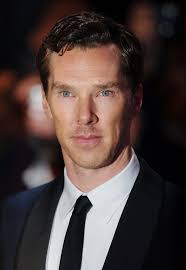
Benedict Cumberbatch, born on July 19, 1976, in London, is a British actor whose versatility and depth of performance have made him one of the most respected and recognizable talents in the entertainment industry. From his early days in theater to his breakout role as Sherlock Holmes and his subsequent success in Hollywood, Cumberbatch’s career is a testament to his enduring talent and dedication to his craft. This article explores the life, career, and impact of Benedict Cumberbatch, offering detailed insights into the milestones that have defined his journey to fame.
Early Life and Education
Benedict Timothy Carlton Cumberbatch was born into a family deeply rooted in the arts. His parents, Wanda Ventham and Timothy Carlton, were both accomplished actors, which naturally influenced Cumberbatch’s early interest in performing. He was educated at the prestigious Harrow School, where his love for acting began to take shape. It was at Harrow that he participated in numerous school plays, receiving praise for his performances, particularly in Shakespearean roles.
After completing his secondary education, Cumberbatch took a year off to teach English in a Tibetan monastery. This experience was profoundly influential, giving him a broader perspective on life and a deeper understanding of different cultures. Upon returning to the UK, he pursued a degree in drama at the University of Manchester, where he further honed his acting skills. To complete his formal training, Cumberbatch attended the London Academy of Music and Dramatic Art (LAMDA), one of the most prestigious drama schools in the world.
Early Career and Breakthrough
Cumberbatch’s professional acting career began in the early 2000s, with roles in British television series and theater productions. His early work was marked by a dedication to his craft, often taking on challenging and diverse roles that showcased his range as an actor. His television debut came in 2002 with the film “Fields of Gold,” followed by appearances in various TV series.
However, it was his portrayal of the young Stephen Hawking in the 2004 BBC drama “Hawking” that brought Cumberbatch to wider attention. His performance was critically acclaimed, earning him a Golden Nymph award at the Monte Carlo Television Festival and a BAFTA nomination. This role not only demonstrated Cumberbatch’s ability to portray complex characters but also marked the beginning of his rise to fame.
The Sherlock Phenomenon
In 2010, Benedict Cumberbatch was cast in the role that would catapult him to international stardom: Sherlock Holmes in the BBC series “Sherlock.” Created by Steven Moffat and Mark Gatiss, “Sherlock” was a modern adaptation of Sir Arthur Conan Doyle’s classic detective stories. Cumberbatch’s portrayal of Sherlock Holmes was a revelation, blending the character’s sharp intellect with a unique, often eccentric, intensity.
The success of “Sherlock” was immediate and widespread. Cumberbatch’s performance earned him numerous awards, including a BAFTA for Best Actor, and the show itself became a cultural phenomenon, gaining a massive global fanbase. The role solidified Cumberbatch’s status as one of the leading actors of his generation and opened the doors to major film roles.
Transition to Hollywood and Film Success
Following the success of “Sherlock,” Benedict Cumberbatch’s career in film began to flourish. In 2011, he starred in two major films: “Tinker Tailor Soldier Spy,” an adaptation of John le Carré’s novel, where he played Peter Guillam, and “War Horse,” directed by Steven Spielberg. Both films were critically acclaimed and showcased Cumberbatch’s ability to transition seamlessly between different genres and characters.
Cumberbatch’s Hollywood breakthrough came with his role as Khan Noonien Singh in J.J. Abrams’ “Star Trek Into Darkness” (2013). His portrayal of the iconic villain was praised for its depth and intensity, further establishing him as a versatile actor capable of taking on blockbuster roles. That same year, he played Julian Assange in “The Fifth Estate,” a film that explored the rise of WikiLeaks. While the film received mixed reviews, Cumberbatch’s performance was consistently highlighted as one of its strengths.
In 2014, Cumberbatch delivered what is perhaps one of his most acclaimed performances to date in “The Imitation Game.” He portrayed Alan Turing, the brilliant mathematician who played a crucial role in breaking the Enigma code during World War II. Cumberbatch’s nuanced portrayal of Turing, capturing both his genius and his struggles with societal norms, earned him an Academy Award nomination for Best Actor. The film was both a critical and commercial success, further cementing Cumberbatch’s reputation as a leading actor in Hollywood.
Doctor Strange and the Marvel Cinematic Universe
In 2016, Benedict Cumberbatch entered the Marvel Cinematic Universe (MCU) as Doctor Stephen Strange in the film “Doctor Strange.” Directed by Scott Derrickson, the film was a visual spectacle that introduced audiences to the mystical side of the MCU. Cumberbatch’s portrayal of Doctor Strange, a neurosurgeon who becomes a master of the mystic arts, was widely praised for its charisma and depth. The film was a box office success, and Cumberbatch’s character quickly became a fan favorite.
Cumberbatch reprised his role as Doctor Strange in several MCU films, including “Avengers: Infinity War” (2018), “Avengers: Endgame” (2019), and “Doctor Strange in the Multiverse of Madness” (2022). His performance in these films has been a key part of the MCU’s ongoing success, and Doctor Strange is now considered one of the central characters in the franchise.
Theatre Work and Continued Success
Despite his success in film and television, Benedict Cumberbatch has never strayed far from his roots in theater. In 2011, he starred in the National Theatre’s production of “Frankenstein,” directed by Danny Boyle. In this production, Cumberbatch alternated between the roles of Victor Frankenstein and his creature, alongside Jonny Lee Miller. The play was a critical and commercial success, and Cumberbatch’s performance earned him an Olivier Award for Best Actor.
Cumberbatch’s commitment to the stage continued with his 2015 portrayal of Hamlet in a production at London’s Barbican Theatre. The production was highly anticipated and sold out months in advance, with Cumberbatch’s performance receiving widespread acclaim. His ability to balance high-profile film roles with challenging stage performances is a testament to his dedication to the craft of acting.
Personal Life and Humanitarian Work
Benedict Cumberbatch’s personal life has also been a subject of public interest, though he has always maintained a level of privacy. He was in a long-term relationship with actress Olivia Poulet, which ended in 2011. In 2015, Cumberbatch married theater director Sophie Hunter, and the couple has since welcomed three children.
Beyond his acting career, Cumberbatch is known for his humanitarian work. He has been involved in various charitable causes, including supporting refugees and advocating for the rights of LGBTQ+ individuals. In 2014, Cumberbatch was appointed a CBE (Commander of the Order of the British Empire) for his services to the performing arts and charity.
Cumberbatch has also used his platform to raise awareness about important social issues. He has spoken out against the mistreatment of refugees and has been involved in campaigns to support those displaced by conflict. His commitment to these causes has earned him respect beyond the entertainment industry, highlighting his role as a socially conscious public figure.
Recent Work and Ongoing Influence
In recent years, Benedict Cumberbatch has continued to take on diverse and challenging roles. In 2021, he starred in “The Power of the Dog,” directed by Jane Campion. In this film, Cumberbatch played Phil Burbank, a complex and troubled rancher. His performance was widely praised, earning him another Academy Award nomination for Best Actor. The film itself was a critical success, further demonstrating Cumberbatch’s ability to excel in a wide range of roles.
Cumberbatch also portrayed the artist Louis Wain in “The Electrical Life of Louis Wain” (2021), a biographical film that explores the life of the eccentric British artist known for his whimsical cat paintings. The role allowed Cumberbatch to delve into the life of a unique historical figure, showcasing his ability to bring depth and empathy to his characters.
As of 2023, Benedict Cumberbatch remains one of the most respected and sought-after actors in the industry. His ability to seamlessly transition between film, television, and theater, combined with his dedication to his craft, has solidified his status as a modern acting icon.
Conclusion
Benedict Cumberbatch’s journey from a promising young actor to a global superstar is a story of talent, hard work, and dedication. His performances have captivated audiences across the world, and his influence on both the entertainment industry and broader society is undeniable. Whether on stage, in front of the camera, or through his humanitarian efforts, Cumberbatch continues to leave a lasting impact.
As he continues to take on new and exciting projects, it is clear that Benedict Cumberbatch’s legacy in the world of acting is far from complete. His ability to bring complexity, intelligence, and emotion to his roles ensures that he will remain a central figure in the entertainment industry for years to come.


