
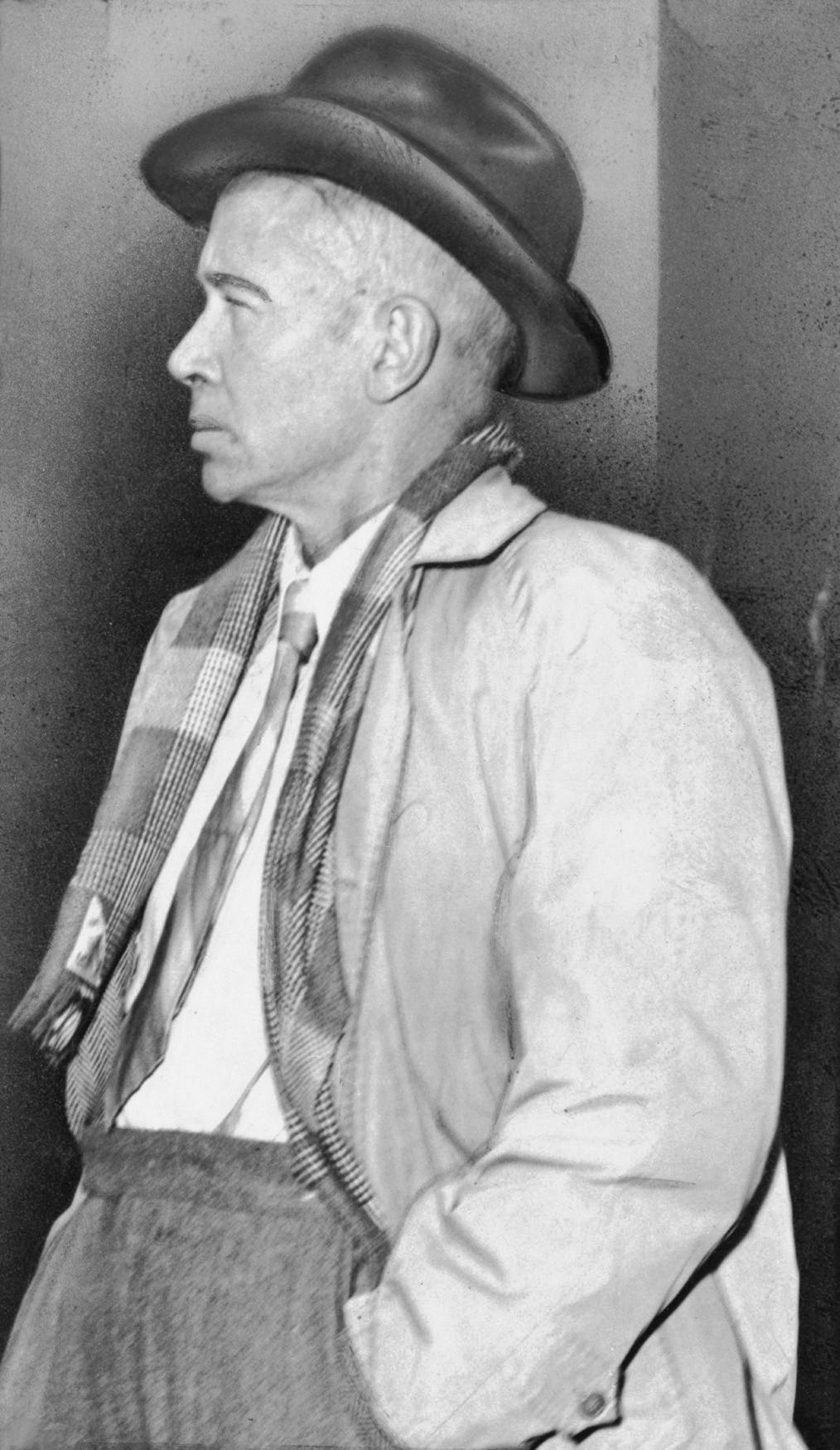
Edward Estlin Cummings, known to the literary world as E.E. Cummings, was born on October 14, 1894, in Cambridge, Massachusetts. Cummings was a pioneering American poet, painter, essayist, author, and playwright who left an indelible mark on modernist literature. His innovative use of language, typography, and poetic form challenged traditional conventions, making him one of the most distinctive voices of the 20th century.
Early Life and Education
Edward Estlin Cummings was born into an intellectually stimulating environment. His father, Edward Cummings, was a professor of sociology and political science at Harvard University and later a Unitarian minister. His mother, Rebecca Haswell Clarke, encouraged Cummings’ early literary and artistic talents. By the age of three, Cummings was already attempting to compose poems, showcasing an innate creativity that would flourish in later years.
Cummings’ early education was steeped in the classics, which he studied at the prestigious Harvard University. He graduated with a Bachelor of Arts degree in 1915 and followed it with a Master of Arts degree in 1916, focusing on English and Classical Studies. During his time at Harvard, Cummings was influenced by the avant-garde movements of the time, particularly the works of Gertrude Stein and Ezra Pound. His exposure to these literary figures played a crucial role in shaping his own experimental style.
World War I and Early Literary Career
The outbreak of World War I saw Cummings volunteering for the Norton-Harjes Ambulance Corps in France. However, due to administrative errors, he was delayed in Paris, where he developed a deep affection for the city—a place that would influence much of his later work. His stay in Paris also marked the beginning of his lifelong connection with the French avant-garde, which would inform his artistic and literary endeavors.
Cummings’ wartime experience took a dramatic turn when he and his friend, William Slater Brown, were arrested by French authorities. Their crime was a series of letters expressing anti-war sentiments. Cummings was held for three months in a detention camp in La Ferté-Macé, Normandy. This harrowing experience became the basis for his autobiographical novel, “The Enormous Room,” published in 1922. The book was a satirical critique of the absurdities of war and the dehumanizing effects of bureaucracy, showcasing Cummings’ early disdain for authority and conventional norms.
Post-War Life and Literary Success
After his return to the United States, Cummings briefly served in the U.S. Army before dedicating himself entirely to his literary pursuits. The 1920s were a prolific period for Cummings, as he began to establish himself as a leading figure in modernist literature. His first major collection of poetry, “Tulips and Chimneys,” was published in 1923. The collection was notable for its unconventional use of syntax, punctuation, and capitalization, elements that would become hallmarks of Cummings’ style.
Cummings’ work often explored themes of love, nature, and the human experience, but what set him apart was his innovative approach to form. He frequently used lower-case letters, played with spacing and line breaks, and incorporated visual elements into his poetry, treating the page as a canvas. This approach reflected his belief that poetry was not just about the content, but also about how that content was visually and rhythmically presented.
His second collection, “XLI Poems” (1926), continued to push the boundaries of traditional poetry. Cummings’ work was not without its critics; some viewed his experiments with form as gimmicky or overly complex. However, his ability to convey deep emotion and meaning through his unconventional techniques earned him a dedicated following.
Influences and Innovations
E.E. Cummings was deeply influenced by the avant-garde movements of his time, including Dadaism and Surrealism, which he encountered during his frequent stays in Paris. These movements emphasized the irrational, the dream-like, and the absurd—qualities that resonated with Cummings’ own view of the world. He rejected traditional narrative structures and instead embraced a fragmented, nonlinear approach to both his poetry and prose.
One of Cummings’ most significant contributions to literature was his exploration of the visual dimension of poetry. For Cummings, a poem was not just a linguistic construct but a visual and auditory experience. He often manipulated the layout of words on the page to create a visual representation of the poem’s themes. This technique, sometimes referred to as “concrete poetry,” allowed Cummings to express complex ideas and emotions in a highly condensed and impactful way.
Cummings’ innovation extended to his use of language. He often created new words by combining existing ones, or by altering their spelling or structure. This linguistic playfulness was not just for effect; it was a way for Cummings to explore the fluidity and malleability of language. His poetry frequently tackled the tension between the individual and the collective, the personal and the universal, using language that was at once familiar and startlingly new.
Major Works and Themes
Throughout his career, E.E. Cummings produced an extensive body of work that included poetry, novels, plays, and essays. His poetry collections, such as “No Thanks” (1935) and “Collected Poems” (1938), solidified his reputation as a leading voice in American modernism. These collections continued to explore his signature themes of love, nature, and individuality, often with a sense of humor and irony.
Cummings’ novel “The Enormous Room” remains one of his most celebrated works. It provides a detailed account of his imprisonment during World War I, offering a scathing critique of the military and bureaucratic systems that perpetuate human suffering. The novel’s vivid character sketches and dark humor reflect Cummings’ deep empathy for the human condition and his mistrust of authority.
Another significant work is “Eimi” (1933), a travelogue that chronicles Cummings’ journey through the Soviet Union. Written in a stream-of-consciousness style, “Eimi” offers a surreal and often critical perspective on the Soviet experiment. The book reflects Cummings’ skepticism toward totalitarian regimes and his belief in the importance of individual freedom.
Cummings also wrote several plays, including “Him” (1927) and “Santa Claus: A Morality” (1946). These works, like his poetry, were marked by their experimental structure and themes of individualism and resistance to conformity.
Personal Life and Relationships
E.E. Cummings’ personal life was as unconventional as his poetry. He was married three times and had several significant relationships throughout his life. His first marriage, to Elaine Orr, ended in divorce, but not before they had a daughter, Nancy. Cummings’ second marriage, to Anne Minnerly Barton, also ended in divorce. His third and final partnership was with Marion Morehouse, a photographer and model, with whom he spent the rest of his life. Though they never officially married, their relationship was one of deep companionship and creative collaboration.
Cummings’ relationship with his parents, particularly his father, had a profound impact on his life and work. The sudden death of his father in a car accident in 1926 was a turning point for Cummings, leading him to focus more intently on his writing. His grief and love for his father are evident in some of his most personal and moving poems.
Later Years and Legacy
In the years following World War II, E.E. Cummings’ reputation continued to grow. He became a beloved figure among younger poets and was seen as a mentor and guiding light for the post-war generation. His lectures at Harvard University, where he was appointed an honorary professor in 1952, were immensely popular, and he received numerous accolades for his contributions to literature.
Cummings’ later works, such as “95 Poems” (1958), reflect a more mature and reflective voice, though they retain the experimental spirit that defined his early work. He continued to write and publish until his death on September 3, 1962, from a heart attack. By the time of his death, Cummings was the second most widely read poet in the United States, after Robert Frost.
Conclusion
E.E. Cummings was a poet and artist who continually pushed the boundaries of what language and literature could achieve. His innovative use of form, syntax, and language set him apart as a truly unique voice in American literature. Cummings’ work is characterized by its celebration of individuality, its exploration of love and human connection, and its deep skepticism of authority and conformity.
Cummings’ legacy lives on not only in his poetry but also in his influence on subsequent generations of writers and artists. His work remains a testament to the power of creativity and the endless possibilities of language. As one of the most important figures in modernist literature, E.E. Cummings continues to inspire readers and writers around the world.


