
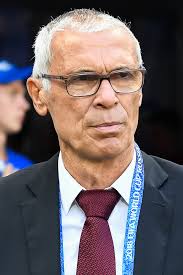
Héctor Raúl Cúper, born on November 16, 1955, in the small town of Chabás, Argentina, is a renowned football manager and former player. His name has become synonymous with both remarkable achievements and heart-wrenching near misses in the world of football. Throughout his career, Cúper has been celebrated for his tactical acumen and ability to lead teams to the brink of glory, even if ultimate success sometimes eluded him. This article delves into the life, career, and significant moments that have defined Héctor Cúper’s journey in football, offering detailed insights and exploring the nuances of his legacy.
Early Life and Playing Career
Héctor Cúper’s early life was deeply rooted in the footballing culture of Argentina, a country known for its passion for the sport. Cúper began his football career as a central defender, a position that requires both physical prowess and strategic thinking. His professional playing career took off with Club Ferro Carril Oeste, one of the prominent teams in Argentina at the time. Cúper spent the majority of his playing career with Ferro, where he established himself as a reliable and technically proficient defender.
During his time with Ferro Carril Oeste, Cúper was part of a team that won the Argentine Primera División titles in 1982 and 1984 under the guidance of the legendary coach Carlos Timoteo Griguol. These achievements marked the pinnacle of Cúper’s playing career, showcasing his abilities on a larger stage and earning him a call-up to the Argentine national team. Although he only earned a handful of caps for Argentina, his playing career laid the foundation for his later success as a manager.
Cúper’s playing style was characterized by his strong defensive instincts, leadership on the pitch, and an ability to read the game. These qualities would later translate into his coaching philosophy, where he emphasized organization, discipline, and tactical rigor.
Transition to Coaching and Early Success
As his playing career wound down, Cúper made a seamless transition into coaching. His first major role came with Huracán, a club where he had finished his playing career. Cúper took charge of Huracán in 1993, and his success in stabilizing the team and implementing his tactical vision quickly caught the attention of larger clubs.
In 1995, Cúper was appointed as the head coach of Club Atlético Lanús. It was here that he began to make a name for himself as a manager. Under his leadership, Lanús won the Copa CONMEBOL in 1996, a significant achievement that put Cúper on the radar of European clubs. His success at Lanús was built on a solid defensive foundation, coupled with a pragmatic approach to the game, which would become hallmarks of his coaching style.
Cúper’s ability to get the best out of his players and his tactical acumen earned him a move to Europe, where he would embark on a managerial career that saw both highs and lows.
European Adventure: Mallorca and Valencia
Héctor Cúper’s European coaching career began in Spain with Real Mallorca in 1997. His impact was immediate and profound. Mallorca, a team with modest expectations, flourished under Cúper’s guidance. In his first season, he led the club to the final of the Copa del Rey, where they narrowly lost to Barcelona. However, the team’s performance was enough to secure a place in the UEFA Cup Winners’ Cup.
The following season, Mallorca won the Spanish Super Cup, defeating Barcelona, and reached the final of the UEFA Cup Winners’ Cup, where they were narrowly defeated by Lazio. These achievements were remarkable for a club of Mallorca’s stature and showcased Cúper’s ability to overachieve with limited resources.
Cúper’s success at Mallorca earned him the managerial position at Valencia CF in 1999. At Valencia, Cúper built on his reputation as a top-level coach. He led Valencia to consecutive UEFA Champions League finals in 2000 and 2001. However, both finals ended in heartbreak, with Valencia losing to Real Madrid in 2000 and Bayern Munich in 2001. Despite these near misses, Cúper was widely praised for his tactical expertise and his ability to guide Valencia to the top echelons of European football.
The Champions League finals, particularly the 2001 final against Bayern Munich, where Valencia lost on penalties, became defining moments in Cúper’s career. While he was celebrated for bringing Valencia to the brink of European glory, the losses also added to his reputation as a manager who was often just short of the ultimate prize.
Inter Milan: The Serie A Challenge
In 2001, Héctor Cúper accepted the challenge of managing Inter Milan, one of Italy’s most storied football clubs. His task was monumental: to restore Inter to its former glory and to break the dominance of rivals Juventus and AC Milan in Serie A. Cúper’s tenure at Inter is remembered for both its promise and its frustrations.
In his first season, Cúper led Inter to the brink of the Serie A title. However, in a dramatic final day of the 2001-2002 season, Inter’s title hopes were dashed by a 4-2 defeat to Lazio, which saw them finish third behind Juventus and Roma. The date of May 5, 2002, became infamous in Inter’s history, as it marked a painful collapse that cost them the Scudetto.
The following season, Cúper’s Inter finished second in Serie A, again falling short of the title. Inter also reached the semifinals of the UEFA Champions League, where they were eliminated by city rivals AC Milan on the away goals rule. Despite these close calls, Cúper was unable to secure a major trophy during his time at Inter, leading to his dismissal in October 2003 after a poor start to the season.
Cúper’s time at Inter was marked by a mixture of strong performances and near misses. His tenure is often viewed through the lens of what could have been, as Inter came agonizingly close to major success under his guidance.
Later Career: Global Journeys and International Management
After leaving Inter, Héctor Cúper’s coaching career took him across the globe. He returned to Mallorca in 2004, where he managed to steer the club to safety in La Liga, but resigned the following year as results deteriorated. He also had stints in Greece with Aris Thessaloniki, in the Middle East with Al Wasl in the UAE, and in Turkey with Orduspor, each experience adding to his rich and varied coaching resume.
In 2015, Cúper took on one of his most challenging roles when he was appointed the head coach of the Egyptian national team. Egypt, a country with a storied football history but struggling to regain its former glory, saw Cúper as the man to lead them back to prominence. His impact was significant: Cúper led Egypt to the final of the 2017 Africa Cup of Nations, where they were narrowly defeated by Cameroon. Despite the loss, Cúper’s tactical organization and defensive solidity were widely praised.
Cúper’s crowning achievement with Egypt came in 2018 when he guided the team to their first FIFA World Cup appearance in 28 years. Although Egypt did not progress beyond the group stage, Cúper’s achievement in qualifying for the World Cup was celebrated as a major success, and he was hailed as a national hero in Egypt.
After his tenure with Egypt, Cúper continued his international coaching career with roles in Uzbekistan and the Democratic Republic of Congo, further showcasing his willingness to take on new challenges in diverse environments.
Coaching Philosophy and Legacy
Héctor Cúper’s coaching philosophy has been characterized by a focus on defensive organization, tactical discipline, and a pragmatic approach to the game. His teams are often well-drilled, difficult to break down, and resilient in the face of adversity. While this approach has sometimes been criticized for being too conservative, it has also been the foundation of Cúper’s success in leading underdog teams to punch above their weight.
Cúper’s legacy is one of near-misses and what-ifs, but also of undeniable achievement. His ability to take teams to the brink of glory, often against the odds, has earned him respect and admiration across the footballing world. His managerial career has spanned continents and cultures, making him one of the most experienced and versatile coaches of his generation.
Conclusion
Héctor Cúper’s journey in football is a testament to resilience, adaptability, and a deep understanding of the game. From his early days as a player in Argentina to his managerial success in Europe and beyond, Cúper has left an indelible mark on the sport. While his career has been marked by both triumphs and heartbreaks, Cúper’s influence as a tactician and leader remains widely respected.
As he continues to take on new challenges, Cúper’s legacy as a manager who could inspire teams to dream big, even if ultimate success sometimes eluded him, will continue to be celebrated. His story is a reminder that in football, as in life, the journey and the struggle often matter just as much as the final result.


