
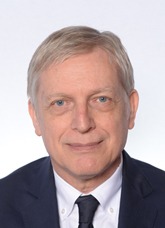
Gianni Cuperlo, born Giovanni Cuperlo on September 3, 1961, in Trieste, Italy, is a prominent Italian politician known for his deep commitment to leftist ideals and his long-standing association with the Italian center-left. Over the years, Cuperlo has emerged as a key figure within the Italian political landscape, particularly within the Democratic Party (PD). This article provides a comprehensive overview of Cuperlo’s life, political career, and the significant contributions he has made to Italian politics, along with the challenges and opportunities that have shaped his journey.
Early Life and Education
Gianni Cuperlo’s early years were marked by a strong academic inclination and a budding interest in politics. After completing his middle school education, he attended the prestigious Liceo Classico “Francesco Petrarca” in Trieste, where he developed a keen interest in the humanities, particularly in classical studies. Cuperlo’s academic achievements were notable; he graduated in 1980 with a diploma score of 55 out of 60, a testament to his dedication and intellectual prowess.
During his high school years, Cuperlo began to engage actively in political discussions, influenced by the social and political movements of the time. His involvement in school assemblies and participation in political demonstrations exposed him to the ideas of the Italian left, particularly the Federazione Giovanile Comunisti Italiani (FGCI), the youth wing of the Italian Communist Party (PCI). Cuperlo’s early exposure to these ideas set the stage for his lifelong commitment to progressive politics.
Following his high school graduation, Cuperlo enrolled at the University of Bologna, one of Italy’s oldest and most prestigious universities, where he studied at the Faculty of Arts and Humanities (DAMS). His academic focus was on mass communication, a field that would later become central to his political career. In 1985, Cuperlo graduated with top honors, earning his degree with a thesis on mass communication under the mentorship of Mauro Wolf, a respected scholar in the field.
Entry into Politics and Rise within the FGCI
Gianni Cuperlo’s formal entry into politics came through his involvement with the FGCI. His intellectual background and passion for leftist ideals quickly earned him recognition within the organization. In 1988, Cuperlo was elected as the national secretary of the FGCI, a role that positioned him at the forefront of the youth wing of the Italian Communist Party.
Cuperlo’s leadership of the FGCI coincided with a period of significant political transformation in Italy and Europe. The late 1980s were marked by the fall of the Berlin Wall and the subsequent collapse of communist regimes across Eastern Europe. These events forced leftist parties in Western Europe, including Italy’s PCI, to re-evaluate their ideological foundations and political strategies.
During this time, Cuperlo played a pivotal role in guiding the FGCI through its own transition. In 1989, under the influence of the then-PCI leader Achille Occhetto, Cuperlo proposed the dissolution of the FGCI and the establishment of a new confederation, Sinistra Giovanile (Youth Left), which would align more closely with the evolving political landscape. This proposal was accepted with a significant majority, marking a decisive shift in the direction of the organization.
The last congress of the FGCI was held in December 1990 in Pesaro, where the organization officially disbanded, and the majority of its members transitioned to the newly formed Democratic Party of the Left (PDS), which was the successor to the PCI. Cuperlo’s leadership during this period was instrumental in shaping the future of the Italian left and in setting the stage for his own political career within the broader party structure.
Transition to the Democratic Party of the Left (PDS) and Collaboration with Massimo D’Alema
Following the dissolution of the FGCI, Gianni Cuperlo became an active member of the PDS, which later evolved into the Democratic Left (DS) and eventually the Democratic Party (PD). His early years within the PDS were marked by a close collaboration with Massimo D’Alema, a prominent figure in Italian politics and a key leader of the left.
Cuperlo’s work with D’Alema extended beyond party politics to legislative initiatives. He served as an advisor to D’Alema during his tenure as the president of the Bicameral Commission for Constitutional Reforms, an influential body tasked with proposing changes to Italy’s constitution. Cuperlo’s expertise in communication and his deep understanding of political strategy made him a valuable asset in these efforts.
In addition to his work with D’Alema, Cuperlo co-authored several publications that reflected his political vision and commitment to progressive change. Among these works were “Un Paese Normale. La Sinistra e il Futuro dell’Italia” (A Normal Country: The Left and the Future of Italy), published in 1996, and “La Grande Occasione. L’Italia Verso le Riforme” (The Great Opportunity: Italy Towards Reforms), published in 1998. These publications, which were co-authored with Claudio Velardi and other collaborators, offered insights into the challenges facing the Italian left and outlined a vision for the country’s future.
Leadership Roles and the Evolution of the Democratic Party
In 2001, Gianni Cuperlo was appointed to the national secretariat of the Democratic Left (DS), where he assumed the role of head of party communication. His background in mass communication and his academic training made him particularly well-suited for this role. During his tenure, Cuperlo worked to modernize the party’s communication strategies, helping to navigate the challenges posed by a rapidly changing media landscape.
Cuperlo’s expertise in political communication also led to his appointment as a contract professor at the University of Teramo, where he taught courses on political communication and public communication theory. His academic contributions further solidified his reputation as a leading thinker in the field, and his insights were sought after by both students and political colleagues.
In 2006, Cuperlo was elected to the Italian Chamber of Deputies as a representative of the Friuli-Venezia Giulia constituency under the banner of L’Ulivo, a center-left coalition. During this period, he also served as a member of the XIV Commission on European Union Policies, where he focused on issues related to Italy’s role in Europe and the broader implications of European integration.
The following year, with the formation of the Democratic Party (PD), Cuperlo became an integral part of the new party structure. The PD represented a unification of various center-left factions, including the DS and elements of the former Christian Democrats, and aimed to present a broad-based alternative to the center-right in Italy. Cuperlo’s involvement in the PD reflected his ongoing commitment to advancing progressive politics in a rapidly changing political environment.
Advocacy for Party Renewal and Leadership Challenges
Gianni Cuperlo’s career within the PD has been marked by his consistent advocacy for party renewal and generational change. Following the 2008 general election, in which the PD, led by Walter Veltroni, suffered a significant defeat, Cuperlo was among the voices calling for a reassessment of the party’s leadership and direction.
In a speech at the December 2008 party leadership meeting, Cuperlo emphasized the need for the PD to embrace new leadership and to address the broader challenges facing the Italian left. He argued that the party’s leadership had failed to connect with the electorate and that a new generation of leaders was needed to revitalize the party and its message.
Cuperlo’s calls for renewal were part of a broader debate within the PD about the future of the party and its ability to compete effectively with the center-right, led by figures like Silvio Berlusconi. This debate ultimately led to significant changes within the party, including the election of new leadership and a renewed focus on connecting with younger voters.
In 2013, following the resignation of Pier Luigi Bersani as PD secretary after a disappointing electoral performance, Cuperlo emerged as a potential candidate to lead the party. Although Guglielmo Epifani was chosen as interim leader, Cuperlo formally announced his candidacy for the party’s leadership in an interview with journalist Gad Lerner.
Cuperlo’s campaign for the PD leadership was marked by his emphasis on the need for the party to remain true to its progressive roots while also modernizing its approach to governance and political engagement. He launched a platform called “È Tempo di Crederci” (It’s Time to Believe), which focused on social justice, equality, and the importance of safeguarding civil rights. Cuperlo also advocated for the creation of a European Party of Democrats and Socialists, reflecting his belief in the importance of European integration and cooperation.
Despite his strong platform, Cuperlo ultimately lost the PD leadership election to Matteo Renzi, the charismatic mayor of Florence, who represented a more centrist and reform-oriented vision for the party. Renzi’s victory marked a significant shift in the PD’s direction, with Cuperlo and other left-wing members of the party expressing concerns about the potential for the party to move away from its traditional values.
Continued Influence and Legacy
Although Gianni Cuperlo did not secure the leadership of the PD, he has remained an influential figure within the party and the broader Italian left. His commitment to progressive ideals and his willingness to challenge the party’s direction have earned him respect both within and outside the PD.
Cuperlo has continued to advocate for social justice, workers’ rights, and the need for the left to address the challenges posed by globalization and economic inequality. His focus on communication and the importance of connecting with voters has also remained a central theme of his work, reflecting his belief in the power of effective messaging and engagement in shaping political outcomes.
In addition to his political work, Cuperlo has authored several books and articles on politics, communication, and the future of the left. His writings have contributed to ongoing debates about the direction of the Italian left and the broader challenges facing progressive movements in Europe and beyond.
Conclusion
Gianni Cuperlo’s life and career are a testament to his enduring commitment to the principles of social justice, equality, and progressive politics. From his early days in the FGCI to his ongoing work within the PD, Cuperlo has consistently championed the values of the Italian left and sought to advance the cause of social democracy.
While his career has been marked by both successes and setbacks, Cuperlo’s influence on Italian politics is undeniable. His advocacy for party renewal, his focus on effective communication, and his dedication to the principles of the left have left a lasting impact on the PD and the broader Italian political landscape.
As Gianni Cuperlo continues to engage with the challenges facing Italy and Europe, his work serves as a reminder of the importance of remaining true to one’s ideals while also adapting to the changing realities of the political world. His story is one of perseverance, dedication, and a deep commitment to the values that have shaped his life and career.


