
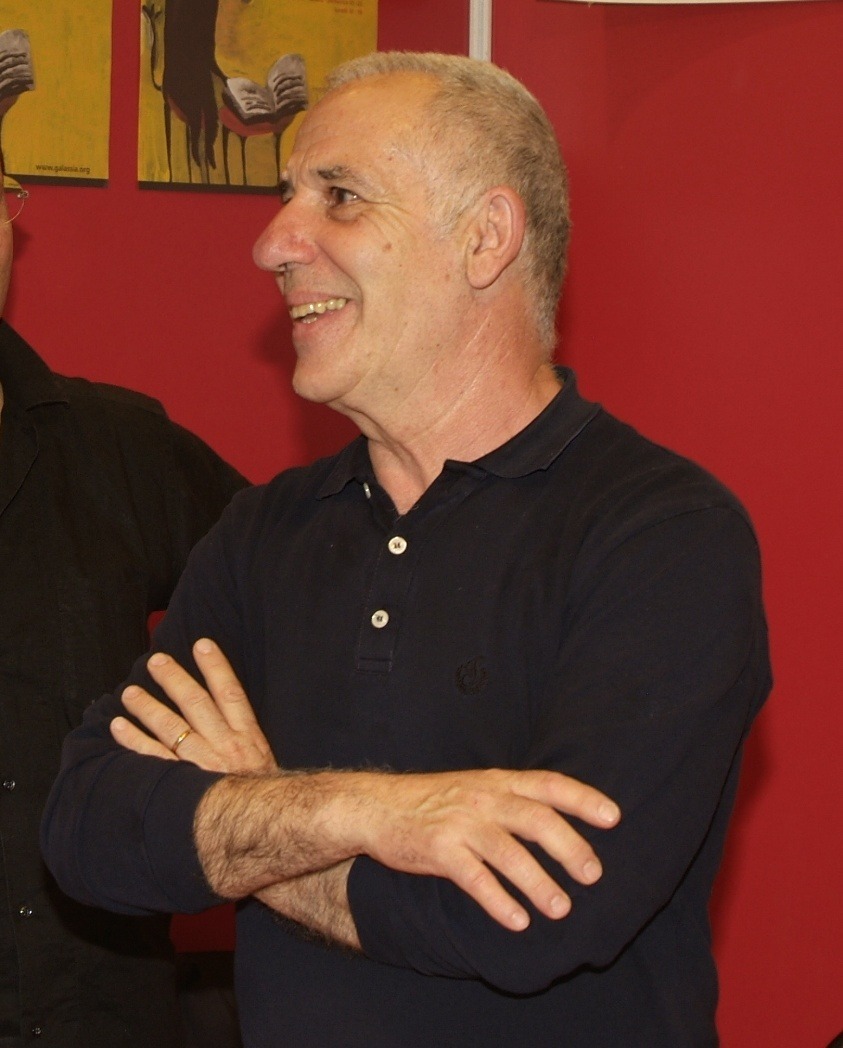
Renato Curcio, a name intertwined with one of Italy’s most tumultuous periods, is a figure whose life and actions have left an indelible mark on the nation’s history. Born on September 23, 1941, in Monterotondo, a town near Rome, Curcio’s journey from a difficult childhood to becoming the co-founder of the infamous Red Brigades (Brigate Rosse) is both compelling and controversial.
Early Life and Background
Renato Curcio was born into a complex and challenging environment. His mother, Jolanda Curcio, was a young woman from Puglia who had moved to Rome, where she became involved in an extramarital relationship with Renato Zampa, the brother of the renowned film director Luigi Zampa. This relationship led to Curcio’s birth, a fact that perhaps set the tone for the difficulties he would face in his early years.
Curcio’s childhood was marked by instability, largely due to his mother’s precarious employment situation. The death of his uncle Armando in 1945, a worker at Fiat who was killed during a reprisal by the Italian Social Republic (Repubblica Sociale Italiana), further complicated his early life. This tragic event occurred during a time when Italy was grappling with the consequences of World War II, and it undoubtedly influenced Curcio’s later ideological development.
As a young man, Curcio moved between Milan and Albenga, where he was exposed to Catholic activism. He completed his secondary education at the Galileo Galilei Institute in Campochiesa, a small fraction of Albenga. This period of his life, characterized by his involvement in religious and social movements, laid the groundwork for his future as a political activist.
Academic Pursuits and the Birth of Ideological Beliefs
In 1962, Renato Curcio moved to Trento to pursue studies at the prestigious Faculty of Sociology. The late 1960s were a time of significant social upheaval, with student movements gaining momentum across Europe. Trento was no exception, and Curcio quickly became involved in the burgeoning student protests. It was here that he met Margherita “Mara” Cagol, who would later become his wife and a key figure in the Red Brigades.
In 1967, Curcio and Cagol founded a study group known as “Università Negativa” (Negative University). The group focused on analyzing and reinterpreting texts that were often overlooked in academic curricula. Their studies included works by revolutionary figures such as Che Guevara, Mao Tse-Tung, and Herbert Marcuse. This intellectual exploration played a crucial role in shaping Curcio’s ideological beliefs, which were increasingly leaning towards radical left-wing thought.
During this period, Curcio became deeply involved in the student movement and other far-left organizations. He shared living quarters with Mauro Rostagno, a charismatic left-wing intellectual who would later be dubbed the “Che of Trento.” Curcio completed all his academic requirements but chose not to graduate as a political statement, further demonstrating his commitment to his ideological beliefs.
Founding the Red Brigades
Renato Curcio’s political evolution reached a critical point in the late 1960s. He joined the editorial team of “Lavoro Politico,” a Marxist-Leninist publication, where he began to express views that were increasingly aligned with the idea of armed struggle. This shift in perspective was likely influenced by the violent clashes in Avola in December 1968, where police opened fire on striking workers, killing two and wounding many others. The brutality of this event left a lasting impact on Curcio and solidified his belief in the necessity of a more radical approach to political change.
In November 1969, at the height of the student protest movement, Curcio attended the now-famous conference in Chiavari at the Stella Maris hotel. It was here that the foundation was laid for the armed struggle that would soon engulf Italy. Curcio, along with members of the Collettivo Politico Metropolitano of Milan, began to seriously consider the formation of a militant group. By May 1970, the Red Brigades were born, with their distinctive five-pointed star symbol appearing on leaflets in the Lorenteggio district of Milan.
Curcio, along with his wife Mara and fellow activist Alberto Franceschini, became the leading figures of the Red Brigades. Their first act of sabotage occurred on September 17, 1970, when they bombed the garage of Giuseppe Leoni, a manager at SIT Siemens. This was just the beginning of a series of attacks targeting major industrial enterprises such as Pirelli and Alfa Romeo, as the Red Brigades sought to undermine the capitalist system through direct action.
Arrest, Escape, and Re-Arrest
Renato Curcio’s involvement in the Red Brigades made him a prime target for law enforcement. In 1974, he was arrested, but his time in custody was short-lived. Thanks to a daring operation led by his wife Mara, Curcio escaped from prison in February 1975. However, his freedom was fleeting. Later that year, Mara was killed in a shootout with police, a devastating blow to Curcio both personally and politically.
Curcio’s second arrest came in early 1976, following the infiltration of the Red Brigades by Silvano Girotto, who would later be known as “Frate Mitra” (Brother Gun). This marked the end of Curcio’s direct involvement in the Red Brigades, as he was sentenced to a lengthy prison term.
During Curcio’s incarceration, the leadership of the Red Brigades shifted to a more militant faction led by Mario Moretti. This period, often referred to as the “Years of Lead,” saw an escalation in violence, including kidnappings, assassinations, and bombings. Despite the increasing bloodshed, Curcio never expressed regret for his involvement in the Red Brigades, although he did distance himself from the more extreme actions taken by the group after his arrest.
Post-Prison Life and Legacy
Renato Curcio remained in prison until April 7, 1993. Upon his release, he chose to focus on intellectual and editorial work rather than returning to political activism. He became the editorial director of the cooperative “Sensibili alle foglie,” where he authored several books on social issues, including “Il dominio flessibile” (The Flexible Domination), “Il consumatore lavorato” (The Worked Consumer), and “L’azienda totale” (The Total Enterprise).
Curcio’s post-prison work reflects his continued interest in critiquing contemporary society, particularly the effects of neoliberalism and the precariousness of modern labor. However, his legacy is forever tied to his role in the Red Brigades, a group that has been both vilified and romanticized in Italian history.
Historical Context and the Impact of the Red Brigades
To understand Renato Curcio’s significance, one must consider the broader historical context of Italy during the 1970s. This was a period marked by political instability, economic struggles, and social unrest. The post-war Italian state faced numerous challenges, including the rise of radical political movements on both the left and the right.
The Red Brigades emerged as part of a larger wave of left-wing militancy that swept across Europe during this time. Inspired by anti-colonial struggles, the Cuban Revolution, and other revolutionary movements, the Red Brigades sought to ignite a similar uprising in Italy. However, their methods, which included acts of terrorism, alienated much of the population and ultimately led to a severe crackdown by the state.
The group’s actions, particularly the kidnapping and assassination of former Prime Minister Aldo Moro in 1978, shocked the nation and led to widespread condemnation. The “Years of Lead” that followed were characterized by a cycle of violence and repression that left deep scars on Italian society.
While Renato Curcio was not directly involved in the Moro case, his role in founding and leading the Red Brigades means that he remains a controversial figure. To some, he is a symbol of resistance against an unjust system; to others, he is a terrorist responsible for sowing chaos and fear.
Conclusion
Renato Curcio’s life is a testament to the complexities of political activism and the fine line between resistance and extremism. From his early years in a struggling family to his involvement in one of Italy’s most notorious militant groups, Curcio’s story is one of conviction, controversy, and consequence.
Today, as Curcio continues his work as an author and editor, he remains a figure of significant historical interest. His legacy, while divisive, offers valuable insights into the turbulent period of Italian history in which he lived and the enduring impact of the Red Brigades on the nation’s collective memory.
In the end, Renato Curcio’s life and actions force us to confront difficult questions about the nature of political violence, the ethics of resistance, and the ways in which history judges those who challenge the status quo.


