
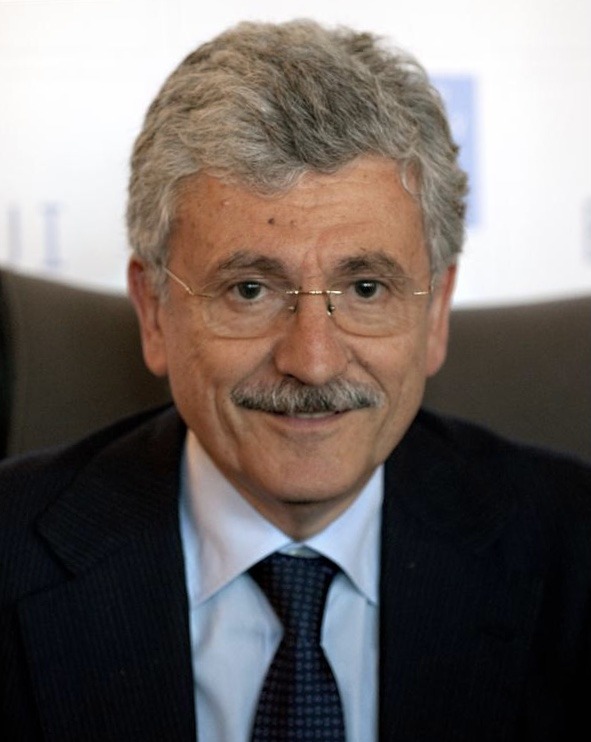
Massimo D’Alema, born on April 20, 1949, in Rome, Italy, is a prominent Italian politician, journalist, and intellectual who has played a significant role in the country’s political landscape for several decades. Known for his sharp intellect, strategic acumen, and sometimes controversial decisions, D’Alema has been a central figure in the transformation of the Italian left from its communist roots to a modern, center-left political force. This article explores his life, political career, and the key moments that have defined his legacy.
Early Life and Political Beginnings
Massimo D’Alema was born into a politically active family, with his father, Giuseppe D’Alema, being a prominent member of the Italian Communist Party (PCI). This political environment deeply influenced D’Alema from a young age, instilling in him a passion for political discourse and activism. His early education took place in Rome, where he attended the prestigious Liceo Classico Torquato Tasso before enrolling at the University of Pisa to study philosophy.
D’Alema’s political career began in earnest in 1963, when he joined the Italian Federation of Young Communists (FGCI), the youth wing of the PCI. His natural leadership abilities and exceptional oratory skills quickly propelled him through the ranks. By 1975, at the age of just 26, he had become the national secretary of the FGCI, marking the start of his rise to prominence within the broader Italian left.
Rise in the Italian Communist Party (PCI)
Throughout the 1970s and 1980s, D’Alema established himself as a key figure within the PCI, known for his intellectual rigor and strategic thinking. In 1983, he was elected to the party’s national directorate, where he played a crucial role in shaping its policies and direction. D’Alema was an advocate of modernization and believed in adapting the party’s ideology to the changing political landscape of Italy and Europe.
The fall of the Berlin Wall in 1989 and the subsequent collapse of communist regimes across Eastern Europe forced the PCI to reevaluate its identity and future. D’Alema was one of the leading voices in the transformation of the PCI into the Democratic Party of the Left (PDS), which was officially founded in 1991 under the leadership of Achille Occhetto. This move marked a significant shift in Italian politics, as the PDS sought to distance itself from its communist past and embrace social democracy.
In 1994, following the electoral defeat of the center-left coalition led by the PDS, Occhetto resigned, and D’Alema was elected as the party’s national secretary. His leadership marked a new era for the Italian left, characterized by efforts to build broader coalitions and appeal to a wider electorate.
Political Strategy and the Fall of Berlusconi’s Government
D’Alema’s tenure as the leader of the PDS (and later the Democrats of the Left, or DS, after a further rebranding in 1998) was marked by his strategic approach to politics. He recognized the need to unite the fragmented Italian left and center-left forces to challenge the rising power of Silvio Berlusconi, the media magnate who had entered politics and quickly established himself as a dominant force.
In 1996, D’Alema played a key role in orchestrating the victory of the center-left coalition, known as The Olive Tree, led by Romano Prodi. The coalition’s success in the general elections ended Berlusconi’s first government and marked a significant turning point in Italian politics.
D’Alema’s influence extended beyond his role as a party leader. In 1997, he was appointed president of the Bicameral Commission for Institutional Reforms, tasked with drafting proposals for constitutional changes. However, the commission ultimately failed to reach an agreement, largely due to disagreements between the center-left and center-right over judicial reforms, highlighting the deep divisions within Italian politics.
Becoming Prime Minister
In 1998, following the collapse of Prodi’s government due to a failed confidence vote, D’Alema was asked to form a new government. On October 21, 1998, he was sworn in as the Prime Minister of Italy, becoming the first former communist to hold the position in a Western European country. His ascension to the premiership was both historic and controversial, as it involved a political alliance with the centrist Union of Democrats for Europe (UDEUR) led by Francesco Cossiga and Clemente Mastella, which some viewed as a betrayal of The Olive Tree’s original spirit.
As Prime Minister, D’Alema faced numerous challenges, both domestically and internationally. One of his most significant and contentious decisions was to support NATO’s intervention in Kosovo in 1999. This move, aimed at stopping the humanitarian crisis and ethnic cleansing perpetrated by Serbian forces under Slobodan Milošević, earned D’Alema international credibility but also alienated many within his own party and the broader Italian left, who were opposed to military intervention.
Domestically, D’Alema’s government pursued various reforms, but it struggled with internal divisions and external opposition. The government’s unpopularity culminated in the center-left’s defeat in the 2000 regional elections, after which D’Alema resigned as Prime Minister, paving the way for Giuliano Amato to take over the leadership.
Later Political Career and Influence
After stepping down as Prime Minister, D’Alema continued to play a significant role in Italian politics. He became the president of the Democrats of the Left and remained an influential figure within the center-left coalition. However, his relationship with the party’s leadership, particularly with his successor as party secretary, Walter Veltroni, was often strained.
D’Alema’s political career took another notable turn in 2006 when the center-left coalition, now led by Romano Prodi, won the general elections. Although D’Alema was initially considered a strong candidate for the presidency of Italy, the position ultimately went to Giorgio Napolitano. Instead, D’Alema was appointed Deputy Prime Minister and Minister of Foreign Affairs in Prodi’s second government, a role that allowed him to continue influencing Italy’s foreign policy and its position within the European Union.
As Foreign Minister, D’Alema navigated complex international issues, including Italy’s involvement in Afghanistan, the Middle East peace process, and relations with the United States under the George W. Bush administration. His tenure was marked by a pragmatic approach to diplomacy, balancing Italy’s traditional alliances with a commitment to multilateralism and European integration.
Intellectual Contributions and Publications
In addition to his political career, Massimo D’Alema is also known for his contributions as a writer and intellectual. He has authored several books that reflect his deep engagement with political theory, history, and the challenges facing the Italian left. His writings often explore the intersection of politics and ideology, as well as the practical realities of governing in a rapidly changing world.
Some of his notable publications include:
- “Dialogo su Berlinguer” (1994) – A reflective dialogue on the legacy of Enrico Berlinguer, one of Italy’s most respected communist leaders.
- “La Sinistra nell’Italia che cambia” (1997) – A book that examines the role of the left in the context of Italy’s evolving political landscape.
- “La grande occasione. L’Italia verso le riforme” (1997) – A discussion of the opportunities and challenges facing Italy as it embarked on a path of reform.
- “Kosovo. Gli italiani e la guerra” (1999) – An exploration of Italy’s involvement in the Kosovo conflict and the broader implications for Italian foreign policy.
- “Oltre la paura: la sinistra, il futuro, l’Europa” (2004) – A forward-looking analysis of the future of the left in Italy and its role within a united Europe.
D’Alema’s writings reflect his deep commitment to the principles of social democracy and his belief in the need for a progressive, united left that can address the challenges of globalization, inequality, and the changing nature of politics in the 21st century.
Legacy and Criticism
Massimo D’Alema’s legacy in Italian politics is complex and multifaceted. He is often praised for his intellectual rigor, strategic thinking, and contributions to the modernization of the Italian left. His role in transforming the Italian Communist Party into a modern social-democratic force and his leadership during a critical period of Italian politics have left a lasting impact.
However, D’Alema has also faced significant criticism, particularly for his role in the fall of Prodi’s first government and his decision to support NATO’s intervention in Kosovo. Some view his political maneuvering as overly pragmatic, even Machiavellian, and argue that it sometimes undermined the unity and principles of the center-left coalition.
Despite these controversies, D’Alema remains a respected and influential figure in Italian politics and European social democracy. His career reflects the challenges and opportunities of political leadership in a rapidly changing world, and his contributions continue to shape the discourse on the future of the left in Italy and beyond.
Conclusion
Massimo D’Alema’s life and career are a testament to the complexities of political leadership in modern Italy. From his early days as a young communist activist to his role as Prime Minister and Foreign Minister, D’Alema has navigated the turbulent waters of Italian politics with a combination of intellect, strategy, and pragmatism. His legacy is marked by both significant achievements and contentious decisions, making him one of the most fascinating and influential figures in contemporary Italian history.
As Italy continues to evolve, D’Alema’s experiences and insights offer valuable lessons for future generations of politicians and leaders, particularly those on the left who seek to balance the demands of ideology with the practical realities of governance.


