
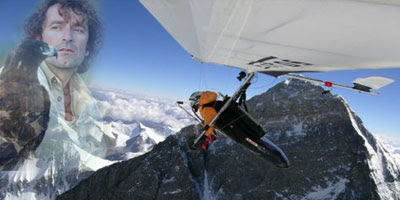
Angelo D’Arrigo, born on April 3, 1961, was an extraordinary individual who achieved global recognition as a pioneer in the world of extreme sports, particularly in free flight with hang gliders and paragliders. Often referred to as the “Human Condor,” D’Arrigo was renowned for his ability to mimic the flight patterns of birds, a feat that earned him international acclaim and numerous records. His life was a blend of adventure, science, and a deep connection with nature, which ultimately led to his tragic death on March 26, 2006, during a flight demonstration in Comiso, Sicily. This article delves into the life, achievements, and legacy of Angelo D’Arrigo, exploring how he became a symbol of human potential and the pursuit of dreams.
Early Life and Passion for Extreme Sports
Angelo D’Arrigo was born to a French mother and an Italian father, a combination that perhaps contributed to his adventurous spirit and love for the outdoors. From an early age, D’Arrigo was fascinated by the natural world, particularly the mountains and the skies. His passion for adventure led him to pursue a degree at the University of Sports in Paris, where he graduated at the age of 20. This academic foundation laid the groundwork for his future pursuits in extreme sports.
In the early 1980s, D’Arrigo began his journey into the world of free flight. He obtained certifications as an instructor in hang gliding and paragliding, as well as becoming a mountain guide and ski instructor. These skills allowed him to explore some of the most challenging and remote environments on Earth. His love for extreme sports grew, and it wasn’t long before D’Arrigo began to make a name for himself in the competitive world of free flight.
Achievements in Free Flight: Pioneering the Skies
Angelo D’Arrigo’s career in free flight took him to the highest echelons of the sport. He competed internationally, setting records and winning titles that solidified his reputation as one of the best in the world. His ability to fly in challenging conditions, such as over mountains, deserts, and even active volcanoes, showcased his extraordinary skill and bravery.
D’Arrigo’s passion for flight extended beyond mere competition. He was deeply interested in the flight patterns of birds, particularly raptors. This interest led him to develop a unique approach to flying, where he sought to emulate the natural flight techniques of these birds. He embarked on a project called “Metamorphosis,” which involved studying the flight behaviors of the world’s largest raptors, from the eagles of the Alps to the condors of South America.
His studies were not just theoretical; D’Arrigo lived among the birds he studied, observing their flight patterns and learning to replicate their movements in his own flights. This deep connection with nature and his ability to understand the intricacies of bird flight earned him the nickname “Human Condor.”
Notable Flights: Conquering the Elements
One of Angelo D’Arrigo’s most famous achievements was his unassisted free flight over the Sahara Desert. This feat was remarkable not only because of the harsh conditions but also because D’Arrigo completed the flight without the use of a motor, relying solely on his skill and the natural air currents. This achievement highlighted his exceptional ability to adapt to and overcome the challenges posed by extreme environments.
D’Arrigo also made headlines for his flight over Mount Everest, the highest peak on Earth. In 2004, he became the first person to fly over Everest using a hang glider. This flight was the culmination of years of preparation and required D’Arrigo to reach altitudes that few had ever achieved in a non-motorized aircraft. The flight over Everest was not just a physical challenge but also a symbolic one, representing the human drive to reach new heights and push the boundaries of what is possible.
Another significant flight in D’Arrigo’s career was his crossing of Siberia. This journey involved flying across vast, frozen landscapes, where temperatures plummeted to extreme lows. The flight was part of his broader project to study the migratory patterns of birds, particularly those that cross such inhospitable terrains. D’Arrigo’s ability to endure the harsh conditions of Siberia and complete the flight was a testament to his resilience and determination.
Contribution to Science and Ecology
Beyond his achievements in extreme sports, Angelo D’Arrigo made significant contributions to the fields of science and ecology. His studies of bird flight provided valuable insights into avian behavior and the mechanics of flight. He collaborated with various scientists, including renowned ethologist Professor Danilo Mainardi, to advance the understanding of how birds navigate and survive in different environments.
D’Arrigo’s work was particularly valuable in the study of raptors, many of which are endangered. By mimicking their flight patterns and studying their behavior in the wild, D’Arrigo helped to shed light on the challenges these birds face and the strategies they use to overcome them. His research contributed to conservation efforts aimed at protecting these majestic creatures and preserving their natural habitats.
In addition to his scientific contributions, D’Arrigo was also dedicated to educating others about the importance of environmental conservation. He produced several documentaries and gave lectures in schools and cultural centers, where he shared his experiences and knowledge with audiences around the world. His ability to combine adventure with education made him a powerful advocate for the protection of the natural world.
Tragic End: The Loss of a Pioneer
Angelo D’Arrigo’s life was tragically cut short on March 26, 2006, when he died in a plane crash during a flight demonstration in Comiso, Sicily. The accident occurred when the small aircraft he was in, piloted by another individual, suffered a mechanical failure and crashed. D’Arrigo’s death was a devastating loss to the world of extreme sports and to all those who had been inspired by his achievements.
In the wake of his death, tributes poured in from around the world, with many expressing their admiration for D’Arrigo’s courage, skill, and dedication to his craft. He was remembered not only as a pioneer in the field of free flight but also as a man who lived life to the fullest, constantly seeking new challenges and pushing the limits of human potential.
Legacy: Inspiring Future Generations
Angelo D’Arrigo’s legacy continues to inspire future generations of adventurers, scientists, and environmentalists. His life story is a testament to the power of passion, perseverance, and the relentless pursuit of one’s dreams. D’Arrigo showed the world that with determination and skill, even the most daunting challenges can be overcome.
In 2005, D’Arrigo published his autobiography, In volo sopra il mondo (“Flying Over the World”), in which he recounted his experiences and shared his philosophy on life. The book offers a glimpse into the mind of a man who was driven by a deep love for the natural world and a desire to explore its mysteries. In the preface to the book, renowned Italian science communicator Piero Angela wrote, “How happy Leonardo da Vinci would have been to see Angelo D’Arrigo fly over deserts, cross the Mediterranean, soar above Everest, and glide for hundreds of kilometers, simply hanging from a contraption made of sticks and fabric.”
D’Arrigo’s work also lives on through the “No Limits Etna Center,” a free flight school he established in Sicily. The center continues to train aspiring pilots and offers a unique environment where people can experience the thrill of flight while learning about the natural world. The center stands as a testament to D’Arrigo’s commitment to sharing his passion for flight with others and fostering a deeper connection between humans and nature.
Historical Context and Cultural Impact
To understand the significance of Angelo D’Arrigo’s achievements, it’s important to consider the broader historical and cultural context in which he operated. The late 20th and early 21st centuries saw a growing interest in extreme sports and adventure, as people sought to push the boundaries of what was physically and mentally possible. D’Arrigo was at the forefront of this movement, embodying the spirit of exploration and the desire to connect with the natural world in a profound way.
D’Arrigo’s flights over iconic landscapes like the Sahara Desert and Mount Everest also tapped into a deep cultural fascination with these places. These locations have long been symbols of the untamed and the extreme, representing challenges that test the limits of human endurance. By conquering these environments, D’Arrigo not only demonstrated his own capabilities but also inspired others to believe in the possibility of achieving their own dreams, no matter how impossible they might seem.
His approach to flight, which emphasized harmony with nature rather than domination over it, resonated with a growing awareness of environmental issues. At a time when the impact of human activities on the planet was becoming increasingly clear, D’Arrigo’s work highlighted the importance of understanding and preserving the natural world. His flights were not just feats of physical prowess but also acts of environmental advocacy, reminding people of the beauty and fragility of the ecosystems that sustain life on Earth.
Conclusion: Angelo D’Arrigo’s Enduring Influence
Angelo D’Arrigo was more than just an extreme sports enthusiast; he was a visionary who saw the sky not as a limit but as a canvas for human potential. His life and achievements have left an indelible mark on the world, inspiring countless individuals to pursue their passions and explore the unknown. Whether through his record-breaking flights, his scientific contributions, or his dedication to environmental education, D’Arrigo’s legacy continues to soar, much like the raptors he so admired.
As we look to the future, the lessons of Angelo D’Arrigo’s life remain as relevant as ever. In a world where challenges and opportunities abound, his example encourages us to embrace our own journeys with courage, curiosity, and a deep respect for the natural world. In doing so, we honor the memory of a man who truly lived life en plein air—always reaching for the sky, always striving to be free.


