
San Francesco d’Assisi, born between December 1181 and September 1182, is one of the most revered saints in the history of Christianity. He was born in the small Italian town of Assisi to Pietro Bernardone, a wealthy merchant of cloth and spices, and Pica Bourlemont, a noblewoman of French descent. His life, marked by a radical embrace of poverty and a deep love for nature, continues to inspire millions of people around the world.
Early Life and Background
Francesco, originally baptized as Giovanni, was born into a life of privilege. His father, Pietro Bernardone, was a prosperous merchant who frequently traveled to France, which influenced Francesco’s early life and education. Upon his return from one of these trips, Pietro renamed his son Francesco, a name reflecting his affinity with France.
Francesco received a broad education, studying Latin, vernacular languages, music, and poetry. His father also taught him French and Provençal, likely with the intention of grooming him for a future in commerce. As a young man, Francesco worked alongside his father in the family business, gaining firsthand experience in the world of trade.
At the age of twenty, Francesco participated in a military conflict between Assisi and Perugia. During the battle, he was captured and spent a year in captivity. This period was marked by severe hardship, and Francesco returned home severely ill. The experience left a profound impact on him, leading to a gradual transformation in his outlook on life.
The Path to Conversion
Francesco’s conversion began in earnest around 1205. One of the pivotal moments during this time was his decision to abandon his privileged life in favor of one dedicated to spiritual reflection and poverty. The catalyst for this change was a vision he experienced on his way to join the forces of Gualtiero da Brienne in southern Italy. In this vision, Francesco heard a voice instructing him to return home and wait for further guidance.
Upon his return to Assisi, Francesco’s life began to change dramatically. He started to spend more time in solitude, meditating and praying in the countryside surrounding Assisi. During one such prayer session in the dilapidated Church of San Damiano, Francesco experienced a powerful vision. The crucifix before him appeared to come to life and instructed him to “repair my church, which, as you can see, is in ruins.” Interpreting this message literally, Francesco sold some of his father’s goods to fund the restoration of the church.
This act led to a major confrontation with his father, who was angered by Francesco’s actions. The conflict culminated in a dramatic public renunciation, during which Francesco returned all his possessions, including the clothes he wore, to his father. Standing naked in the town square, he declared that he now had no father but God. This event marked Francesco’s complete break from his former life of wealth and privilege.
Embracing Poverty and Founding the Franciscan Order
Following his renunciation, Francesco began to live as a beggar, embracing a life of extreme poverty. He dressed in a simple tunic, tied with a rope, and traveled barefoot, relying on the charity of others for his sustenance. His commitment to poverty was absolute; he believed that true freedom and spiritual fulfillment could only be achieved by relinquishing all material possessions.
Francesco’s radical approach to life attracted a small group of followers, who were inspired by his teachings and way of life. His first disciple was Bernardo da Quintavalle, a wealthy magistrate, followed by Pietro Cattani, a canon lawyer. As more people joined him, Francesco began to formalize his teachings, which emphasized living in accordance with the Gospel of Jesus Christ. His primary message was one of simplicity, humility, and love for all of God’s creation.
In 1210, Francesco and his followers traveled to Rome to seek the approval of Pope Innocent III for their way of life. Initially skeptical, the Pope had a dream in which he saw Francesco holding up the Lateran Basilica, the mother church of Christendom. Interpreting this as a divine sign, the Pope granted verbal approval for the formation of the Franciscan Order, officially known as the Order of Friars Minor.
The cornerstone of the Franciscan Order was absolute poverty. The friars were not allowed to own property, and they relied entirely on alms for their survival. Their mission was to preach the Gospel, care for the poor, and live in harmony with nature. The Order grew rapidly, attracting men and women from all walks of life, including the wealthy and the powerful.
The Influence of the Franciscan Order and Missionary Work
The Franciscan Order had a profound impact on the Catholic Church and European society. Francesco’s emphasis on poverty, humility, and the love of creation resonated with people across social strata. The Order became a major force in the renewal of the Church, emphasizing a return to the simplicity and purity of the early Christian community.
Francesco himself undertook several missionary journeys, spreading his message beyond the borders of Italy. In 1213, he set out on a mission to the Holy Land, where he sought to promote peace between Christians and Muslims. He traveled to Egypt during the Fifth Crusade, where he met with Sultan Melek el-Kamel, the Muslim ruler. Despite the ongoing conflict, Francesco’s encounter with the Sultan was marked by mutual respect and dialogue, and he was allowed to preach in the Sultan’s court.
Francesco’s mission to the Muslim world was groundbreaking for its time, as it emphasized peace and understanding rather than confrontation and violence. Although his efforts did not result in immediate conversions, they laid the groundwork for future interfaith dialogue and influenced the Church’s approach to non-Christian religions.
The Rule of the Franciscan Order and the Creation of the First Nativity Scene
In 1223, Francesco dedicated himself to rewriting the Rule of the Franciscan Order, a task that took up much of his time that autumn. The original Rule had been lost, and Francesco, with the help of his close companions, including Brother Leo, began to draft a new version. The revised Rule emphasized the core values of the Order: poverty, humility, and a commitment to the Gospel. It was officially recognized by Pope Honorius III, solidifying the Franciscan way of life within the Church.
That same year, Francesco created the first nativity scene in a cave near the town of Greccio. This living nativity, complete with animals and actors portraying the Holy Family, was intended to bring the story of Christ’s birth to life in a tangible and relatable way. The tradition of the nativity scene quickly spread throughout Europe and remains a central part of Christian Christmas celebrations to this day.
The Later Years: Stigmata and the Canticle of the Creatures
As Francesco grew older, his health began to deteriorate. He suffered from various ailments, including severe eye problems that nearly left him blind. Despite his physical suffering, Francesco continued to live a life of prayer, service, and preaching.
In 1224, while praying on Mount La Verna, Francesco experienced a mystical vision in which he received the stigmata, the wounds of Christ, on his hands, feet, and side. This extraordinary event further solidified his reputation as a holy man and mystic. The stigmata, a visible sign of his deep identification with Christ’s suffering, became one of the defining aspects of his sainthood.
During this period, Francesco composed one of his most famous works, the “Canticle of the Creatures” (also known as the “Canticle of the Sun”). This lyrical poem praises God through the elements of creation—Brother Sun, Sister Moon, Brother Wind, Sister Water, and even Sister Death. The Canticle reflects Francesco’s deep connection with nature and his belief in the inherent goodness of all creation. It is one of the earliest works of literature written in the Italian vernacular and remains a cornerstone of Christian environmental thought.
Death and Canonization
Francesco’s health continued to decline, and he eventually retired to the small chapel of the Porziuncola, the spiritual heart of the Franciscan Order. On October 3, 1226, at the age of 44, Francesco passed away, surrounded by his closest companions. His death was a moment of profound grief for his followers and for the wider Christian community.
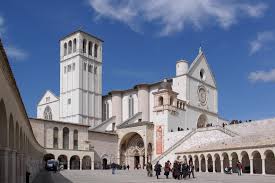
Just two years after his death, on July 16, 1228, Pope Gregory IX officially canonized Francesco as a saint. The speed of his canonization was a testament to the widespread veneration he had inspired during his lifetime. The Pope also laid the foundation stone for the Basilica of San Francesco in Assisi, where Francesco’s remains were eventually interred.
Legacy and Impact
San Francesco d’Assisi’s legacy extends far beyond his lifetime. His life and teachings have had a lasting impact on the Catholic Church, Western spirituality, and the broader cultural landscape. The Franciscan Order he founded remains one of the largest and most influential religious orders in the world, with branches dedicated to various aspects of service, education, and mission work.
Francesco’s radical embrace of poverty and his deep love for nature have made him a symbol of simplicity, humility, and environmental stewardship. In 1979, Pope John Paul II declared him the patron saint of ecology, recognizing his enduring influence on the Christian approach to the natural world. His life continues to inspire movements dedicated to social justice, peace, and the protection of the environment.
The story of San Francesco d’Assisi is also deeply embedded in the cultural and artistic heritage of Europe. His life has been the subject of countless works of art, literature, and film. The Basilica of San Francesco in Assisi, adorned with frescoes by Giotto and other Renaissance masters, remains a pilgrimage site for millions of people each year.
In modern times, Francesco’s message of peace, humility, and love for all creation resonates with people of all faiths and backgrounds. His example challenges us to live more simply, to care for the poor and marginalized, and to recognize the sacredness of the world around us. As one of the most beloved and influential saints in history, San Francesco d’Assisi’s life continues to light the way for those seeking a path of spiritual renewal and service.


