
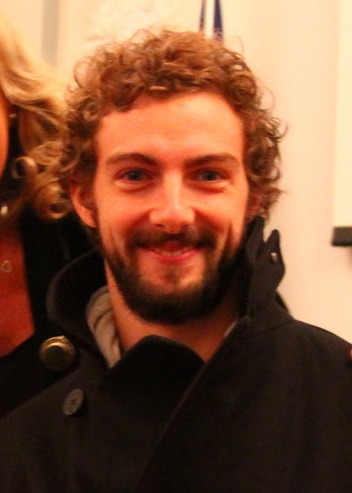
Alessandro D’Avenia is a name that resonates strongly within contemporary Italian literature. Born on May 2, 1977, in Palermo, Sicily, D’Avenia has carved out a unique space for himself as a novelist, screenwriter, and teacher. His journey from a small Sicilian town to international literary acclaim is a testament to his talent, determination, and passion for storytelling.
Early Life and Education
Alessandro D’Avenia was born into a large family as the third of six children to Giuseppe and Rita D’Avenia. His early life in Palermo was marked by a strong academic inclination, which led him to enroll in the prestigious Vittorio Emanuele II Classical High School. It was during these formative years that D’Avenia encountered Father Pino Puglisi, a religion teacher and anti-Mafia activist who left a profound impact on him. Puglisi’s teachings would later influence D’Avenia’s own work, particularly his focus on themes of morality and social justice.
After completing his high school education, D’Avenia moved to Rome to pursue a degree in Classical Literature at La Sapienza University. His academic prowess was evident early on, and he soon won a doctoral scholarship at the University of Siena. In 2004, he completed his Ph.D. with a thesis on Homeric sirens and their relationship with the Muses, showcasing his deep engagement with ancient literature and mythology.
Teaching Career and Literary Beginnings
D’Avenia’s passion for literature naturally extended into the realm of teaching. He began his career as a middle school teacher while continuing to expand his qualifications by attending a specialization school for secondary education. His teaching journey eventually led him to the prestigious San Carlo College in Milan, where he became known for his engaging and empathetic approach to education.
D’Avenia’s dedication to teaching is not just a profession but a vocation. He has often spoken about his choice to remain celibate, not as a rejection of love, but as a different way of living it—channeling his passion into storytelling, teaching, and volunteering. His decision reflects a deep commitment to his students and his craft, which he views as intertwined with his spiritual life.
Rise to Fame: “Bianca come il latte, rossa come il sangue”
D’Avenia’s first major literary success came in 2010 with the publication of his debut novel, “Bianca come il latte, rossa come il sangue” (White as Milk, Red as Blood). The novel, which was inspired by a true story, centers on a young high school student named Leo who falls in love with a girl suffering from leukemia. The book was a commercial and critical success, selling over a million copies and being translated into more than twenty languages. It was also adapted into a film, for which D’Avenia wrote the screenplay, further cementing his status as a prominent figure in Italian literature.
The novel’s success can be attributed to D’Avenia’s ability to capture the raw emotions of adolescence, blending them with philosophical and existential questions that resonate with readers of all ages. His writing style, characterized by its poetic lyricism and deep empathy, has drawn comparisons to other great Italian authors, while also marking him as a distinctive voice in his own right.
Subsequent Works and Continued Success
Following the success of his debut novel, D’Avenia continued to explore themes of love, loss, and the human condition in his subsequent works. In 2011, he published his second novel, “Cose che nessuno sa” (Things No One Knows), which also garnered critical acclaim and international recognition. This novel further established D’Avenia as a master storyteller, capable of weaving complex narratives that explore the depths of human emotion.
D’Avenia’s third novel, “Ciò che inferno non è” (What Hell Is Not), published in 2014, is perhaps his most personal work. The novel is set in Palermo and is heavily influenced by the life and martyrdom of Father Pino Puglisi, who was assassinated by the Mafia. The book is a powerful exploration of the struggle between good and evil, set against the backdrop of the author’s native Sicily.
In 2016, D’Avenia ventured into non-fiction with “L’arte di essere fragili: Come Leopardi può salvarti la vita” (The Art of Being Fragile: How Leopardi Can Save Your Life). This book, which combines literary analysis with personal reflection, became a bestseller and was later adapted into a stage play. The work showcases D’Avenia’s versatility as a writer and his ability to connect with readers on both an intellectual and emotional level.
Journalism and Screenwriting
In addition to his work as a novelist, D’Avenia has made significant contributions to journalism and screenwriting. He has written for several major Italian newspapers, including La Stampa and Avvenire, where his columns often reflect on education, literature, and social issues. His ability to engage with contemporary topics while drawing on literary and philosophical traditions has made him a respected voice in Italian media.
D’Avenia’s talents also extend to the screen. In 2013, the film adaptation of “Bianca come il latte, rossa come il sangue” was released, with D’Avenia serving as the screenwriter. The film was well-received and brought his story to an even wider audience, demonstrating his skill in translating literary works into visual narratives.
Recent Works and Ongoing Projects
D’Avenia’s literary output has remained prolific in recent years. In 2017, he published “Ogni storia è una storia d’amore” (Every Story is a Love Story), a book that explores the theme of love through the retelling of over thirty famous love stories from literature. This work, like his others, has been praised for its lyrical prose and insightful commentary on the human experience.
In 2020, D’Avenia released “L’appello” (The Call), a novel that tells the story of Omero Romeo, a blind schoolteacher who comes to understand his students better than any of his sighted colleagues. The novel has been celebrated for its exploration of themes such as perception, empathy, and the transformative power of education.
Alessandro D’Avenia’s Impact and Legacy
Alessandro D’Avenia’s impact on contemporary Italian literature is undeniable. His works have not only achieved commercial success but have also sparked important conversations about love, faith, education, and social justice. Through his novels, essays, and journalistic contributions, D’Avenia has proven himself to be a writer deeply attuned to the complexities of the human condition.
Moreover, D’Avenia’s commitment to education, both as a teacher and a writer, underscores his belief in the power of storytelling as a tool for personal and social transformation. His works often highlight the importance of empathy, understanding, and the moral challenges that individuals face in their everyday lives.
Conclusion
Alessandro D’Avenia is a multifaceted figure whose life and work continue to inspire readers and students alike. From his early beginnings in Palermo to his rise as an internationally acclaimed author, D’Avenia’s journey is a testament to the enduring power of literature and education. As he continues to write and teach, there is no doubt that Alessandro D’Avenia will remain a significant voice in both Italian and global literary landscapes for years to come.


