
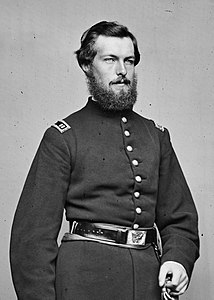
Luigi Filippo Alberto d’Orléans, also known as Louis-Philippe Albert d’Orléans, was a prominent figure in European aristocracy during the 19th century. Born on August 24, 1838, in Paris, France, he was destined to play a significant role in the complex and turbulent political landscape of his time. As the Count of Paris and a claimant to the French throne, his life was marked by exile, intellectual pursuits, and involvement in major historical events. This article provides an in-depth look at Luigi Filippo Alberto d’Orléans’s life, exploring his rise to prominence, his contributions to history, and the legacy he left behind.
Early Life and Royal Heritage
Luigi Filippo Alberto d’Orléans was born into one of France’s most illustrious families. He was the son of Ferdinand Philippe d’Orléans, the Duke of Orléans, and Helena of Mecklenburg-Schwerin. His grandfather, Louis-Philippe I, was the King of the French from 1830 until 1848, during the July Monarchy. The Orléans family was a cadet branch of the Bourbon dynasty, which had ruled France for centuries. As such, Luigi Filippo Alberto was born with a strong royal heritage, positioning him as a key figure in the ongoing struggle for the French crown.
The political climate of France during his early years was highly unstable. The July Revolution of 1830 had placed his grandfather, Louis-Philippe I, on the throne, replacing the deposed Charles X. However, the monarchy’s hold on power was tenuous, and by 1848, another revolution had erupted, leading to the abdication of Louis-Philippe I. The monarchy was abolished, and France was declared a republic, forcing the Orléans family into exile.
Exile and Intellectual Pursuits
Following the revolution of 1848, Luigi Filippo Alberto, then just ten years old, fled France with his family. The young prince was raised in exile, primarily in Germany and England, where he received an education that emphasized both intellectual and military training. Despite the loss of the throne, the Orléans family maintained their royal aspirations, and Luigi Filippo Alberto was groomed to be a potential future king.
During his time in exile, Luigi Filippo Alberto developed a keen interest in history, politics, and journalism. He became an accomplished intellectual, known for his writings on a variety of subjects. His historical works, in particular, reflected his deep understanding of European politics and his ongoing commitment to the royalist cause.
In addition to his intellectual pursuits, Luigi Filippo Alberto also sought to gain military experience. In 1861, during the American Civil War, he joined the Union Army as a captain under the command of General George McClellan. His participation in the war demonstrated his commitment to the values of liberty and justice, which he saw as integral to the royalist cause. His service in the Civil War also allowed him to forge important connections with American political and military leaders, further enhancing his stature as a global figure.
Marriage and Family Life
On May 30, 1864, Luigi Filippo Alberto married Maria Isabella d’Orléans, the daughter of Antoine d’Orléans and Luisa Fernanda of Spain. The marriage was a significant alliance between two prominent branches of European royalty, further solidifying the Orléans family’s position within the aristocracy. The couple had eight children, who would go on to play important roles in European nobility:
- Amélie d’Orléans (1865-1951): Married King Carlos I of Portugal, becoming Queen of Portugal.
- Philippe d’Orléans (1869-1926): Known as Philippe VIII, Duke of Orléans and later Count of Paris, who married Archduchess Maria Dorothea of Austria.
- Hélène d’Orléans (1871-1951): Married Emanuele Filiberto, 2nd Duke of Aosta, strengthening ties with the Italian royal family.
- Charles-Philippe d’Orléans (1875): Tragically died in infancy, living only a few months.
- Isabelle d’Orléans (1878-1961): Married her cousin, Jean III d’Orléans, Duke of Guise, further intertwining the Orléans and Bourbon families.
- Jacques Marie Clément d’Orléans (1880-1881): Another son who died in infancy, reflecting the challenges of 19th-century child mortality.
- Louise d’Orléans (1882-1958): Married Infante Carlos of Bourbon, Duke of Calabria, a member of the Spanish royal family.
- Ferdinand d’Orléans (1884-1924): Duke of Montpensier, married Isabella Gonzalez de Olaneta e Ibarreta, a Spanish noblewoman.
Luigi Filippo Alberto’s children continued the Orléans family’s tradition of strategic marriages, furthering their influence across Europe. Despite the political challenges they faced, the family’s connections ensured that they remained an integral part of European nobility.
The Political Landscape and Royal Aspirations
The fall of the French Second Republic and the rise of Louis-Napoleon Bonaparte, who became Emperor Napoleon III in 1852, reshaped the political landscape of France. Luigi Filippo Alberto, as the Count of Paris, was recognized by many royalists as the legitimate heir to the French throne, particularly after the death of his grandfather, Louis-Philippe I, in 1850.
However, the restoration of the monarchy was complicated by the presence of other claimants, most notably Henri d’Artois, the Count of Chambord, who represented the senior Bourbon line. Despite their shared goal of restoring the monarchy, the Orléans and Bourbon factions were often at odds, with each branch advocating for their own candidate.
In 1870, following France’s defeat in the Franco-Prussian War, Napoleon III’s Second Empire collapsed, leading to the proclamation of the Third Republic. This period of political instability presented an opportunity for monarchists to push for the restoration of the monarchy. In 1873, Luigi Filippo Alberto reached an agreement with Henri d’Artois to unite the royalist factions, with the understanding that he would succeed Henri as king if the monarchy were restored.
The Orléanist Claim and Final Exile
The death of Henri d’Artois in 1883 without direct heirs left Luigi Filippo Alberto as the uncontested royal claimant for many monarchists. He adopted the title of Philippe VII, continuing the Orléanist claim to the throne. However, the Third Republic was firmly established by this time, and the prospect of a monarchical restoration grew increasingly remote.
In 1886, the French government, wary of the potential threat posed by the royalists, passed a law that expelled the heads of former ruling dynasties from France. Luigi Filippo Alberto, along with his family, was forced into exile once again. He took refuge in England, where he would spend the final years of his life.
During his time in England, Luigi Filippo Alberto continued to advocate for the royalist cause, although his influence in France waned. He remained a respected figure among European royalty, but the political realities of the late 19th century meant that his chances of reclaiming the French throne were slim.
Death and Legacy
Luigi Filippo Alberto d’Orléans passed away on September 8, 1894, at the age of 56, in Stowe House, Buckinghamshire, England. His death marked the end of an era for the Orléans family, as the hope of restoring the monarchy in France faded further into history.
Despite the challenges and setbacks he faced, Luigi Filippo Alberto’s life was marked by a deep commitment to the royalist cause and a dedication to his family’s legacy. His intellectual contributions, particularly in history and journalism, left a lasting impact, and his involvement in the American Civil War demonstrated his willingness to engage in global events beyond the confines of European royalty.
Today, Luigi Filippo Alberto d’Orléans is remembered as a significant figure in the history of European nobility. His life serves as a reminder of the complex and often tumultuous nature of royal politics in the 19th century, as well as the enduring influence of the Orléans family in European history.
Conclusion
Luigi Filippo Alberto d’Orléans, Count of Paris, lived a life shaped by the dramatic political changes of the 19th century. From his early years as a potential heir to the French throne to his exile and intellectual pursuits, his story is one of resilience, ambition, and a deep connection to the royal heritage. As the leader of the Orléanist cause, he navigated the challenges of his time with determination, leaving behind a legacy that continues to be studied and appreciated by historians today.


