
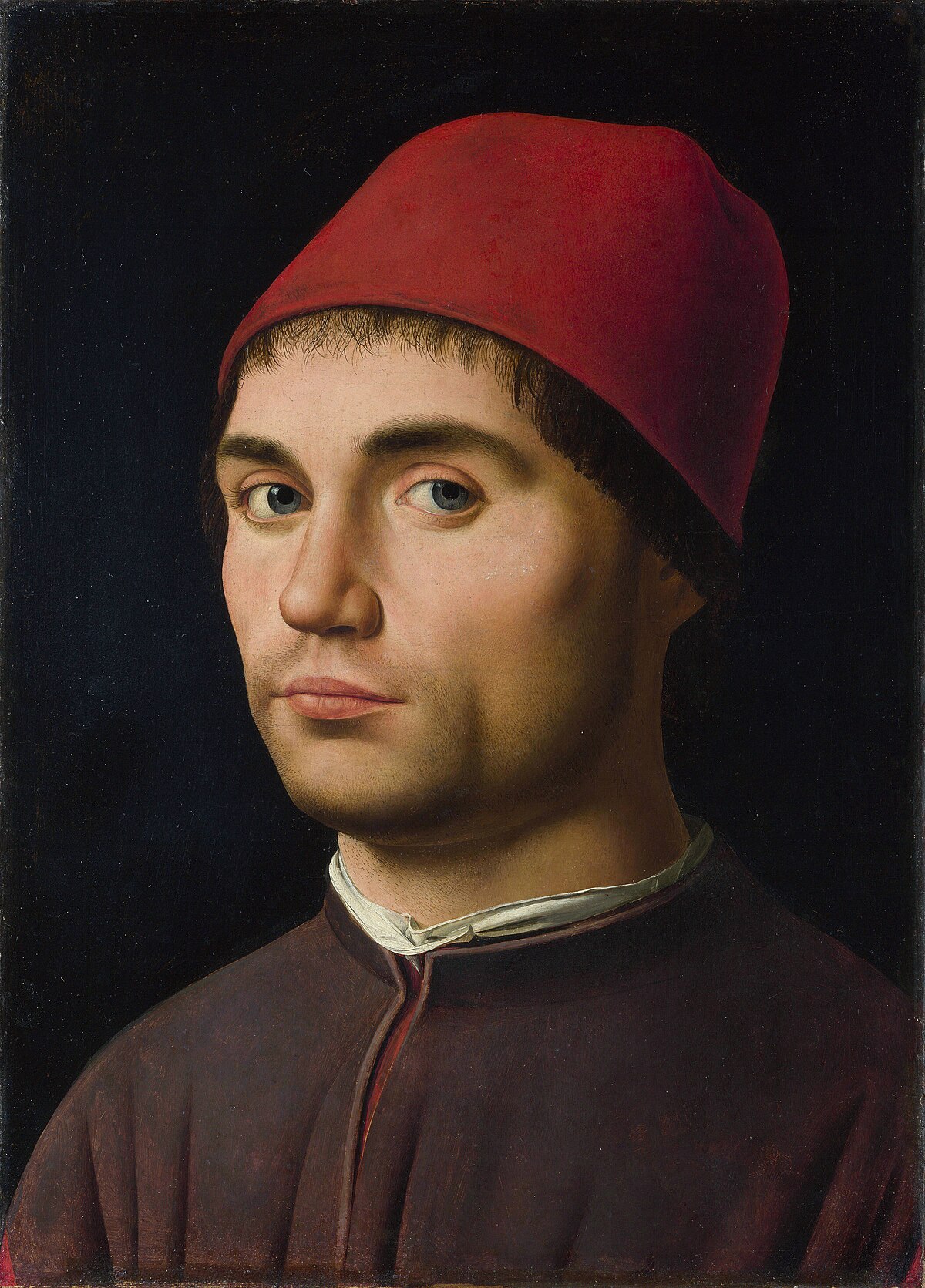
Antonello da Messina, born as Antonio di Giovanni de Antonio around 1430 in the city of Messina, is a seminal figure in the history of Renaissance art. Renowned for his pioneering techniques and profound influence on the evolution of portraiture and religious painting, Antonello’s work represents a fusion of Italian and Northern European artistic traditions. His life, although somewhat obscure due to the scarcity of documented details, is marked by a relentless pursuit of artistic innovation and a legacy that continues to be celebrated in art history.
Early Life and Artistic Formation
Antonello da Messina was born in the bustling port city of Messina, located on the northeastern coast of Sicily. During this period, Messina was a vibrant cultural crossroads, exposed to various artistic influences from the Mediterranean and beyond. It was in this dynamic environment that Antonello’s early artistic sensibilities were shaped.
Around 1440, Antonello began his formal training in the arts. He is believed to have studied under the painter Colantonio in Naples, one of the leading artistic centers of the time. Colantonio’s workshop was instrumental in exposing Antonello to the techniques of Flemish painting, which would later become a hallmark of his own work. The detailed realism and meticulous attention to light and texture characteristic of Flemish art deeply influenced Antonello’s approach to painting.
The Influence of Flemish Art
One of the most significant aspects of Antonello da Messina’s work is his incorporation of Flemish techniques into Italian art. During the 15th century, Flemish painters like Jan van Eyck were renowned for their mastery of oil painting, a medium that allowed for greater detail, depth, and luminosity compared to the traditional tempera used by Italian artists.
Antonello is credited with introducing and popularizing the use of oil painting in Italy. His ability to blend the precision and realism of Flemish art with the grace and compositional balance of the Italian Renaissance created a unique style that set him apart from his contemporaries. His works are characterized by a delicate interplay of light and shadow, a technique known as chiaroscuro, which adds a three-dimensional quality to his figures and a sense of depth to his compositions.
Key Works and Artistic Contributions
Antonello da Messina’s body of work is small but highly influential. Among his most famous pieces are his portraits and religious paintings, which are celebrated for their psychological depth and technical brilliance.
Ritratto d’uomo (Portrait of a Man)
One of Antonello’s most iconic works is the Ritratto d’uomo, often referred to as the Trivulzio Portrait. Painted between 1473 and 1474, this portrait is believed to be a self-portrait, although this is a subject of ongoing debate among art historians. The portrait is a striking example of Antonello’s ability to capture the essence of his subjects, conveying not just their physical likeness but also their inner character. The use of light and shadow in the portrait is masterful, highlighting the subtle contours of the face and giving the image a lifelike quality that was revolutionary for its time.
The Annunciation
The Annunciation, painted around 1474, is another masterpiece that showcases Antonello’s skill in rendering religious themes with a humanistic touch. The painting depicts the Virgin Mary at the moment of the Annunciation, with an angel delivering the news of her divine pregnancy. Antonello’s use of light in this work is particularly noteworthy, as it creates a serene and contemplative atmosphere. The delicate expression on Mary’s face, combined with the realistic rendering of her hands and veil, exemplifies Antonello’s ability to blend spiritual subject matter with a deep sense of humanity.
San Girolamo nello studio (Saint Jerome in His Study)
San Girolamo nello studio is one of Antonello’s most celebrated works, painted around 1475. The painting portrays Saint Jerome, one of the early Church Fathers, in his study, surrounded by books and writing tools. The composition is meticulously detailed, with Antonello paying careful attention to the play of light on different surfaces, from the polished wood of the furniture to the soft folds of fabric. The painting is a masterclass in perspective and spatial organization, drawing the viewer’s eye into the depth of the scene and creating a sense of immersion in Jerome’s contemplative world.
Salvator Mundi
The Salvator Mundi, or “Savior of the World,” is another significant work attributed to Antonello. This painting of Christ holding a crystal orb in his left hand, with his right hand raised in blessing, is a powerful example of Antonello’s ability to convey spiritual themes with a sense of realism and immediacy. The calm and serene expression of Christ, combined with the intricate detailing of the orb, reflects Antonello’s mastery of both religious iconography and naturalistic detail.
Artistic Journey and Influence
Antonello da Messina’s career took him to several key artistic centers in Italy, where he interacted with other influential artists and absorbed various stylistic influences. Around 1460, Antonello traveled to Rome, where he encountered the works of Piero della Francesca and Fra Angelico. The influence of these masters, particularly in their use of perspective and their treatment of light, can be seen in Antonello’s subsequent works.
In 1475, Antonello visited Venice, one of the most important cultural hubs of the Renaissance. During his time in Venice, he came into contact with the work of Giovanni Bellini, a leading figure in the Venetian School of painting. Bellini’s influence is evident in Antonello’s later works, particularly in his use of vibrant color and his exploration of atmospheric effects. The exchange of ideas between Antonello and Bellini was mutually beneficial, with each artist influencing the other’s approach to composition and technique.
Antonello’s work in Venice left a lasting impact on the city’s artistic community. His introduction of oil painting techniques contributed to the development of Venetian painting, which would later be characterized by its rich color palette and luminous textures. Artists like Bellini, Titian, and Giorgione were all influenced by Antonello’s innovations, and his legacy can be traced through their works.
Later Life and Legacy
Despite the relatively short span of his career, Antonello da Messina left a profound impact on the art world. His innovative use of oil paint, combined with his ability to merge the best of Italian and Northern European art, set the stage for future developments in Renaissance painting. Antonello’s works are celebrated for their emotional depth, technical precision, and the seamless integration of light and shadow.
In 1479, Antonello returned to his hometown of Messina, where he passed away shortly after drafting his will. His death is believed to have been caused by tuberculosis, a common and deadly disease at the time. Although he died at the relatively young age of 49, Antonello’s influence continued to resonate through the works of later artists, both in Italy and beyond.
Today, Antonello da Messina is recognized as one of the great masters of the Italian Renaissance. His ability to convey the psychological depth of his subjects, combined with his technical mastery, has earned him a place among the most important figures in the history of Western art. His works are studied for their pioneering use of oil paint, their meticulous attention to detail, and their innovative approach to portraiture and religious imagery.
Conclusion
Antonello da Messina was a trailblazer in the world of Renaissance art. His work bridged the gap between the artistic traditions of Italy and Northern Europe, introducing new techniques and approaches that would shape the future of painting. Through his portraits and religious scenes, Antonello captured the essence of his subjects with a realism and emotional depth that was revolutionary for his time.
His influence on the Venetian School and on subsequent generations of artists cannot be overstated. As a master of light, perspective, and human expression, Antonello da Messina’s legacy endures, continuing to inspire and captivate art lovers and scholars alike. His contributions to the development of Renaissance art ensure that his name remains synonymous with innovation, excellence, and artistic mastery.


