
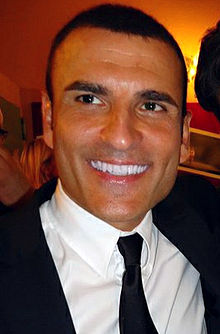
Sal Da Vinci, born Salvatore Michael Sorrentino, is a celebrated figure in the Italian entertainment industry, known for his contributions to music, theater, and film. His story is a fascinating journey of passion, resilience, and artistic evolution, deeply rooted in his Neapolitan heritage.
Early Life and Background
Sal Da Vinci was born on April 7, 1969, in New York City. He is the son of Mario Da Vinci, a prominent figure in the world of Neapolitan sceneggiata, a form of musical drama popular in Naples. Mario Da Vinci’s influence on Sal’s career is undeniable, as he introduced his son to the world of music and theater at a very young age. The family eventually moved back to Italy, where Sal Da Vinci’s artistic journey began.
The Beginnings of a Career
Sal Da Vinci made his debut in the entertainment industry at the tender age of six, performing alongside his father in various theatrical productions. This early exposure to the stage laid the foundation for his future career. In 1974, at the age of just five, Sal recorded his first song, “Miracolo e Natale,” a duet with his father. The success of this song led to the creation of a sceneggiata based on the track, marking the beginning of Sal’s journey in the world of music and theater.
Transition to Film
In the late 1970s, Sal Da Vinci expanded his horizons by venturing into the world of cinema. He starred in the film “Figlio mio sono innocente” (1978), directed by Alberto Sciotti, which was followed by another film, “Napoli storia d’amore e di vendetta” (1979). These roles helped establish him as a versatile artist capable of handling both musical and dramatic roles.
Struggles and Setbacks
Despite his early successes, Sal Da Vinci’s journey was not without its challenges. In the early 1980s, he faced several setbacks in the music industry. Two of his songs, recorded with the musician James Senese, were never released, and he experienced numerous unfulfilled promises. These difficulties led him to step back from the music industry for a time, focusing instead on his theatrical endeavors.
Resurgence in Music
Sal Da Vinci’s love for music never waned, and in the early 1990s, he made a significant comeback. In 1993, he was signed by the record label Ricordi, with whom he released two albums. His big break came in 1994 when he participated in the “Festival Italiano di Musica,” a competition organized by Canale 5 as a rival to the famous Sanremo Music Festival. Sal’s song “Vera” won first place in the competition and became a bestseller in South America under the title “Vida mi Vida,” selling over 5 million copies. This success catapulted him back into the spotlight and solidified his place in the Italian music industry.
Recognition and Collaborations
The success of “Vera” opened many doors for Sal Da Vinci. In 1995, he performed at the Sanctuary of Loreto for Pope John Paul II, singing a Latin version of “Salve Regina” in front of 450,000 young people and a large television audience. This performance was a significant milestone in his career, showcasing his ability to connect with audiences on a profound level.
In 1998, Sal released his third album with EMI, and his music video for the song “Sei Divina” became one of the most played videos of the year. The video caught the attention of renowned Italian singer Eros Ramazzotti, who invited Sal to participate in the initiatives of the Nazionale Italiana Cantanti, a football team composed of Italian singers that raises funds for charity.
Theatrical Success and Further Acclaim
In 1999, Sal Da Vinci took on the role of protagonist in “L’Opera buffa del Giovedì Santo,” a play directed by Roberto De Simone. The production was a revival of a work that had debuted 20 years earlier with Peppe and Concetta Barra in the lead roles. The play premiered on January 12, 2000, at the Teatro Metastasio in Prato and was performed in prestigious theaters across Italy for over two years.
The year 2000 also saw the release of the single “Vurria saglire ‘ncielo,” a Neapolitan gospel song with lyrics by Maurizio Morante, based on a 700-year-old melody by Roberto De Simone. The single won Sal Da Vinci the Premio Internazionale Videoitalia as the best interpreter and the most voted artist abroad.
A Flourishing Theatrical Career
In the early 2000s, Sal Da Vinci continued to make his mark in the theatrical world. In 2002, he starred in the musical “C’era una volta Scugnizzi,” written by Claudio Mattone. The production was a resounding success, with over 600 performances across Italy and earning the ETI award for Best Musical of 2003. This achievement revitalized Sal’s career, which had been on the decline just a few years earlier.
On August 15, 2004, Sal performed in Naples at the traditional Ferragosto concert, drawing a crowd of over 15,000 people. The following year, he collaborated with Lucio Dalla and Gigi Finizio on the song “Napule,” which was included in Gigi D’Alessio’s album “Quanti Amori.”
Continued Musical Pursuits
In 2005, Sal Da Vinci embarked on the “Anime Napoletane” project, which included the release of an album and participation in a theatrical production produced by Claudio and Tullio Mattone. The project was a celebration of Neapolitan music and culture, showcasing Sal’s deep connection to his roots.
The following year, he began a professional collaboration with comedian Alessandro Siani, writing and performing the soundtrack for Siani’s film “Ti lascio perché ti amo troppo.” The main song from the soundtrack, “Accuminciamm a’ respirà,” was released as a single in 2007.
Recent Years and Continued Relevance
In 2008, Sal Da Vinci released the single “Nnammuratè,” which marked his return to the music scene. Later that year, he participated in the variety show “Volami nel cuore” on RaiUno, hosted by Pupo and Ernestino Schinella. During the 2008-2009 theater season, Sal starred in the musical “Canto per Amore,” directed by Gino Landi, with choreography by Cappellini-Ligheri. The production was accompanied by an album of the same name, featuring new songs by Sal Da Vinci.
Sal’s career reached another high point in 2009 when he made his debut at the Sanremo Music Festival with the song “Non riesco a farti innamorare.” He placed third in the competition, behind Marco Carta and Giuseppe Povia, further cementing his status as a beloved figure in Italian music.
Legacy and Influence
Sal Da Vinci’s career is a testament to his versatility and resilience as an artist. He has successfully navigated the challenges of the entertainment industry, from his early days as a child performer to his resurgence as a musical and theatrical star. His contributions to Neapolitan culture and Italian music have earned him a dedicated fan base and the respect of his peers.
Throughout his career, Sal Da Vinci has remained true to his roots, drawing inspiration from his Neapolitan heritage while also exploring new musical and theatrical forms. His ability to connect with audiences on an emotional level has made him a beloved figure in Italy and beyond.
In conclusion, Sal Da Vinci is more than just a singer or actor; he is a cultural icon who has left an indelible mark on the Italian entertainment industry. His journey from the stages of Naples to the heights of the Sanremo Music Festival is a story of passion, perseverance, and unwavering dedication to his craft. As he continues to perform and create, Sal Da Vinci’s influence on Italian music and theater will undoubtedly endure for years to come.


