
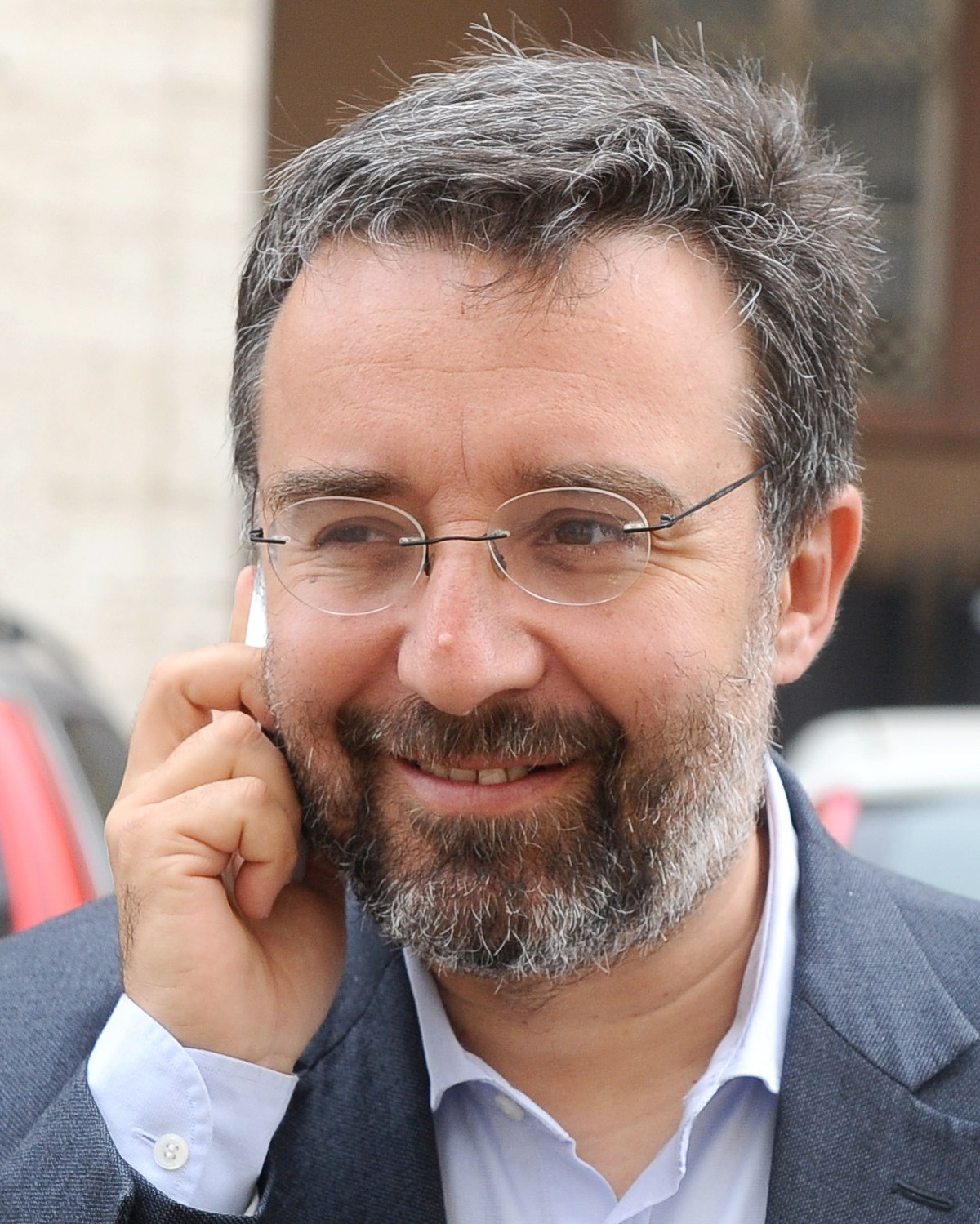
Marco Damilano, born on October 25, 1968, in Rome, Italy, is a distinguished Italian journalist, political commentator, and author. Over the years, Damilano has established himself as a prominent voice in Italian media, known for his insightful political analysis, eloquent writing, and presence on television. His career spans several decades, during which he has become a respected figure in both journalism and television. This article explores Marco Damilano’s life, career, and contributions to Italian media, offering detailed insights into his journey, achievements, and the impact he has made in the field of political journalism.
Early Life and Education
Marco Damilano was born into a family with deep roots in different regions of Italy. His father hailed from Piedmont, while his mother was from Campania. The family eventually settled in Rome, where Damilano spent his formative years. Growing up in the capital city, Damilano was exposed to the vibrant political and cultural life that characterized Rome, which significantly influenced his interests and future career.
Damilano pursued higher education at the prestigious Sapienza University of Rome, where he earned a degree in Contemporary History. His academic focus on modern Italian history provided him with a strong foundation in understanding the political and social dynamics of Italy, a knowledge base that would later inform his work as a journalist. Following his undergraduate studies, Damilano further specialized by obtaining a doctorate in the history of contemporary Italy, deepening his expertise in the subject.
The Beginnings of a Journalism Career
Marco Damilano’s passion for politics and history naturally led him to a career in journalism. He began his professional journey at the magazine Segno Sette, where he honed his skills as a journalist and developed a reputation for his incisive reporting. His work at Segno Sette earned him recognition within the industry, and it wasn’t long before he moved on to other prominent publications.
Damilano’s career took a significant step forward when he joined Diario, a well-regarded Italian magazine, where he continued to build his profile as a political journalist. His work at Diario showcased his ability to break down complex political issues for a general audience, making him a valuable asset in the field of journalism. He later contributed to Sette, a weekly magazine distributed by Corriere della Sera, further cementing his status as a rising star in Italian journalism.
The Rise at L’Espresso
The turning point in Marco Damilano’s career came in 2001 when he joined the editorial staff of L’Espresso, one of Italy’s most influential news magazines. L’Espresso has long been known for its in-depth investigative reporting and its critical stance on political and social issues in Italy. At L’Espresso, Damilano initially focused on parliamentary reporting, covering the intricacies of Italian politics with a keen eye for detail and a deep understanding of the historical context.
Damilano’s work at L’Espresso quickly gained him a reputation as one of Italy’s leading political journalists. His ability to analyze and explain the often convoluted nature of Italian politics made him a trusted voice for readers seeking clarity in a complex landscape. Over the years, Damilano’s role at L’Espresso expanded, and in 2017, he was appointed as the magazine’s editor-in-chief, a position that marked the pinnacle of his career in print journalism.
As editor-in-chief of L’Espresso, Damilano oversaw the magazine’s editorial direction during a time of significant political and social change in Italy. Under his leadership, L’Espresso continued to produce hard-hitting investigative journalism and remained a critical voice in the Italian media landscape. Damilano’s tenure as editor was marked by his commitment to maintaining the magazine’s reputation for excellence in journalism while navigating the challenges of a rapidly evolving media environment.
Transition to Television and Media Personality
While Marco Damilano had already made a name for himself in print journalism, his transition to television brought him even greater recognition and influence. His television career began with guest appearances on various political talk shows, where his clear, articulate, and often ironic style of communication resonated with viewers. Damilano’s ability to engage audiences and explain complex political issues in a relatable way made him a sought-after commentator.
One of Damilano’s most notable television roles was on the show Propaganda Live, which aired on La7, an Italian television network known for its focus on current affairs. On Propaganda Live, Damilano became famous for his segment called “Lo Spiegone,” where he would provide detailed explanations of the week’s political events. His calm demeanor and sharp analysis made “Lo Spiegone” a popular segment, further increasing his visibility and appeal.
Damilano’s success on Propaganda Live led to regular appearances on other La7 programs, including Dimartedì, hosted by Giovanni Floris, and various special broadcasts led by Enrico Mentana. These special broadcasts, often referred to as “Maratone,” were extensive live coverages of major political events, such as national elections or significant international developments. Damilano’s insightful contributions during these broadcasts earned him widespread acclaim and solidified his status as one of Italy’s leading political commentators.
Literary Contributions and Screenwriting
In addition to his work in journalism and television, Marco Damilano has also made significant contributions to literature. His writing is characterized by a blend of sharp political analysis and a deep understanding of Italian history. Over the years, Damilano has authored several books that explore various aspects of Italian politics, society, and culture.
One of his early literary works, Democristiani immaginari (Imaginary Christian Democrats), published in 2006, delves into the history and legacy of the Christian Democratic Party in Italy, a political force that dominated Italian politics for much of the 20th century. The book is notable for its critical yet nuanced examination of the party’s impact on Italian society.
Damilano’s literary output also includes Il partito di Dio (The Party of God), which explores the relationship between religion and politics in Italy. His work often reflects a critical perspective on the ways in which power and ideology intersect, offering readers a deeper understanding of the forces that shape Italian politics.
In 2015, Damilano published La Repubblica del Selfie: Dalla meglio gioventù a Matteo Renzi (The Selfie Republic: From the Best Youth to Matteo Renzi), a book that examines the transformation of Italian politics in the age of social media and personal branding. The book provides a critical analysis of how Italian political culture has evolved in response to new media and the rise of a more personalized, image-driven form of politics.
Damilano’s talents extend beyond journalism and literature into the realm of screenwriting. In the mid-1990s, he co-wrote the screenplay for the film Piovono Mucche (It’s Raining Cows), a comedy-drama that tells the story of conscientious objectors working in a community for people with disabilities. The film was well-received, and Damilano’s work on the screenplay earned him the prestigious Premio Solinas award in 1996.
Personal Life and Public Persona
Despite his public prominence, Marco Damilano is known for being a private individual who keeps his personal life largely out of the public eye. He is married and has occasionally spoken about his personal life in interviews, expressing his happiness and contentment in his marriage. However, Damilano prefers to let his work speak for itself, focusing on his career and the causes he is passionate about.
Damilano is also active in the digital sphere, where he engages with a broader audience through social media. His presence online allows him to reach a younger, more diverse audience, and his ability to communicate complex ideas in a clear and accessible manner has made him a popular figure among internet users.
Recent Developments and New Ventures
In March 2022, Marco Damilano made headlines when he resigned from his position as editor-in-chief of L’Espresso. His departure came after the magazine was sold by its previous owner, the Gedi Group, leading to significant changes in its management and editorial direction. Damilano’s resignation marked the end of an era at L’Espresso, where he had spent over two decades of his career.
Following his departure from L’Espresso, Damilano embarked on a new venture in television. In August 2022, he launched a new daily program on Rai Tre titled Il cavallo e la torre (The Horse and the Tower). The show, which airs as a short segment each evening, focuses on current events and political analysis, continuing Damilano’s tradition of providing thoughtful and in-depth commentary on the issues of the day.
Il cavallo e la torre represents a new chapter in Damilano’s career, allowing him to reach a broad audience on one of Italy’s most prominent television networks. The show’s format, which combines Damilano’s trademark clarity with a concise, focused delivery, has been well-received by viewers, further solidifying his role as a leading voice in Italian media.
Conclusion
Marco Damilano’s career is a testament to his passion for journalism, his deep understanding of Italian politics, and his ability to communicate complex ideas to a wide audience. From his early days as a young journalist to his rise as editor-in-chief of L’Espresso and his current role as a television commentator, Damilano has consistently demonstrated his commitment to providing insightful and thought-provoking analysis of the world around him.
His work has not only informed but also influenced the way Italians understand their political landscape. As he continues to evolve in his career, Damilano remains a vital figure in Italian media, offering a unique perspective that combines historical knowledge with a keen awareness of contemporary issues.
Whether through his writing, his television appearances, or his new ventures, Marco Damilano continues to shape the conversation around politics and society in Italy. His legacy as a journalist, author, and commentator is one of excellence, integrity, and a deep commitment to the principles of truth and transparency.


