
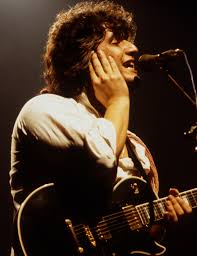
Pino Daniele was an iconic figure in Italian music, celebrated for his unique ability to blend traditional Neapolitan sounds with a variety of global influences. Born on March 19, 1955, in Naples, Italy, Daniele grew up in a family of five siblings. From an early age, he was captivated by music, picking up his first guitar at the tender age of 14, marking the beginning of a remarkable career that would span several decades.
The Early Years: Passion for Music
During the early 1970s, Pino Daniele immersed himself in the vibrant music scene of the era, seeking to create something entirely new by merging different genres and sounds. His early experiences with small musical groups, such as the “New Jet,” where he played alongside his close friend Gino Giglio, were crucial in shaping his musical journey. These formative years involved performing at various local events, gradually earning recognition and respect from the public.
By 1977, after years of dedication and hard work, Pino Daniele’s breakthrough came with the release of his debut album, Terra Mia, under the EMI label. The album featured songs that would go on to become timeless classics in his career, such as ‘Na tazzulella ‘e cafè and Napule è. Even at this early stage, Daniele’s ambition was clear: to fuse traditional Neapolitan music with rock and blues, creating a new and distinctive sound that would later be known as the “Neapolitan Sound.”
The Rise to Fame: A New Musical Language
Pino Daniele’s quest to innovate was not without its challenges. His frequent use of the Neapolitan dialect in his lyrics initially limited his audience, as the language was not easily understood by all. However, this barrier began to dissolve with the release of his self-titled album Pino Daniele in 1979, which included the now-legendary track Je so’ pazzo. This song resonated with a broader audience, and Daniele’s talent caught the attention of prominent figures like Renzo Arbore, who invited him to perform on popular radio and television shows such as Alto gradimento and L’altra domenica. This exposure helped solidify Daniele’s reputation as a rising star in Italian music.
The real breakthrough came with the release of his subsequent albums, Nero a metà (1980) and Vai mò (1981). These albums contained some of Daniele’s most celebrated tracks, including Yes I know my way, A me me piace ‘o blues, and Quanno chiove, which showcased his mastery of blending blues, rock, and traditional Neapolitan music. With a top-notch band featuring musicians like James Senese on sax, Toni Esposito on percussion, Tullio De Piscopo on drums, Joe Amoruso on piano and keyboards, and Rino Zurzolo on bass, Pino Daniele embarked on tours across Italy, filling stadiums in major cities and cementing his status as a major musical force.
International Recognition and Musical Evolution
In 1982, Pino Daniele continued to expand his musical horizons with the album Bella ‘mbriana, which incorporated European rhythms and melodies, further enriching his sound. His collaboration with internationally renowned session musicians, such as bassist Alphonso Johnson and saxophonist Wayne Shorter, helped introduce his music to audiences beyond Italy’s borders.
The mid-1980s saw Daniele exploring new sonic territories, producing albums like Common Ground for Richie Havens in 1983 and establishing his own recording studio, BAGARIA, in Formia, a town near Naples. It was here that he recorded the album Musicante (1984) and the double live album Sciò Live, which captured his ability to blend blues, rock, jazz, and Neapolitan music into a cohesive and dynamic performance.
By 1985, with the release of Ferryboat, Pino Daniele had firmly established himself as a creative force in the Italian music scene. This album, crafted with the participation of great artists like Gato Barbieri and Steve Gadd, demonstrated Daniele’s relentless pursuit of new sounds and melodies. His desire for change and evolution was further evident in his 1987 album Bonne Soirée.
Health Struggles and Collaborations with Cinema
In 1988, Pino Daniele released Schizzechea with love, an album that earned him the prestigious Tenco Prize. However, around this time, he faced serious health issues, which were fortunately resolved with the support of close friends like Rosario Jermano and actor-director Massimo Troisi. Daniele’s collaboration with Troisi was particularly fruitful; he composed the music for Troisi’s films Le vie del signore sono finite (1989) and Pensavo fosse amore invece era un calesse (1991). The soundtrack for the latter included the song Quando, one of Daniele’s most beloved tracks.
The late 1980s and early 1990s were a period of intense creativity for Daniele. In 1989, he released the album Mascalzone latino, which included the song Anna verrà, dedicated to the legendary actress Anna Magnani. This album, along with his collaboration with American jazz guitarist Mick Goodrick on Un uomo in blues (1990) and Sotto ‘o sole (1991), which featured reworkings of older songs and new tracks like Quando and ‘O ssaje comme fa ‘o core, highlighted Daniele’s ability to continually reinvent himself.
The 1990s: Continued Success and New Collaborations
In 1993, Pino Daniele released Che Dio ti benedica, an album that saw collaborations with jazz luminaries like Chick Corea and Ralph Towner. The album was a critical and commercial success, leading to a memorable tour across Italy and Europe.
As the mid-1990s approached, Pino Daniele entered a new phase of his musical career. With the release of Non calpestare i fiori nel deserto in 1995 and Dimmi cosa succede sulla terra in 1997, Daniele began to move away from the Neapolitan dialect, collaborating with prominent artists in the Italian music scene, including Giorgia, Irene Grandi, Almamegretta, and Jovanotti.
To mark the 20th anniversary of his debut album, Pino Daniele released The Best of Yes I know my way in 1997, a compilation that featured reworked versions of 13 of his most famous songs, along with three new tracks: Amore senza fine, Per te (an instrumental piece), and Senza peccato, which was recorded with the participation of the British band Simple Minds. This album marked a significant transformation for Daniele, both musically and in terms of his public image, as he adopted a new look with short hair and a goatee.
The 2000s: Legacy and Final Years
In 1999, Pino Daniele released the album Come un gelato all’equatore, followed by Medina in 2001. The latter album saw a return to his musical roots, with some tracks written in the Neapolitan dialect, reflecting his desire to stay connected to his origins while exploring future musical directions.
Throughout the early 2000s, Pino Daniele continued to make his mark on the Italian music scene. In 2002, he organized a major tour with fellow Italian music legends Francesco De Gregori, Fiorella Mannoia, and Ron. This period also saw the release of the album Pino Daniele Project – Passi D’Autore in April 2004, which included a track dedicated to the legendary footballer Diego Armando Maradona, titled Tango della buena suerte.
In honor of Pino Daniele’s nearly 30-year career, EMI released a three-disc compilation album, Pino Daniele Platinum Collection, in June 2004. This comprehensive collection featured 53 tracks that spanned the entirety of Daniele’s career, offering a rich overview of his contributions to music.
The End of an Era: A Legacy Remembered
Tragically, Pino Daniele’s life was cut short when he passed away from a heart attack on the night of January 4, 2015, while at his home in Magliano, Tuscany. His death marked the end of an era for Italian music, but his legacy lives on through his timeless music, which continues to inspire and resonate with fans around the world.
Pino Daniele’s career was a testament to his relentless pursuit of musical innovation, his deep connection to his Neapolitan roots, and his ability to bridge the gap between tradition and modernity. His influence on Italian music is immeasurable, and his work remains a vital part of the cultural fabric of Italy and beyond.


