
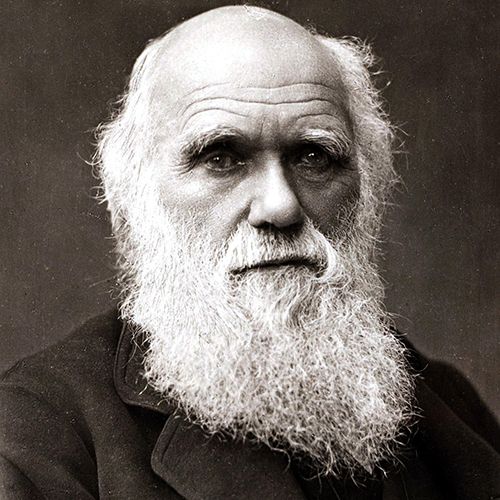
Charles Darwin, born on February 12, 1809, in Shrewsbury, Shropshire, England, is one of the most influential figures in the history of science. His groundbreaking work on the theory of evolution by natural selection has fundamentally altered our understanding of life on Earth. Darwin’s ideas continue to provoke debate and inspire research in biology, genetics, and anthropology. This article explores Darwin’s life, his rise to fame, the development of his ideas, and the lasting impact of his work on science and society.
Early Life and Education
Charles Darwin was born into a well-to-do family in England. His father, Robert Darwin, was a successful physician, and his grandfather, Erasmus Darwin, was a noted physician, poet, and natural philosopher who had also written about evolution. Growing up in such an intellectually stimulating environment, Darwin was exposed to the world of science and natural history from a young age.
Despite this, Darwin’s early academic journey was not particularly remarkable. He attended the Shrewsbury School, where he was considered an average student. His father initially encouraged him to pursue a career in medicine, leading him to enroll at the University of Edinburgh in 1825. However, Darwin found the lectures dull and the sight of surgery without anesthesia distressing, prompting him to abandon his medical studies.
In 1827, Darwin’s father, hoping to guide him towards a stable career, sent him to Christ’s College, Cambridge, to study for a career in the Church of England. While at Cambridge, Darwin became more interested in natural history, particularly geology and botany. He was greatly influenced by his cousin William Darwin Fox and the botanist John Stevens Henslow, who became his mentor. It was during this period that Darwin’s passion for the natural world began to take shape, laying the foundation for his future scientific endeavors.
The Voyage of the Beagle: A Turning Point
The defining moment in Darwin’s life came in 1831 when he was invited to join the HMS Beagle as a naturalist for a survey expedition around the world. This journey, which lasted from 1831 to 1836, was pivotal in shaping Darwin’s scientific ideas and his understanding of the natural world.
The Beagle’s mission was to chart the coastlines of South America, but for Darwin, it was an opportunity to observe diverse species and collect a wealth of specimens. Throughout the voyage, Darwin meticulously documented his observations of geology, flora, fauna, and fossils. These observations led him to question the prevailing views of creationism, which held that species were immutable and created separately by divine intervention.
One of the most significant stops on the voyage was the Galápagos Islands, where Darwin observed variations in the beaks of finches on different islands. These variations suggested that the finches had adapted to their environments, leading Darwin to consider the possibility that species might change over time through a process of natural selection.
Developing the Theory of Evolution
After returning to England in 1836, Darwin began to systematically analyze the vast amounts of data and specimens he had collected during the Beagle voyage. Over the next two decades, he refined his ideas on evolution, drawing on the work of other scientists such as Thomas Malthus, whose essay on population growth influenced Darwin’s thinking about competition and survival.
In 1839, Darwin published his first major work, The Voyage of the Beagle, which documented his journey and observations. The book was well-received and established Darwin as a respected naturalist. However, he remained cautious about publishing his ideas on evolution, knowing that they would be controversial and potentially damaging to his reputation.
Darwin’s hesitation was partly due to the deeply religious context of Victorian England, where the idea of species evolving through natural processes challenged the established belief in divine creation. Nevertheless, Darwin continued to work on his theory in private, amassing a significant body of evidence to support his ideas.
In 1858, Darwin received a letter from Alfred Russel Wallace, a fellow naturalist who independently arrived at a similar theory of evolution by natural selection. This prompted Darwin to finally publish his work. In 1859, he released On the Origin of Species, a seminal work that laid out the evidence for evolution and introduced the concept of natural selection.
The Impact of On the Origin of Species
On the Origin of Species was a groundbreaking publication that forever changed the way humans understand their place in the natural world. Darwin’s theory of evolution by natural selection provided a scientific explanation for the diversity of life on Earth, challenging the prevailing religious and philosophical views of the time.
The book was a scientific success, quickly selling out its first edition. However, it also sparked intense debate and controversy, particularly among religious groups who saw it as a direct challenge to the biblical account of creation. The idea that humans shared a common ancestor with other animals was especially provocative, leading to widespread criticism and rejection by those who adhered to the idea of special creation.
Despite the controversy, Darwin’s work was embraced by many in the scientific community. It provided a unifying theory for biology, explaining how species adapted to their environments and how new species emerged over time. Darwin’s meticulous documentation and logical reasoning convinced many scientists of the validity of his theory, even if it took decades for the broader public to accept it fully.
The Legacy of Charles Darwin
Charles Darwin’s contributions to science extend far beyond his theory of evolution. His work laid the foundation for modern biology and has influenced a wide range of scientific disciplines, including genetics, anthropology, paleontology, and ecology. Darwin’s ideas have also had a profound impact on philosophy, ethics, and religion, prompting new discussions about the relationship between science and faith.
One of Darwin’s most significant legacies is the concept of natural selection, which remains a cornerstone of evolutionary biology. The idea that species evolve through the differential survival and reproduction of individuals with advantageous traits has been supported by countless studies and is now a fundamental principle in the life sciences.
Darwin’s work also inspired future generations of scientists to explore the mechanisms of evolution further. The discovery of DNA and the development of the field of genetics in the 20th century provided a molecular basis for Darwin’s theory, confirming and expanding upon his ideas. The Modern Synthesis, a mid-20th-century fusion of Darwin’s theory with Mendelian genetics, solidified evolution as the unifying theory of biology.
Personal Life and Later Years
While Charles Darwin’s scientific achievements are well-documented, his personal life was marked by challenges, including chronic illness and the loss of loved ones. After returning from the Beagle voyage, Darwin married his cousin, Emma Wedgwood, in 1839. The couple had ten children, though three died in infancy, and another, Annie, died at the age of ten—a loss that deeply affected Darwin.
Throughout his life, Darwin suffered from various health issues, including chronic fatigue, gastrointestinal problems, and heart palpitations. These ailments, possibly contracted during the Beagle voyage, often left him bedridden for weeks or months at a time. Despite his poor health, Darwin remained intellectually active, continuing his research and correspondence with other scientists.
Darwin’s health challenges did not prevent him from making significant contributions to science in his later years. He published several more books, including The Descent of Man (1871), in which he applied his theory of evolution to human beings, and The Expression of the Emotions in Man and Animals (1872), which explored the evolutionary basis of emotions.
Darwin’s later work continued to provoke controversy, particularly his assertion that human beings evolved through the same processes as other animals. However, by this time, his ideas had gained wider acceptance in the scientific community, and his reputation as a leading figure in natural history was firmly established.
Death and Burial at Westminster Abbey
Charles Darwin died on April 19, 1882, at the age of 73. His death marked the end of a life dedicated to the pursuit of knowledge and the advancement of science. Despite the controversies surrounding his work, Darwin was widely respected by his peers, and his contributions to science were recognized with numerous honors during his lifetime.
Darwin was buried in Westminster Abbey in London, a testament to the impact of his work on British society and the world at large. His burial in such a prestigious location, near the graves of other scientific luminaries like Isaac Newton, signified the importance of his contributions to human understanding.
Continuing Influence and Modern Interpretations
Charles Darwin’s influence extends well beyond his own time, and his ideas continue to shape modern scientific thought. Evolutionary biology remains a vibrant field of study, with ongoing research exploring the mechanisms of evolution, the origins of species, and the complexities of genetic inheritance.
Darwin’s work also continues to inform debates on a range of social and ethical issues, from education and religion to the implications of genetic engineering and biotechnology. The ongoing relevance of Darwin’s ideas is a testament to the power of his theory to explain the natural world and its processes.
In recent years, Darwin’s life and work have been the subject of numerous biographies, documentaries, and scholarly studies, further cementing his status as one of the most important figures in the history of science. His contributions are celebrated annually on February 12, known as Darwin Day, which honors his legacy and promotes the public understanding of science.
Conclusion: The Enduring Legacy of Charles Darwin
Charles Darwin’s life and work represent a turning point in the history of science. His theory of evolution by natural selection challenged long-held beliefs about the origins of life and provided a scientific framework for understanding the diversity of species. Despite the controversies and challenges he faced, Darwin’s ideas have endured and continue to influence scientific research and thought today.
Darwin’s legacy is not only found in the field of biology but also in the broader cultural and intellectual landscape. His work has prompted new ways of thinking about humanity’s place in the natural world and has inspired generations of scientists to explore the mysteries of life on Earth. As we continue to uncover the complexities of evolution and the origins of species, Darwin’s contributions will remain a guiding light in the pursuit of knowledge.


