
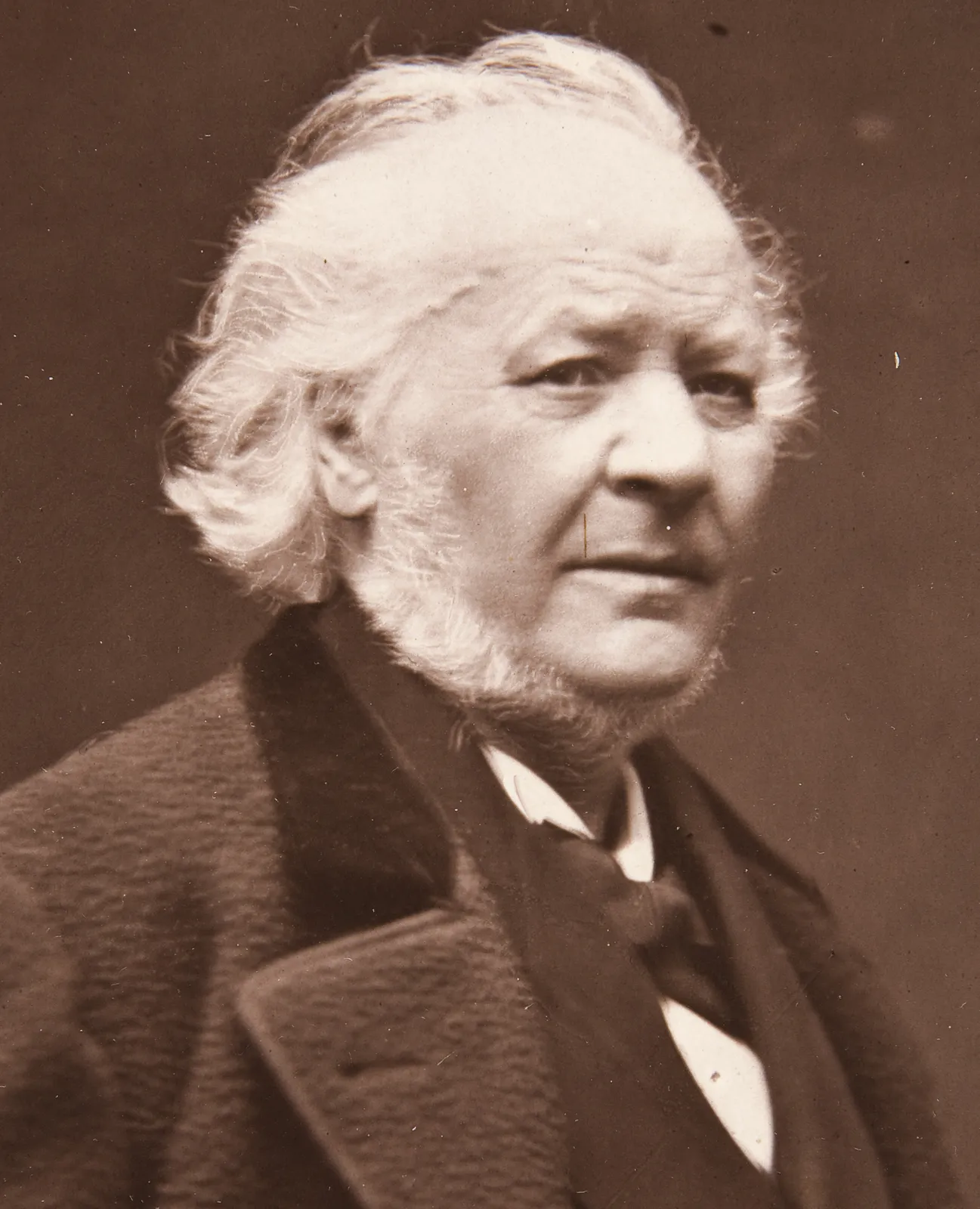
Honoré Daumier is a name that echoes throughout the annals of art history, representing an era where satire, social consciousness, and realism intersected in powerful and often controversial ways. Born on February 26, 1808, in Marseille, France, Daumier’s life and works are emblematic of the struggles and triumphs of 19th-century France. His career as a painter, sculptor, and, most notably, as a caricaturist, left an indelible mark on both the art world and the society he sought to critique. This article explores the life of Honoré Daumier, his rise to fame, and the key highlights that define his artistic legacy.
Early Life and Artistic Beginnings
Honoré Daumier was born into a modest family in Marseille. His father, Jean Baptiste Louis, was a multifaceted craftsman and aspiring poet, while his mother, Cécile Catherine Philip, managed the household. The family moved to Paris when Daumier was still young, a decision that would profoundly influence his future career. Paris, the vibrant cultural and political hub of France, provided the fertile ground on which Daumier’s artistic talents would flourish.
From an early age, Daumier displayed a keen interest in art, particularly in drawing. However, the financial constraints of his family meant that formal education in the arts was not immediately accessible. Despite this, Daumier pursued his passion, taking up jobs as an assistant to a bailiff and a bookseller while honing his skills in his spare time. His determination and natural talent did not go unnoticed, and he eventually found a mentor in the artist Alexandre Lenoir, under whose guidance Daumier began his formal training in art.
The Caricaturist Emerges: Satire and Social Commentary
Daumier’s artistic career truly began to take shape in the 1820s, a time of political upheaval and social change in France. The fall of Charles X and the rise of Louis-Philippe marked the end of the Bourbon Restoration and the beginning of a new liberal bourgeois order. It was within this context that Daumier found his voice as a caricaturist, using his art to critique and satirize the society around him.
In 1830, Daumier began working for the satirical newspaper La Caricature, where he published some of his most famous and biting works. His lithographs were characterized by their sharp wit and incisive social commentary, often targeting the bourgeoisie and the political establishment. One of his most infamous pieces, “Gargantua,” depicted King Louis-Philippe as a grotesque, gluttonous figure consuming the wealth of the nation. This piece was so controversial that it led to Daumier’s imprisonment for six months, a testament to the power of his art and its impact on the public consciousness.
Daumier’s work during this period was not limited to political satire. He also produced a vast number of lithographs that depicted the everyday lives of the French people, capturing the struggles and injustices faced by the lower classes. Through his art, Daumier gave a voice to the voiceless, shining a light on the social issues of his time with a blend of humor, empathy, and sharp criticism.
The Shift to Painting and Sculpture
While Daumier is most renowned for his lithographs and caricatures, his artistic endeavors were not confined to these mediums. In the 1840s, Daumier began to focus more on painting and sculpture, influenced by his friendships with prominent artists of the time, including Eugène Delacroix, Charles-François Daubigny, and Jean-Baptiste Camille Corot. These relationships enriched Daumier’s artistic expression, allowing him to explore new themes and techniques.
Daumier’s paintings, much like his lithographs, often depicted scenes of everyday life, but with a greater emphasis on realism. He sought to portray the human condition with honesty and without embellishment, a hallmark of the Realist movement to which he is often associated. His works, such as “The Third-Class Carriage,” capture the somber realities of the working class, depicting their plight with a poignant mix of empathy and realism.
Despite his significant contributions to painting and sculpture, Daumier’s work in these fields was not as widely recognized during his lifetime. His style was considered unconventional, and he struggled to find commercial success as a painter. Nevertheless, his commitment to his craft and his belief in the power of art to reflect and challenge society remained unwavering.
Personal Life: Struggles and Resilience
Honoré Daumier’s personal life was marked by both triumph and hardship. His marriage to Marie-Alexandrine Dassy in 1846 provided him with a brief period of stability and companionship. However, the couple faced financial difficulties, exacerbated by Daumier’s lack of commercial success in painting. The latter part of his life was particularly challenging, as he struggled with poverty and declining health.
By the 1860s, Daumier had lost much of his sight, a devastating blow to an artist whose work relied so heavily on his ability to observe and depict the world around him. Despite this, he continued to create, relying on his deep understanding of form and composition. His final years were spent in relative obscurity, supported by a few loyal friends, including Corot, who provided both financial assistance and companionship.
Daumier’s resilience in the face of adversity is one of the defining features of his life. He remained committed to his art, even as he faced personal and financial hardships, and continued to produce work that challenged societal norms and inspired future generations of artists.
Legacy and Impact on Art
Honoré Daumier’s legacy is vast and multifaceted. He is often regarded as one of the pioneers of modern caricature and social satire, setting a standard for political and social commentary in art that continues to influence artists today. His ability to capture the essence of his subjects with a few strokes of his pen or brush is a testament to his skill and insight as an artist.
Daumier’s work as a caricaturist laid the groundwork for the development of satirical art in the 19th and 20th centuries. His influence can be seen in the works of later artists and cartoonists who sought to use humor and satire as tools for social and political critique. His lithographs, with their blend of realism and caricature, also played a crucial role in the evolution of the Realist movement, bridging the gap between satire and fine art.
In addition to his contributions to caricature and realism, Daumier is also considered a precursor to the Impressionist movement. His focus on capturing the fleeting moments of everyday life, his loose brushwork, and his emphasis on the effects of light and shadow were all elements that would later be central to the Impressionist style. Although Daumier never achieved the same level of fame as some of his contemporaries, his work has been recognized posthumously as a significant influence on the development of modern art.
Historical Context and Nuances
To fully appreciate Honoré Daumier’s contributions to art and society, it is essential to understand the historical context in which he lived and worked. The 19th century was a period of significant social, political, and economic change in France, marked by revolutions, the rise of the bourgeoisie, and the struggles of the working class. Daumier’s art was deeply rooted in these dynamics, reflecting the tensions and contradictions of his time.
Daumier’s work can be seen as a response to the social and political upheavals of the era. His caricatures were not just humorous depictions of politicians and bourgeois figures but were also sharp critiques of the power structures and inequalities that defined 19th-century French society. Through his art, Daumier gave voice to the frustrations and aspirations of the common people, challenging the status quo and advocating for social justice.
The restrictions on freedom of the press during Louis-Philippe’s reign also played a significant role in shaping Daumier’s career. The government’s attempts to censor and control the media pushed Daumier and other artists to find new ways to express their dissent. This environment of censorship and repression only served to heighten the impact of Daumier’s work, making his satire even more potent and provocative.
The Influence of Media and Public Perception
Honoré Daumier’s relationship with the media was complex. As a caricaturist, he worked within the very medium that he often critiqued. His lithographs were published in popular satirical newspapers such as La Caricature and Le Charivari, reaching a wide audience and making him a household name in France. However, this exposure also made him a target for government censorship and legal action, as evidenced by his imprisonment following the publication of “Gargantua.”
Despite these challenges, Daumier’s work remained popular among the public, who appreciated his wit, humor, and keen social insight. His ability to capture the essence of the political and social climate of his time resonated with readers, making his work both relevant and influential. Daumier’s legacy as a master of satire and social commentary continues to be celebrated today, with his work serving as a powerful reminder of the role of art in challenging societal norms and advocating for change.
Conclusion
Honoré Daumier’s life and work are a testament to the power of art as a tool for social critique and change. From his early days as a struggling artist in Paris to his rise as one of the most influential caricaturists of his time, Daumier’s career was marked by a relentless pursuit of truth and justice. His ability to capture the complexities of 19th-century French society, combined with his innovative approach to art, has left a lasting impact on the world of art and beyond.
Today, Daumier is remembered not only as a master caricaturist but also as a pioneer of realism and a precursor to modern art movements such as Impressionism. His work continues to inspire artists and thinkers around the world, serving as a powerful reminder of the enduring relevance of art in shaping and reflecting the human experience.
In summary, Honoré Daumier was not just an artist; he was a visionary who used his talents to challenge the status quo and advocate for the marginalized. His life and career offer valuable insights into the role of art in society, the importance of social and political engagement, and the enduring power of satire as a tool for change.


