
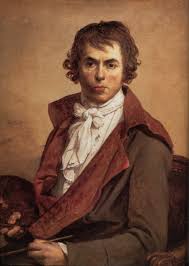
Jacques-Louis David, born on August 30, 1748, in Paris, is a figure of immense historical and artistic significance. As one of the most prominent painters of the Neoclassical movement, David’s work was deeply intertwined with the political upheavals of his time, particularly the French Revolution and the rise of Napoleon Bonaparte. His paintings not only reflect the aesthetic ideals of Neoclassicism but also serve as powerful political statements that capture the spirit of an era defined by radical change. This article delves into the life of Jacques-Louis David, exploring his age, rise to fame, and the key highlights that define his illustrious career.
Early Life and Artistic Formation
Jacques-Louis David was born into a middle-class family in Paris. His father, Louis-Maurice David, was a merchant who died in a duel when Jacques-Louis was only nine years old. Following this tragic event, his mother, Marie-Geneviève Buron, sent him to live with his uncles, who were architects. Despite this family tragedy, David’s early life in Paris was relatively stable, and he was afforded a good education.
David showed a talent for drawing from a young age, and his uncles encouraged this interest. Although they initially hoped he would pursue a career in architecture, David was more inclined towards painting. His artistic journey began when he enrolled in the Académie Saint-Luc, where he honed his skills in drawing and painting.
In 1766, David joined the studio of Joseph-Marie Vien, a successful painter and a leading figure in the early Neoclassical movement. Vien’s influence on David was profound, and under his tutelage, David developed a strong foundation in the principles of Neoclassicism, which emphasized a return to the classical ideals of simplicity, symmetry, and moral virtue in art.
Struggles and Successes: The Prix de Rome
David’s early career was marked by both struggles and successes. He first attempted to win the prestigious Prix de Rome in 1771 with his painting “Combat of Mars and Minerva,” but only managed to secure second place. His subsequent attempts in 1772 and 1773 with “Diana and Apollo Killing Niobe’s Children” and “The Death of Seneca” also failed to win the top prize, leaving David deeply frustrated and contemplating giving up his artistic ambitions.
However, in 1774, David finally won the Prix de Rome with his painting “Erasistratus Discovering the Cause of Antiochus’ Disease.” This victory was a turning point in his career, as it allowed him to study in Rome, where he would be profoundly influenced by the classical art and architecture of antiquity. The time he spent in Italy was crucial in solidifying his commitment to Neoclassicism, and it was here that he began to develop the distinctive style that would later define his career.
The Return to Paris and Rise to Prominence
Upon his return to Paris in 1780, David was determined to establish himself as a leading painter of his generation. His work during this period reflected his deepening commitment to the principles of Neoclassicism. In 1784, he completed “The Oath of the Horatii,” a painting that would cement his reputation as the foremost painter of the Neoclassical style.
“The Oath of the Horatii” is one of David’s most famous works, embodying the ideals of Neoclassicism with its emphasis on patriotism, sacrifice, and moral virtue. The painting depicts a scene from Roman history in which three brothers swear an oath to defend Rome to the death. The composition is marked by its clarity, balance, and dramatic use of light and shadow, all of which serve to heighten the emotional intensity of the scene.
The success of “The Oath of the Horatii” brought David widespread acclaim and numerous commissions. His work became increasingly associated with the political ideals of the French Revolution, and he used his art to promote the revolutionary cause. His paintings from this period, including “The Death of Socrates” (1787) and “Brutus Receiving the Bodies of His Sons” (1789), reflect his deep engagement with the political and social issues of his time.
The French Revolution and Political Involvement
As the French Revolution unfolded, Jacques-Louis David became increasingly involved in the political life of France. He was a fervent supporter of the Revolution and used his art to promote its ideals. David’s most famous revolutionary painting, “The Death of Marat” (1793), depicts the murdered revolutionary leader Jean-Paul Marat as a martyr for the cause. The painting is both a powerful political statement and a masterful work of art, combining the realism of Marat’s lifeless body with the idealism of his sacrifice for the Revolution.
David’s involvement in the Revolution went beyond his art. He was an active member of the Jacobin Club, the most radical political group of the time, and he served as a deputy in the National Convention. During the Reign of Terror, David was closely associated with Maximilien Robespierre and played a key role in organizing revolutionary festivals and propaganda. His political activities during this period were both influential and controversial, and they left a lasting impact on his legacy.
The Napoleonic Era: David as the Court Painter
After the fall of Robespierre and the end of the Reign of Terror, David was imprisoned for a time but was eventually released. With the rise of Napoleon Bonaparte, David found a new patron in the form of the ambitious military leader who would soon become Emperor of France. David became Napoleon’s official court painter, and his work during this period reflects his close association with the Napoleonic regime.
One of David’s most famous works from this period is “The Coronation of Napoleon” (1807), a monumental painting that depicts the moment when Napoleon crowned himself Emperor in 1804. The painting is notable for its grandeur and attention to detail, as well as its ability to convey the power and authority of Napoleon. David’s work during the Napoleonic era also includes “Napoleon Crossing the Alps” (1801), which portrays Napoleon as a heroic figure leading his troops across the mountains.
David’s association with Napoleon brought him both fame and fortune, but it also tied his fortunes to those of the Emperor. When Napoleon was defeated and the Bourbon monarchy was restored, David’s political past and his close ties to the Napoleonic regime made him a target for retribution.
Exile and Later Years
Following the defeat of Napoleon at the Battle of Waterloo in 1815, Jacques-Louis David was forced into exile. He fled to Brussels, where he continued to work as a painter, though his later years were marked by a decline in both his fortunes and his influence. Despite this, David continued to produce significant works, including “Mars Disarmed by Venus and the Three Graces” (1824), a painting that reflects his continued commitment to the ideals of classical art.
David’s exile in Brussels was a difficult period for the aging artist. He was isolated from the artistic community in Paris, and his health began to deteriorate. In 1825, he suffered a paralysis that left him unable to paint, and he died on December 29 of that year. His body was buried in Brussels, but his heart was later interred in the Père Lachaise Cemetery in Paris, a final connection to the city where he had made his name.
Legacy and Impact on Art
Jacques-Louis David’s impact on the art world is profound and enduring. He is widely regarded as the leading figure of the Neoclassical movement, and his work played a key role in shaping the direction of European art in the late 18th and early 19th centuries. David’s paintings are characterized by their clarity, precision, and moral seriousness, all hallmarks of the Neoclassical style.
David’s influence extended beyond his own work to the many students who studied under him. His atelier in Paris was one of the most important centers of artistic training in Europe, and his students included some of the most prominent painters of the next generation, such as Jean-Auguste-Dominique Ingres and Antoine-Jean Gros. Through his teaching, David helped to spread the principles of Neoclassicism across Europe, ensuring that his influence would continue to be felt long after his death.
David’s work also reflects the complex relationship between art and politics. His paintings are not only masterpieces of Neoclassical art but also powerful expressions of the political and social ideals of his time. Whether promoting the values of the French Revolution or celebrating the achievements of Napoleon, David’s art is inseparable from the historical context in which it was created.
Historical Context and Nuances
To fully appreciate Jacques-Louis David’s contributions to art and history, it is essential to understand the historical context in which he lived and worked. David’s career spanned a period of profound change in France, from the final years of the Ancien Régime to the rise and fall of Napoleon. His work reflects the shifting political and social currents of this turbulent era, and his involvement in the Revolution and the Napoleonic regime makes him a key figure in the history of both art and politics.
David’s commitment to Neoclassicism was not just an aesthetic choice but also a political statement. In an age of revolution, David saw classical art as a means of expressing the values of civic virtue, patriotism, and moral integrity. His paintings were intended not only to delight the eye but also to instruct and inspire, to serve as visual embodiments of the ideals of the Enlightenment and the Revolution.
David’s legacy is thus not only that of a great painter but also that of a visionary who used his art to engage with the great issues of his time. His work continues to be studied and admired for its technical brilliance, its intellectual depth, and its profound engagement with the moral and political questions of the modern world.
Conclusion
Jacques-Louis David’s life and work are a testament to the power of art to shape and reflect the world around us. As the leading figure of the Neoclassical movement, David revolutionized European painting and left an indelible mark on the history of art. His work embodies the ideals of an era that sought to rediscover the values of the classical past while grappling with the challenges of the modern world.
David’s paintings are more than just beautiful works of art; they are powerful expressions of the political and social ideals that defined the French Revolution and the Napoleonic era. His influence on subsequent generations of artists is profound, and his legacy continues to be felt in the world of art today.
In summary, Jacques-Louis David was not just a painter but a figure who used his art to engage with the great issues of his time. His work offers valuable insights into the complex relationship between art, politics, and society, and his legacy remains an enduring testament to the power of art to shape our understanding of the world.


