
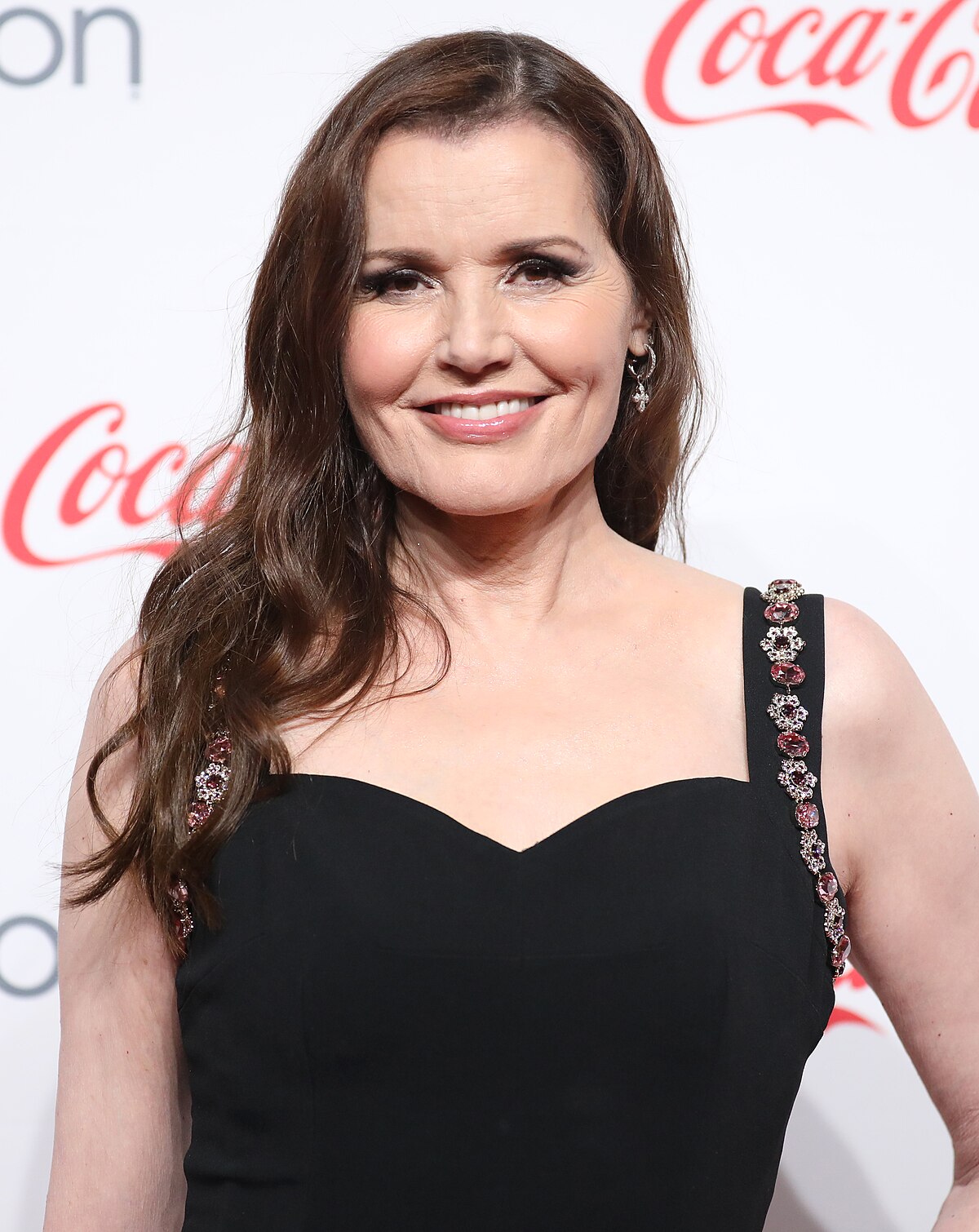
Geena Davis is a name that resonates deeply in the world of film, embodying a remarkable blend of talent, intelligence, and resilience. Born as Virginia Elizabeth Davis on January 21, 1956, in Wareham, Massachusetts, Geena Davis has carved out a distinguished career in Hollywood, becoming one of the most respected and beloved actresses of her time. From her early days as a model to her rise as an Oscar-winning actress, Davis’s journey is a testament to her determination, versatility, and commitment to her craft. This article delves into the life of Geena Davis, exploring her age, rise to fame, and the key highlights that define her extraordinary career.
Early Life and Education
Geena Davis was born into a middle-class family; her father, William F. Davis, was a civil engineer, and her mother, Lucille Cook, was a teacher’s aide. Growing up, Davis displayed an early interest in the arts and academics, which would later become central themes in her life. She was a bright student, excelling in school and showing a particular talent for music. Davis learned to play the piano, flute, and organ, and she even served as an organist at her local church.
After graduating from high school, Davis pursued higher education at New England College before transferring to Boston University, where she studied drama. Her time at Boston University was instrumental in shaping her future career, providing her with the formal training and experience necessary to navigate the competitive world of acting. Davis graduated with a degree in drama and moved to New York City to pursue her dreams of becoming an actress.
Early Career and Modeling
Before breaking into acting, Geena Davis worked as a model to support herself in New York. Her statuesque height of 6 feet (183 cm) and striking features quickly caught the attention of modeling agencies. Davis found early success as a model, even securing a spot in the prestigious Victoria’s Secret catalog. However, while modeling provided financial stability, Davis’s true passion remained in acting.
Her big break came when she caught the eye of director Sydney Pollack, who cast her in a small role in the 1982 film Tootsie. The film, starring Dustin Hoffman, was a major success and helped to launch Davis’s acting career. In Tootsie, Davis played the role of April Page, a naive but charming soap opera actress, showcasing her comedic timing and natural on-screen presence. This role, though minor, was a crucial stepping stone in Davis’s journey to stardom.
Rise to Fame: The 1980s and Early Success
The 1980s marked the beginning of Geena Davis’s rise to fame. Following her debut in Tootsie, Davis appeared in several television series, including Buffalo Bill and Sara, though neither show achieved significant success. Nevertheless, Davis’s persistence paid off when she landed a leading role in the 1986 science fiction horror film The Fly, directed by David Cronenberg. In The Fly, Davis played Veronica Quaife, a journalist who becomes romantically involved with a scientist undergoing a terrifying transformation. The film was both a critical and commercial success, solidifying Davis’s reputation as a talented and versatile actress.
Davis’s performance in The Fly also led to a personal relationship with her co-star, Jeff Goldblum. The two married in 1987, though their marriage ended in divorce three years later. Despite the personal challenges, Davis’s career continued to soar. In 1988, she starred in Beetlejuice, a dark comedy directed by Tim Burton, where she played Barbara Maitland, a recently deceased woman navigating the afterlife. Beetlejuice was a box office hit and has since become a cult classic, further elevating Davis’s status in Hollywood.
Academy Award Win and Iconic Roles
Geena Davis reached the pinnacle of her career in the late 1980s and early 1990s. In 1989, she starred in The Accidental Tourist, a drama directed by Lawrence Kasdan. Davis’s portrayal of Muriel Pritchett, a quirky and determined dog trainer, earned her widespread acclaim and her first Academy Award for Best Supporting Actress. The role showcased Davis’s ability to bring depth and complexity to her characters, cementing her status as one of Hollywood’s leading actresses.
The early 1990s brought Davis even greater success with two of her most iconic roles. In 1991, she starred alongside Susan Sarandon in Thelma & Louise, a groundbreaking film directed by Ridley Scott. The movie tells the story of two women who embark on a road trip that turns into a journey of liberation and self-discovery. Davis’s portrayal of Thelma Dickinson, a housewife who finds her strength and independence, resonated with audiences and critics alike. Thelma & Louise became a cultural touchstone, praised for its feminist themes and strong performances. Both Davis and Sarandon received Academy Award nominations for their roles, though the Oscar ultimately went to Jodie Foster for The Silence of the Lambs.
In 1992, Davis starred in A League of Their Own, a film about the All-American Girls Professional Baseball League during World War II. Directed by Penny Marshall, the film featured Davis as Dottie Hinson, the talented and charismatic catcher who leads her team to success. A League of Their Own was a box office hit and remains one of the most beloved sports films of all time. Davis’s performance as Dottie Hinson showcased her athleticism, comedic timing, and ability to carry a film, further solidifying her place in Hollywood history.
Challenges and Resilience in Hollywood
Despite her success, the mid-1990s presented new challenges for Geena Davis. In 1993, she starred in Hero and Angie, both of which received lukewarm responses from critics and audiences. However, it was her collaboration with director Renny Harlin that marked a significant turning point in her career. Davis married Harlin in 1993, and the two worked together on several films, including Cutthroat Island (1995) and The Long Kiss Goodnight (1996).
Cutthroat Island was a notorious box office flop, with production difficulties and financial losses contributing to its poor reception. Despite Davis’s strong performance as the pirate captain Morgan Adams, the film failed to resonate with audiences. The Long Kiss Goodnight, a thriller in which Davis played a suburban housewife with a secret past as an assassin, fared better critically but did not achieve the commercial success needed to revive Davis’s career at the time.
The challenges of the late 1990s led Davis to take a step back from the spotlight, focusing on her personal life and other interests. However, she remained a respected figure in Hollywood, known for her talent, intelligence, and dedication to her craft.
Personal Life and Advocacy
Geena Davis has always been more than just an actress. Her personal life reflects her multifaceted interests and commitment to social issues. In 2001, Davis married Dr. Reza Jarrahy, a prominent plastic surgeon, with whom she has three children. The couple divorced in 2018, but throughout their marriage, Davis remained dedicated to her family and balanced her career with her role as a mother.
In addition to her acting career, Davis is a passionate advocate for gender equality in media. In 2004, she founded the Geena Davis Institute on Gender in Media, an organization dedicated to increasing the representation of women in media and reducing gender stereotyping. The Institute conducts research, provides educational resources, and works with the entertainment industry to create more balanced and diverse portrayals of women and girls on screen.
Davis’s advocacy work has had a significant impact on the industry, leading to increased awareness of gender disparities in film and television. Her efforts have earned her numerous accolades, including the Jean Hersholt Humanitarian Award from the Academy of Motion Picture Arts and Sciences in 2019.
Continued Success and Legacy
Despite the challenges she faced in the mid-1990s, Geena Davis has continued to find success in her career. In the 2000s, she returned to television with the critically acclaimed series Commander in Chief (2005-2006), in which she played the first female President of the United States. The role earned Davis a Golden Globe Award for Best Actress in a Television Series – Drama, and the show further solidified her status as a trailblazer in Hollywood.
In addition to her work on screen, Davis has remained active in her advocacy efforts, using her platform to push for greater representation and diversity in the entertainment industry. Her work has inspired a new generation of women in Hollywood, and her legacy as a pioneer for gender equality in media is undeniable.
Historical Context and Nuances
To fully appreciate Geena Davis’s contributions to the entertainment industry, it is essential to consider the historical context in which she rose to fame. Davis’s career took off in the 1980s and 1990s, a time when Hollywood was dominated by male-led films and female characters were often relegated to secondary roles. Davis’s ability to break through these barriers and secure leading roles in major films was a significant achievement, paving the way for future generations of actresses.
Davis’s advocacy for gender equality in media also reflects broader societal shifts toward greater awareness of gender issues. Her work with the Geena Davis Institute on Gender in Media has been instrumental in challenging the status quo and pushing for more equitable representation of women on screen. In a time when conversations about gender equality and representation are more prominent than ever, Davis’s contributions to these discussions are more relevant than ever.
The Influence of Media and Public Perception
Geena Davis’s public image has always been closely tied to her on-screen roles and her advocacy work. The media has often portrayed her as a strong, intelligent, and capable woman, both in her acting roles and in real life. This portrayal has contributed to her status as a role model for women and girls, and her work continues to inspire those who seek to challenge traditional gender norms and push for greater equality.
However, the media’s focus on Davis’s personal life, particularly her marriages and divorces, has also shaped public perception of her. Despite these challenges, Davis has remained resilient, using her platform to advocate for important social issues and continue her work in the entertainment industry.
Conclusion
Geena Davis’s life and career are a testament to her talent, resilience, and commitment to making a difference in the world. From her early days as a model to her rise as an Oscar-winning actress and advocate for gender equality, Davis has consistently pushed boundaries and challenged the status quo. Her impact on the entertainment industry and her contributions to the fight for gender equality in media are lasting legacies that will continue to inspire future generations.
As Geena Davis continues to work both on and off screen, her influence on Hollywood and beyond remains profound. Her story serves as a reminder of the power of perseverance, the importance of representation, and the need for continued advocacy in the pursuit of equality. In summary, Geena Davis is not just an actress; she is a trailblazer, a role model, and a force for positive change in the world.


