
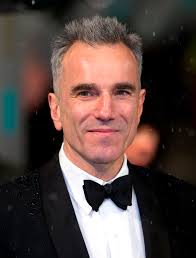
Daniel Day-Lewis, born on April 29, 1957, in London, is widely regarded as one of the greatest actors of his generation. Known for his deep commitment to his roles, Day-Lewis has set the standard for method acting, transforming himself into the characters he portrays with an intensity that is unparalleled. His journey through the world of cinema has been marked by both critical acclaim and popular success, making him a legendary figure in the history of film.
Early Life and Artistic Beginnings
Daniel Day-Lewis was born into a family steeped in artistic tradition. His father, Cecil Day-Lewis, was a celebrated Irish poet and novelist, while his mother, Jill Balcon, was a well-known British actress. Growing up in this environment, Day-Lewis was exposed to the arts from an early age, a factor that would greatly influence his future career.
Day-Lewis attended Sevenoaks School in Kent, one of the oldest schools in the United Kingdom, where he quickly found himself at odds with the strict discipline and traditional values of the institution. His rebellious spirit and strong sense of individuality clashed with the school’s rigid norms. This experience led him to transfer to Bedales School in London, a more progressive institution where he found the freedom to explore his artistic inclinations.
At the age of fourteen, Day-Lewis made his film debut with a small role in John Schlesinger’s “Sunday, Bloody Sunday” (1971). Although it was a minor part, this early exposure to the world of cinema sparked his interest in acting, setting him on a path that would eventually lead to international fame.
Theatrical Roots and Early Career
Day-Lewis’s initial foray into acting was through the theater, following in the footsteps of his mother. He spent the first two decades of his career honing his craft on the stage, working with prestigious theater companies and taking on a wide range of roles. His performances were marked by a deep introspection and a chameleon-like ability to disappear into his characters, traits that would later define his film career.
During this period, Day-Lewis also took on small roles in several films, including Richard Attenborough’s “Gandhi” (1982) and Marek Kanievska’s “Another Country” (1984). Despite his undeniable talent, these early film roles did not bring him widespread recognition, and he remained a relatively obscure figure in the acting world.
Breakthrough and Rise to Fame
Day-Lewis’s breakthrough came in 1985 with his role in Stephen Frears’s “My Beautiful Laundrette,” where he played a punk anti-clerical character. This performance, along with his role in James Ivory’s “A Room with a View” (1985), brought him to the attention of critics and audiences alike. However, it was his portrayal of Christy Brown in “My Left Foot” (1989) that truly catapulted him to international fame.
In “My Left Foot,” Day-Lewis played a man born with cerebral palsy who could only control his left foot. His immersive and intense performance earned him his first Academy Award for Best Actor, establishing him as one of the leading actors of his time. The film’s success marked the beginning of a career defined by a series of remarkable performances and accolades.
The Quest for Excellence
Following his Oscar win, Day-Lewis became known not only as a famous actor but also as a popular one, with a growing fan base and critical acclaim. However, unlike many of his peers, Day-Lewis shunned the spotlight, choosing to live a private life away from the Hollywood scene. He retreated to the countryside, far from the hustle and bustle of Los Angeles or London, and carefully selected his roles, often disappearing from the public eye for years at a time.
In 1992, Day-Lewis starred in “The Last of the Mohicans,” a film that further cemented his status as a leading man in Hollywood. His portrayal of Hawkeye, a rugged frontiersman, resonated with audiences and showcased his ability to embody diverse characters.
The following year, he starred in “In the Name of the Father” (1993), where he played Gerry Conlon, a man wrongly accused of terrorism. This role earned him another Academy Award nomination and solidified his reputation as an actor who could tackle complex and challenging roles with ease.
The Golden Era: Mastering the Craft
The 2000s marked a period of extraordinary artistic achievement for Day-Lewis. In 2002, he teamed up with director Martin Scorsese for “Gangs of New York,” where he played Bill “The Butcher” Cutting, a ruthless and violent gang leader. His performance was hailed as one of the finest of his career, and it earned him another Oscar nomination.
In 2007, Day-Lewis delivered what many consider his magnum opus in Paul Thomas Anderson’s “There Will Be Blood.” His portrayal of Daniel Plainview, a ruthless oilman, was nothing short of extraordinary. The role earned him his second Academy Award for Best Actor, and his performance was widely regarded as one of the greatest in the history of cinema.
Day-Lewis’s ability to delve deep into the psyche of his characters, combined with his meticulous attention to detail, set him apart from his contemporaries. His dedication to his craft was such that he would often remain in character for the duration of filming, fully immersing himself in the world of the story. This commitment to authenticity and realism has made his performances legendary and has earned him the respect of both his peers and audiences around the world.
Later Career and Legacy
In the 2010s, Day-Lewis continued to deliver powerful performances. He starred in Rob Marshall’s musical “Nine” (2009) and later took on the role of Abraham Lincoln in Steven Spielberg’s “Lincoln” (2012). His portrayal of the 16th President of the United States was nothing short of masterful, earning him his third Academy Award for Best Actor, a record that remains unmatched.
Day-Lewis’s final film role came in 2017 with “Phantom Thread,” directed by Paul Thomas Anderson. In this film, he played Reynolds Woodcock, a renowned fashion designer in 1950s London. Once again, Day-Lewis delivered a performance of unparalleled depth and nuance, proving that even in the twilight of his career, he remained at the top of his game.
After the release of “Phantom Thread,” Day-Lewis announced his retirement from acting, bringing an end to a career that spanned over four decades. His decision to step away from the spotlight was in keeping with his character—a man who has always valued his privacy and sought to maintain a sense of mystery around his persona.
The Legacy of Daniel Day-Lewis
Daniel Day-Lewis’s legacy in the world of cinema is undeniable. He is a true artist, an actor who has consistently pushed the boundaries of his craft and set new standards for what is possible in performance. His three Academy Awards for Best Actor are a testament to his extraordinary talent, but they only scratch the surface of his contributions to the art of acting.
Day-Lewis’s influence can be seen in the work of countless actors who have followed in his footsteps, inspired by his dedication and commitment to his roles. His approach to acting, characterized by a deep immersion into his characters and a relentless pursuit of authenticity, has left an indelible mark on the industry.
Even in retirement, Day-Lewis remains a towering figure in the world of cinema. His body of work continues to be studied and admired by film enthusiasts and scholars alike, and his performances are often cited as benchmarks of excellence.
Conclusion
In the annals of film history, Daniel Day-Lewis stands as a monumental figure—a master of his craft who has left an indelible mark on the world of cinema. From his early days in theater to his iconic film roles, Day-Lewis’s career has been characterized by a relentless pursuit of excellence and a deep commitment to his art. As we look back on his life and work, we are reminded of the transformative power of acting and the enduring legacy of one of the greatest actors of all time.


