
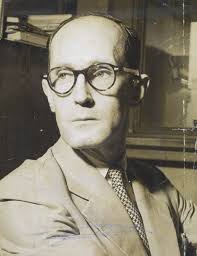
Carlos Drummond de Andrade, born on October 31, 1902, in the small mining town of Itabira, Brazil, stands as one of the most significant figures in Brazilian literature. His contributions to poetry and modernism in Brazil have left an indelible mark on the country’s cultural and literary landscape. Through his work, Drummond captured the complexities of human emotions, social issues, and the rapidly changing world around him. This article delves into the life of Carlos Drummond de Andrade, exploring his journey from a small-town boy to one of Brazil’s most revered poets.
Early Life and Education
Carlos Drummond de Andrade was born into a family of Portuguese descent, in the rural, mountainous region of Minas Gerais. His parents were landowners, and he grew up in a relatively comfortable environment, albeit one deeply connected to the traditional values and hardships of rural Brazil. The early 20th century was a period of transformation for Brazil, transitioning from an agrarian society to an industrializing nation, and these changes would significantly influence Drummond’s work.
Drummond’s formal education began in Belo Horizonte, the capital of Minas Gerais, and continued at a Jesuit school, the Anchieta College, in Nova Friburgo. This education exposed him to classical literature, but it also planted the seeds of rebellion against the rigid structures of traditional Brazilian society. The young Drummond was known for his keen intellect and a growing interest in literature, which eventually led him to the University of Minas Gerais, where he pursued a degree in pharmacy.
Despite earning his degree, Drummond never practiced as a pharmacist. His true passion lay in writing, and after completing his studies, he chose to follow his literary inclinations. This decision marked the beginning of a career that would see him become a central figure in Brazilian literature.
The Birth of a Poet: Early Literary Career
Drummond’s early works were characterized by a satirical tone, reflecting his discontent with the social and political conditions of Brazil. His first poems were published in newspapers and literary magazines, gaining him some recognition in the local literary circles. However, it was the influence of modernism, a movement that sought to break away from the traditional forms of expression, that truly shaped his poetic voice.
The 1920s were a pivotal time for Drummond as he became involved in the Brazilian modernist movement. Inspired by the works of fellow Brazilian writer Mário de Andrade (no relation), Drummond embraced modernism’s rejection of the ornate, sentimental language that had dominated Brazilian literature. Instead, he sought to express the realities of contemporary life in a straightforward, often ironic, manner.
In 1930, Drummond published his first poetry collection, Alguma Poesia (Some Poetry), marking his official debut in the Brazilian literary scene. This collection was a groundbreaking work that blended modernist principles with introspective themes, reflecting Drummond’s personal struggles and observations of society. His poetry was both deeply personal and universally resonant, exploring themes such as loneliness, the passage of time, and the human condition.
Rise to Prominence: The 1940s and Beyond
The 1940s were a significant period in Drummond’s career. His 1940 publication, Sentimento do Mundo (Feeling of the World), marked his rise to prominence as a poet of national and international stature. This collection, written during the tumultuous years of World War II, captured the anxieties and uncertainties of the time. The poems in Sentimento do Mundo are characterized by a blend of lyricism and irony, a juxtaposition that became a hallmark of Drummond’s style.
The war had a profound impact on Drummond, influencing the themes of his work. His poetry from this period reflects a deep concern with social issues, as well as a growing sense of disillusionment with the world. In A Rosa do Povo (The People’s Rose, 1945), Drummond’s focus shifted more explicitly to the collective experience, addressing the struggles and hopes of ordinary people. This collection is often regarded as one of his most powerful works, showcasing his ability to weave together personal and political themes with remarkable poignancy.
The Mature Poet: 1950s and 1960s
As Drummond entered the 1950s, his poetry began to take on a more introspective and philosophical tone. This period saw the publication of works such as Claro Enigma (Clear Enigma, 1951) and Fazendeiro do Ar (Farmer of the Air, 1954). These collections delve into themes of existential doubt, the mysteries of life, and the search for meaning in a world that often seems incomprehensible.
Claro Enigma is particularly noteworthy for its exploration of the tensions between clarity and ambiguity, order and chaos. The title itself suggests the paradoxical nature of the human experience, a theme that runs throughout the collection. Drummond’s language became increasingly refined, and his poetry from this period is marked by a contemplative, almost meditative quality.
In the 1960s, Drummond continued to experiment with form and content. His 1964 collection, Lição de Coisas (Lesson of Things), reflects his ongoing interest in the relationship between the material and the spiritual, the concrete and the abstract. This work, like much of Drummond’s poetry, is characterized by its ability to transform the mundane into the sublime, offering readers a fresh perspective on the world around them.
Later Years: 1970s and 1980s
The later years of Drummond’s life were marked by both personal and artistic evolution. In the 1970s, he published several important collections, including A falta que ama (The Lack that Loves), Nudez (Nakedness), and As Impurezas do Branco (The Impurities of White). These works continued to explore the complexities of human emotions, but they also introduced a more introspective and sometimes darker tone.
During this period, Drummond’s poetry became increasingly focused on themes of aging, memory, and mortality. His 1979 collection, Esquecer para Lembrar (Forget to Remember), reflects a poignant meditation on the passage of time and the inevitability of change. These later works are often tinged with a sense of melancholy, yet they also reveal a deepening wisdom and acceptance of life’s impermanence.
Drummond’s final years were marked by prolific output, even as he faced the challenges of aging. He continued to write until his death, producing works that resonate with a mature understanding of the human experience. His later poetry, such as Amar se aprende amando (Love is Learned by Loving, 1985) and Poesia Errante (Errant Poetry), often explores the themes of love, loss, and the search for meaning in the twilight of life.
Legacy and Impact on Brazilian Literature
Carlos Drummond de Andrade passed away on August 17, 1987, in Rio de Janeiro, at the age of 84. His death marked the end of an era in Brazilian literature, but his legacy continues to influence poets and writers around the world. Drummond’s body of work is vast, encompassing more than fifty books of poetry, prose, and essays. His poetry, characterized by its emotional depth, intellectual rigor, and linguistic innovation, has earned him a place among the greatest poets of the 20th century.
Drummond’s influence on Brazilian literature cannot be overstated. He is often regarded as a central figure in the modernist movement, and his work has been a touchstone for subsequent generations of Brazilian writers. His ability to capture the nuances of the human experience, while also addressing broader social and political issues, has made his poetry timeless and universally relevant.
In addition to his contributions to poetry, Drummond was also an accomplished prose writer, essayist, and journalist. His work in these areas further cemented his reputation as a versatile and insightful thinker, capable of engaging with a wide range of subjects. His essays, in particular, offer valuable insights into the cultural and intellectual currents of his time, reflecting his deep engagement with the world around him.
Conclusion
Carlos Drummond de Andrade’s life and work embody the rich complexities of Brazilian culture and the broader human experience. From his early days in the rural town of Itabira to his rise as a leading voice in Brazilian literature, Drummond’s journey was one of continuous exploration and growth. His poetry, with its blend of personal reflection and social commentary, remains a powerful testament to the enduring power of words.
As we reflect on Drummond’s legacy, we are reminded of the importance of poetry in capturing the essence of life—the joys and sorrows, the beauty and the pain. Drummond’s work continues to inspire, challenge, and comfort readers around the world, ensuring that his voice will resonate for generations to come.


