
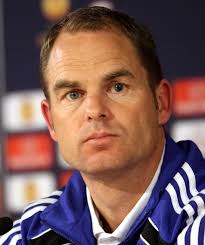
Frank de Boer is a name that resonates with football enthusiasts worldwide. Born on May 15, 1970, in Hoorn, Netherlands, Frank is one half of the famous de Boer twins, with his brother Ronald being the other. Frank de Boer has left an indelible mark on the world of football, both as a player and a coach. His journey through the football world is one of triumphs, challenges, and resilience. This article delves deep into the life of Frank de Boer, exploring his age, rise to fame, and key life highlights.
Early Life and Rise to Prominence
Frank de Boer’s football career began at a young age when he joined the youth academy of Ajax, one of the most prestigious football clubs in the Netherlands. He made his debut for Ajax’s first team in 1989, a moment that marked the beginning of an illustrious career. The following year, he won his first national championship with Ajax, setting the stage for what would be a highly successful period with the club.
During his time at Ajax, Frank de Boer won numerous titles, including five national championships (1990, 1994, 1995, 1996, and 1998), two Dutch Cups (1993 and 1998), three Dutch Supercups (1993, 1994, and 1995), a UEFA Cup (1992), a UEFA Champions League title (1995), a UEFA Super Cup (1995), and an Intercontinental Cup (1995). His versatility as a player, capable of playing as a defender or a midfielder, made him an invaluable asset to his team.
International Fame and Career
Frank de Boer’s success at Ajax earned him international recognition, leading to his transfer to FC Barcelona in January 1999. At Barcelona, he continued to showcase his exceptional skills, winning the La Liga title at the end of his first season. However, his career faced a significant setback in 2001 when he tested positive for nandrolone, a banned substance. Despite this challenge, de Boer continued to play for Barcelona until 2003 before moving on to other clubs, including Galatasaray in Turkey and Rangers in Scotland.
In 2006, after playing for Al-Rayyan and Al-Shamal in Qatar, Frank de Boer retired from professional football. However, his passion for the sport did not end with his retirement. He transitioned into coaching, starting with Ajax’s youth academy, where he worked from 2008. His coaching career took off in 2010 when he was appointed as the head coach of Ajax’s first team.
Coaching Career and Achievements
Frank de Boer’s coaching career began with a bang. In December 2010, he took over as Ajax’s head coach following the resignation of Martin Jol. His debut match was a 2-0 victory against AC Milan in the UEFA Champions League, a clear indication of his potential as a coach. Under his leadership, Ajax won the Eredivisie title in 2011, making him the third person in Dutch football history, after Rinus Michels and Ronald Koeman, to win the Dutch championship as both a player and a coach.
De Boer’s tenure at Ajax was marked by consistent success. He led the team to four consecutive Eredivisie titles from 2011 to 2014, an achievement that solidified his reputation as one of the top coaches in European football. Despite challenges in European competitions, where Ajax often struggled to progress beyond the group stages, de Boer’s domestic success was undeniable.
Challenges and Setbacks
Despite his domestic success, Frank de Boer’s coaching career has not been without its challenges. After leaving Ajax in 2016, de Boer had a brief and tumultuous stint at Inter Milan. His tenure at Inter was short-lived, lasting only a few months before he was dismissed due to a series of poor performances. This setback was followed by another brief tenure at Crystal Palace in 2017, where he was dismissed after just a few games, making it one of the shortest managerial tenures in Premier League history.
These challenges tested de Boer’s resilience, but he remained determined to succeed. In 2018, he took on a new challenge by moving to the United States to coach Atlanta United in Major League Soccer (MLS). His time at Atlanta United was marked by mixed results, but it provided him with valuable experience in a different footballing environment.
Return to National Duty
In 2020, Frank de Boer returned to the international stage when he was appointed as the head coach of the Netherlands national team. This appointment marked a significant milestone in his career, as he became the first Dutchman to captain the national team as a player and then lead it as a coach. His return to national duty was seen as an opportunity for redemption after the challenges he faced in club management.
As the head coach of the Netherlands, de Boer faced the daunting task of leading the team through the European Championship qualifiers and the tournament itself. His tenure was met with mixed reviews, with some praising his tactical acumen while others criticized his conservative approach. Nonetheless, his appointment as the national team coach was a testament to his enduring influence and reputation in Dutch football.
Historical Context and Legacy
To fully appreciate Frank de Boer’s impact on football, it is essential to consider the historical context of his career. Growing up in the Netherlands during the 1980s and 1990s, de Boer was part of a generation of Dutch players who were heavily influenced by the tactical innovations of Rinus Michels and Johan Cruyff. The principles of “Total Football,” which emphasized fluid movement, positional interchange, and technical excellence, were ingrained in de Boer’s playing and coaching philosophy.
As a player, de Boer was known for his technical ability, vision, and leadership on the field. His versatility allowed him to play in multiple positions, making him a key figure in any team he played for. These qualities translated into his coaching career, where he emphasized discipline, tactical organization, and a strong work ethic.
Frank de Boer’s legacy in football is multifaceted. As a player, he was part of one of the most successful eras in Ajax’s history, winning numerous domestic and international titles. As a coach, he led Ajax to unprecedented success in the Eredivisie, setting records that will be remembered for years to come. Despite the challenges he faced in his coaching career, particularly in his stints outside the Netherlands, de Boer’s contributions to football are undeniable.
The Man Behind the Fame
Beyond his achievements on the field and in the dugout, Frank de Boer is known for his calm and composed demeanor. He is a man of few words, preferring to let his actions speak for themselves. His leadership style is characterized by a focus on discipline, both on and off the field. This approach has earned him the respect of players and peers alike.
De Boer’s twin brother, Ronald, has also been a significant influence in his life. The two brothers have shared their football journey from their early days at Ajax to their respective coaching careers. Their close bond is evident in their mutual support and the way they have often been compared to each other in the media.
Conclusion
Frank de Boer’s life and career are a testament to the highs and lows of professional football. From his early days as a promising young player at Ajax to his rise as one of the top coaches in Europe, de Boer’s journey has been marked by both triumphs and challenges. His ability to adapt and overcome setbacks, whether as a player or a coach, speaks to his resilience and determination.
As of today, Frank de Boer continues to be a respected figure in football, with a legacy that spans both his playing and coaching careers. His story is not just one of personal success but also of the broader evolution of Dutch football, influenced by the tactical innovations and philosophies that have shaped the game over the decades. Frank de Boer’s name will undoubtedly be remembered in the annals of football history, not just for his achievements but also for the way he embodied the principles of discipline, versatility, and tactical intelligence.


