
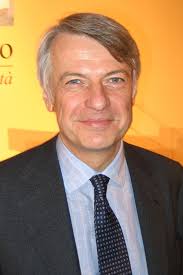
Ferruccio De Bortoli is a towering figure in Italian journalism, known for his insightful writing, leadership at some of Italy’s most prominent newspapers, and his ability to navigate the complex world of media and politics. Born on May 20, 1953, in Milan, De Bortoli’s career spans several decades, during which he has shaped public discourse and contributed significantly to the field of journalism. This article delves into the life and career of Ferruccio De Bortoli, exploring his age, rise to fame, and the key highlights that define his life.
Early Life and Beginnings in Journalism
Ferruccio De Bortoli was born into a family with Venetian roots, hailing from the Belluno area of Italy. His journey into the world of journalism began at an early age. By the time he was 20, in 1973, De Bortoli had already started working as a professional journalist, beginning his career at “Corriere dei Ragazzi,” a popular magazine aimed at young readers. His early work in journalism showcased his talent and dedication to the craft, setting the stage for what would become an illustrious career.
As De Bortoli honed his skills, he worked for several esteemed publications, including “Corriere di Informazione,” “Corriere della Sera,” and “L’Europeo.” These experiences provided him with a broad perspective on journalism and media, allowing him to develop a nuanced understanding of the field. During this time, De Bortoli also pursued higher education, earning a law degree from the University of Milan. This academic background, combined with his practical experience, equipped him with the tools necessary to navigate the complex landscape of Italian media.
Rise to Prominence: The Corriere della Sera Era
Ferruccio De Bortoli’s career took a significant turn in 1987 when he returned to “Corriere della Sera,” one of Italy’s most prestigious newspapers, as the head of the economics desk. His sharp insights and ability to analyze complex economic issues quickly garnered attention, and in 1993, De Bortoli was promoted to deputy director under Paolo Mieli. This role placed him at the heart of Italy’s media landscape, where he was responsible for overseeing the newspaper’s coverage of major national and international events.
In 1997, Ferruccio De Bortoli was appointed as the editor-in-chief of “Corriere della Sera,” marking a new chapter in his career. Under his leadership, the newspaper maintained its position as Italy’s leading daily, navigating through a period of significant political and social changes. De Bortoli’s tenure was marked by his commitment to journalistic integrity and his ability to balance the diverse opinions that define Italian society. His editorial leadership was instrumental in shaping public opinion during some of the most critical moments in recent Italian history.
Key Moments and Challenges
During his time as editor-in-chief, Ferruccio De Bortoli faced numerous challenges, both within the newsroom and from external political pressures. One of the most significant events he oversaw was the coverage of the September 11, 2001, terrorist attacks. The attacks shocked the world, and De Bortoli’s decision to send the renowned writer and journalist Oriana Fallaci to New York played a crucial role in shaping the global conversation. Fallaci’s article, “The Rage and the Pride,” published in “Corriere della Sera,” became a seminal piece, reflecting the intense emotions and political discourse of the time.
Another pivotal moment in De Bortoli’s career was the assassination of Maria Grazia Cutuli, a “Corriere della Sera” journalist, in Afghanistan in 2001. Cutuli’s death was a stark reminder of the dangers faced by journalists in conflict zones, and De Bortoli’s handling of the situation demonstrated his deep respect for the profession and his commitment to honoring the memory of those who risk their lives to report the truth.
Despite these challenges, De Bortoli’s editorial leadership was marked by a steady hand and a clear vision. He navigated the complex political landscape of Italy, often facing criticism and pressure from powerful figures, including former Prime Minister Silvio Berlusconi. In 2003, De Bortoli stepped down from his role as editor-in-chief, citing personal reasons. However, it was widely believed that his departure was influenced by tensions with Berlusconi, who had been critical of the newspaper’s coverage of his government.
Transition to Leadership at Il Sole 24 Ore
After leaving “Corriere della Sera,” Ferruccio De Bortoli continued to play a significant role in Italian media. He remained within the RCS MediaGroup, taking on the role of CEO of RCS Libri, the group’s book publishing division. However, it wasn’t long before De Bortoli returned to the world of journalism. In 2005, he was appointed as the editor-in-chief of “Il Sole 24 Ore,” Italy’s leading financial newspaper. His appointment was strongly supported by Luca Cordero di Montezemolo, the then-president of Confindustria, Italy’s main business association.
At “Il Sole 24 Ore,” De Bortoli’s leadership was marked by his deep understanding of economic issues and his ability to communicate complex financial concepts to a broad audience. His tenure coincided with a period of significant economic change, both in Italy and globally, as the world grappled with the implications of globalization and the early signs of the financial crisis that would erupt in 2008.
The Return to Corriere della Sera
In 2009, Ferruccio De Bortoli made a surprising return to “Corriere della Sera,” once again taking on the role of editor-in-chief. This second tenure was marked by his efforts to modernize the newspaper and adapt it to the rapidly changing media landscape. De Bortoli recognized the growing importance of digital media and worked to ensure that “Corriere della Sera” remained relevant in an increasingly online world. His leadership during this period was crucial in maintaining the newspaper’s reputation and influence, even as print journalism faced significant challenges.
During this time, De Bortoli continued to be a key figure in Italian media, often acting as a moderator for important political and economic discussions. His role in the 2006 Confindustria conference, where he moderated a debate between Romano Prodi and Silvio Berlusconi, was a testament to his reputation as a fair and insightful commentator on Italian politics.
Later Career and Legacy
Ferruccio De Bortoli’s second tenure as editor-in-chief of “Corriere della Sera” lasted until 2015, after which he took on the role of president of the publishing house Longanesi. His influence, however, continued to be felt in Italian journalism. In 2016, he returned to “Corriere della Sera” as a columnist, where his articles continue to provide readers with deep insights into the political and economic issues facing Italy and the world.
Throughout his career, De Bortoli has been known for his integrity, his commitment to journalistic excellence, and his ability to navigate the complex interplay between media and politics. His leadership at “Corriere della Sera” and “Il Sole 24 Ore” helped shape public discourse in Italy, and his legacy as a journalist and editor is secure.
Historical Context and Influence
To understand Ferruccio De Bortoli’s impact on journalism, it is important to consider the historical context in which he has worked. De Bortoli’s career spans a period of significant change in Italy and the world. From the end of the Cold War to the rise of digital media, De Bortoli has been at the forefront of reporting and analyzing the major events that have shaped our world.
De Bortoli’s approach to journalism is deeply rooted in the traditions of Italian journalism, which values rigorous reporting, in-depth analysis, and a commitment to the truth. However, he has also been a forward-thinking leader, recognizing the need to adapt to new technologies and changing reader habits. His efforts to modernize “Corriere della Sera” and integrate digital media into the newspaper’s operations are a testament to his understanding of the evolving media landscape.
The Man Behind the Headlines
Beyond his professional achievements, Ferruccio De Bortoli is known for his thoughtful and measured approach to journalism. He is a man who values integrity and professionalism, and these qualities have earned him the respect of his peers and readers alike. De Bortoli’s leadership style is characterized by a calm demeanor and a focus on the big picture, allowing him to guide his teams through challenging times without losing sight of their core mission.
De Bortoli’s personal life is less in the public eye, but it is clear that his family and his Venetian roots have played a significant role in shaping his character. His ability to balance the demands of a high-profile career with his personal values is one of the reasons he has remained a respected figure in Italian journalism for so long.
Conclusion
Ferruccio De Bortoli’s life and career are a testament to the power of journalism to shape public discourse and influence the course of history. From his early days as a young journalist to his leadership of some of Italy’s most important newspapers, De Bortoli has consistently demonstrated a commitment to journalistic excellence and integrity. His ability to navigate the complex relationship between media and politics, while maintaining his commitment to the truth, has made him one of the most respected figures in Italian journalism.
As he continues to write and contribute to public discourse, Ferruccio De Bortoli’s influence will undoubtedly continue to be felt. His legacy is not just one of personal success, but also of a broader contribution to the field of journalism, both in Italy and internationally. For anyone interested in the intersection of media, politics, and society, the life and career of Ferruccio De Bortoli offer valuable lessons and insights.


