
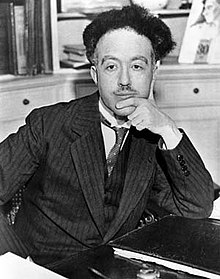
Louis Victor Pierre Raymond de Broglie, born on August 15, 1892, in Dieppe, France, is a towering figure in the history of science. Renowned for his groundbreaking work in quantum mechanics, de Broglie’s contributions have left an indelible mark on the field of physics. His revolutionary theory of wave-particle duality earned him the Nobel Prize in Physics in 1929 and continues to influence scientific thought to this day. This article delves into the life and achievements of Louis de Broglie, exploring his age, rise to fame, and the key highlights that define his life.
Early Life and Academic Background
Louis de Broglie was born into an aristocratic family with a strong intellectual tradition. His early education was marked by a broad and diverse curriculum, reflecting the high expectations placed on him. Initially, de Broglie was not focused on the sciences; instead, he pursued studies in history, earning a degree in history and law from the Sorbonne in Paris by the age of 18. His original intention was to enter the diplomatic service, a career befitting his noble heritage.
However, de Broglie’s academic path took a dramatic turn when he developed an interest in physics. Influenced by the scientific discussions with his older brother, Maurice de Broglie, who was a noted physicist, Louis decided to abandon his plans for a diplomatic career. He began studying physics in earnest, marking the beginning of a journey that would lead to some of the most profound discoveries in modern science.
The Wave-Particle Duality Theory
Louis de Broglie is perhaps best known for his theory of wave-particle duality, a concept that forms a cornerstone of quantum mechanics. In his doctoral thesis, submitted in 1924, de Broglie proposed that particles, such as electrons, could exhibit properties of both particles and waves. This idea was revolutionary and challenged the classical understanding of physics, which treated particles and waves as distinct entities.
De Broglie’s theory was influenced by the work of Albert Einstein and Max Planck, who had introduced the idea of quantized energy levels and the wave-particle nature of light, respectively. De Broglie extended these concepts to matter, suggesting that every particle has an associated wave, and the wavelength of this wave is inversely proportional to the particle’s momentum. This became known as the de Broglie wavelength.
The implications of this theory were profound, offering a new way to understand the behavior of matter at the atomic and subatomic levels. The wave-particle duality of electrons was experimentally confirmed in 1927 by Clinton Davisson and Lester Germer in the United States and by George Paget Thomson in Scotland. This confirmation established de Broglie’s theory as a fundamental principle of quantum mechanics.
Nobel Prize and Recognition
In recognition of his groundbreaking work, Louis de Broglie was awarded the Nobel Prize in Physics in 1929. At the time, he was only 37 years old, and his theory had already begun to reshape the field of physics. The Nobel Committee acknowledged his contribution to the wave theory of matter, emphasizing its significance in the development of quantum theory.
The Nobel Prize brought de Broglie international fame and solidified his reputation as one of the leading physicists of his time. His work not only provided a new framework for understanding the behavior of particles but also paved the way for future developments in quantum mechanics, including the formulation of the Schrödinger equation, which describes how the quantum state of a physical system changes over time.
Academic Career and Further Contributions
After receiving his doctorate, Louis de Broglie continued his academic career at the Sorbonne in Paris, where he became a professor of theoretical physics in 1928. He held this position until his retirement in 1962. During his tenure, de Broglie made significant contributions to the development of quantum theory, often focusing on the philosophical implications of the new physics.
One of de Broglie’s notable contributions during this period was his work on wave mechanics, which was crucial in the formulation of Erwin Schrödinger’s wave equation. Schrödinger’s equation provided a mathematical framework for de Broglie’s wave-particle duality, describing how the quantum state of a system evolves over time. This work further established the importance of de Broglie’s ideas in the foundation of quantum mechanics.
In addition to his work in physics, de Broglie was deeply interested in the philosophical questions raised by the new science. He wrote extensively on the implications of quantum theory for our understanding of reality, often exploring the tension between determinism and the probabilistic nature of quantum mechanics. His writings reflect a keen awareness of the broader impact of scientific discoveries on human thought and society.
The Broader Impact of De Broglie’s Work
Louis de Broglie’s contributions to physics have had a lasting impact on the field, influencing generations of scientists and shaping the course of modern science. His theory of wave-particle duality provided a new perspective on the nature of matter, challenging classical physics and opening the door to the development of quantum mechanics.
One of the most significant implications of de Broglie’s work is the concept of matter waves, which has been fundamental in the development of technologies such as electron microscopy and the study of atomic and molecular structures. The ability to understand and manipulate matter at the quantum level has led to advancements in a wide range of fields, including chemistry, materials science, and information technology.
De Broglie’s work also had a profound impact on the philosophical understanding of the physical world. His ideas contributed to the ongoing debate about the nature of reality, particularly in the context of quantum mechanics, where the deterministic views of classical physics were challenged by the probabilistic nature of quantum events. This has led to a rethinking of concepts such as causality, free will, and the nature of knowledge itself.
Later Life and Philosophical Reflections
As Louis de Broglie grew older, he became increasingly interested in the philosophical implications of his scientific work. He wrote several books that explored the relationship between physics and philosophy, including “Matter and Light,” “The New Physics,” and “Physics and Microphysics.” These works reflect his deep contemplation on the nature of reality and the role of science in uncovering the mysteries of the universe.
A central question in de Broglie’s later life was whether the statistical nature of quantum mechanics reflected an underlying ignorance or whether it was a fundamental aspect of reality. For much of his career, de Broglie believed that the probabilistic nature of quantum mechanics was due to incomplete knowledge, a view that aligned with the deterministic worldview of classical physics. However, later in life, he reconsidered this position, suggesting that statistical theories might indeed reflect a deeper, hidden reality that eludes current experimental techniques.
De Broglie’s reflections on these issues highlight the ongoing tension between determinism and indeterminism in physics, a debate that continues to this day. His willingness to reconsider his views in light of new evidence and ideas is a testament to his intellectual humility and his commitment to the pursuit of truth.
Legacy and Influence
Louis de Broglie passed away on March 19, 1987, at the age of 94, leaving behind a legacy that continues to resonate in the scientific community. His contributions to quantum mechanics have had a profound and lasting impact, influencing not only the development of modern physics but also the way we think about the nature of reality.
De Broglie’s legacy is evident in the many honors and recognitions he received throughout his life, including membership in the French Academy of Sciences and the Royal Society of London. His work has inspired countless physicists, including future Nobel laureates who have built upon his ideas to further our understanding of the quantum world.
Beyond his scientific achievements, de Broglie is remembered as a thinker who was deeply concerned with the broader implications of his work. His writings on the philosophical aspects of quantum mechanics continue to be studied and debated, reflecting his belief that science and philosophy are intertwined in the quest to understand the universe.
Conclusion
Louis de Broglie’s life and work stand as a testament to the power of human curiosity and the relentless pursuit of knowledge. From his early studies in history to his revolutionary contributions to quantum mechanics, de Broglie’s journey was one of intellectual exploration and discovery. His theory of wave-particle duality not only transformed our understanding of the physical world but also challenged us to think more deeply about the nature of reality itself.
As we continue to explore the mysteries of the universe, Louis de Broglie’s legacy serves as a reminder of the importance of questioning assumptions and embracing new ideas. His work has laid the foundation for much of modern physics, and his influence will undoubtedly continue to be felt for generations to come.


