
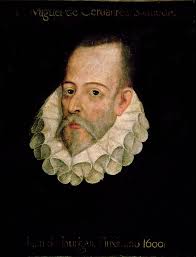
Miguel de Cervantes Saavedra, born on September 29, 1547, in Alcalá de Henares, Spain, is one of the most celebrated figures in world literature. Best known for his monumental work Don Quixote, Cervantes’ life was a tapestry of hardship, adventure, and literary triumph. His influence on literature and culture is immense, and his works continue to resonate with readers centuries after they were written. This article delves into the life and achievements of Miguel de Cervantes Saavedra, exploring his age, rise to fame, and the key highlights that define his legacy.
Early Life and Education
Miguel de Cervantes was born into a modest family. His father, Rodrigo de Cervantes, was a barber-surgeon, a profession that, while respected, did not bring much financial stability. The Cervantes family frequently moved due to financial difficulties, living in various cities such as Córdoba, Valladolid, Seville, and Madrid. This itinerant lifestyle shaped Miguel’s early years, exposing him to different regions and cultures within Spain.
Despite the family’s struggles, Cervantes received a basic education, likely at the hands of the Jesuits in Córdoba and Seville. He later attended the “El Estudio” school in Madrid, directed by Juan López de Hoyos, where he developed a deep appreciation for literature. It was during this time that Cervantes began to write poetry, displaying a natural talent for storytelling and a profound understanding of humanistic and classical culture.
The Italian Sojourn and Military Service
Cervantes’ life took a dramatic turn in 1569 when he became a fugitive from Spanish law after injuring a man named Antonio Sigura in a duel. Facing a harsh punishment, which included the loss of his right hand, Cervantes fled to Italy, seeking refuge from his legal troubles. In Italy, he entered the service of Cardinal Giulio Acquaviva as a chamberlain. This experience not only provided him with financial stability but also exposed him to the rich cultural life of the Italian Renaissance, further influencing his literary development.
In 1571, Cervantes joined the Spanish fleet aboard the galley Marquesa, participating in the famous Battle of Lepanto on October 7, 1571. The battle was a crucial victory for the Holy League against the Ottoman Empire, and Cervantes played a significant role in the conflict. He was wounded in the chest and left hand, the latter injury leaving him permanently disabled. Despite his injuries, Cervantes continued to serve in the military, participating in various expeditions across the Mediterranean.
Captivity and Return to Spain
In 1575, while en route back to Spain from Naples, Cervantes’ ship was captured by Barbary pirates. He was taken to Algiers and held captive for five years, enduring harsh conditions while awaiting ransom. Despite several escape attempts, Cervantes remained in captivity until his family, with the help of Trinitarian friars, managed to secure his release in 1580.
The years of captivity deeply affected Cervantes, both personally and creatively. His experiences during this period inspired several of his later works, including the play El trato de Argel and the story El amante liberal. These works reflect his profound understanding of human suffering, resilience, and the complexities of freedom and captivity.
Struggles and Literary Beginnings
Upon his return to Spain, Cervantes faced a series of personal and financial difficulties. In 1584, he married Catalina de Salazar y Palacios, a woman from Esquivias, near Toledo. However, their marriage was short-lived and largely unhappy, leading to their separation after only two years. Cervantes’ financial situation remained precarious, and he struggled to support himself through various jobs, including working as a tax collector and later as a purchasing agent for the Spanish Armada.
Despite these challenges, Cervantes continued to write. In 1585, he published his first major work, La Galatea, a pastoral novel that received some attention but did not achieve significant success. La Galatea reflected the literary trends of the time, drawing on themes of love and nature, but it lacked the originality and depth that would later characterize Cervantes’ masterpiece, Don Quixote.
The Birth of Don Quixote
The turning point in Cervantes’ literary career came in 1605 with the publication of El ingenioso hidalgo don Quijote de la Mancha (The Ingenious Gentleman Don Quixote of La Mancha). This novel, which tells the story of the delusional knight-errant Don Quixote and his loyal squire Sancho Panza, quickly became a literary sensation. Don Quixote is often considered the first modern novel, blending elements of satire, comedy, and tragedy in a way that was unprecedented in literature.
Don Quixote is a complex work that can be read on multiple levels. On the surface, it is a humorous critique of the chivalric romances that were popular in Cervantes’ time. However, it also explores deeper themes such as the conflict between reality and illusion, the nature of heroism, and the struggles of the individual against societal norms. Don Quixote himself embodies the tension between idealism and pragmatism, with his adventures serving as both a parody and a poignant commentary on the human condition.
The success of Don Quixote was immediate and widespread, not only in Spain but throughout Europe. The novel was translated into multiple languages and became a cultural phenomenon, influencing writers and artists across the continent. Cervantes’ creation of characters like Don Quixote and Sancho Panza has left an indelible mark on literature, with their names and characteristics becoming synonymous with certain archetypes in Western culture.
Later Works and Continued Success
Following the success of Don Quixote, Cervantes’ literary output increased. In 1613, he published a collection of novellas titled Novelas ejemplares (Exemplary Novels), which included twelve stories that showcased his versatility as a writer. These novellas explored various themes, from romance and morality to social criticism, and they further solidified Cervantes’ reputation as a master storyteller.
In 1614, Cervantes published El viaje del Parnaso (The Journey to Parnassus), a satirical poem that reflects on the literary world and Cervantes’ place within it. This work, while less well-known than Don Quixote, offers valuable insights into Cervantes’ views on literature and his own role as a writer.
In 1615, Cervantes published the second part of Don Quixote, which continued the adventures of the errant knight and his squire. This second part was written partly in response to an unauthorized sequel by another author, Alonso Fernández de Avellaneda. Cervantes’ continuation of Don Quixote not only resolved many of the narrative threads from the first part but also introduced new layers of complexity and self-reflection. The second part is often considered more introspective and philosophical, exploring the characters’ awareness of their own fictional status.
Final Years and Legacy
Miguel de Cervantes spent his final years in Madrid, where he continued to write despite ongoing financial difficulties and health issues. In 1616, shortly before his death, Cervantes completed his last work, Los trabajos de Persiles y Sigismunda (The Labors of Persiles and Sigismunda), a Byzantine romance that was published posthumously in 1617. This work, which Cervantes considered one of his finest, explores themes of love, adventure, and the human spirit, reflecting the author’s enduring optimism and creativity.
Cervantes passed away on April 23, 1616, the same day as the English playwright William Shakespeare, a coincidence that has often been remarked upon in literary history. Despite his struggles during life, Cervantes’ death marked the end of an era and the beginning of his lasting legacy as one of the greatest writers in world literature.
Historical Context and Impact
To fully appreciate Miguel de Cervantes’ contributions to literature, it is essential to consider the historical context in which he lived and wrote. Cervantes’ life spanned a period of significant political, social, and cultural change in Spain. The 16th and early 17th centuries were marked by Spain’s rise as a global empire, the challenges of the Protestant Reformation, and the eventual decline of Spanish power.
Cervantes’ works often reflect the complexities and contradictions of his time. Don Quixote, for instance, can be seen as a response to the fading ideals of chivalry and the harsh realities of modernity. Cervantes’ portrayal of Spain as a place where the past and present collide, where idealism meets disillusionment, resonates with readers across different historical periods.
Cervantes’ influence on literature cannot be overstated. His development of the modern novel, his exploration of complex characters, and his use of metafiction have inspired countless writers, from Laurence Sterne and Henry Fielding to Jorge Luis Borges and Gabriel García Márquez. The character of Don Quixote, in particular, has become a universal symbol of the struggle between dreams and reality, embodying the timeless human quest for meaning and purpose.
Conclusion
Miguel de Cervantes Saavedra’s life and work stand as a testament to the enduring power of literature. From his early struggles and military adventures to his literary triumphs, Cervantes’ journey was one of perseverance, creativity, and profound insight into the human condition. His masterpiece, Don Quixote, continues to captivate readers with its wit, wisdom, and exploration of the complexities of life.
Cervantes’ legacy is one of resilience and innovation. He transformed the novel into a form capable of capturing the full range of human experience, and his influence continues to shape the literary landscape. As we reflect on his life and work, Miguel de Cervantes Saavedra remains not just a figure of historical importance but a source of inspiration for anyone who seeks to understand the world through the lens of storytelling.


