
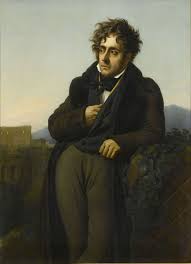
François-René de Chateaubriand, born on September 4, 1768, in Saint-Malo, France, is one of the most influential figures in French literature and a pioneer of Romanticism. His works, characterized by their poetic prose and profound exploration of nature, religion, and the human condition, have left an indelible mark on the literary world. Chateaubriand’s life was marked by the turbulence of the French Revolution, the rise and fall of empires, and his own personal struggles and triumphs. This article delves into the life and career of François-René de Chateaubriand, exploring his age, rise to fame, and the key highlights that define his legacy.
Early Life and Military Beginnings
François-René de Chateaubriand was born into an aristocratic Breton family with deep ties to the nobility. His upbringing was marked by the privileges and responsibilities of his social class, and he was groomed from an early age for a career in the military. As a young man, Chateaubriand witnessed the early stages of the French Revolution, an event that would profoundly shape his worldview and literary output.
Initially, Chateaubriand approached the Revolution with a degree of detachment, reflecting the conservative values instilled in him by his upbringing. However, as the Revolution gained momentum and became increasingly radical, he grew disillusioned and began to oppose the revolutionary forces. In 1791, seeking to escape the chaos and explore new horizons, Chateaubriand embarked on a journey to North America. This voyage, which took him to the vast wildernesses of the United States and Canada, had a lasting impact on his imagination and provided the raw material for some of his most famous works.
The American Journey and Literary Awakening
Chateaubriand’s travels in North America were a formative experience that opened his mind to new ideas and perspectives. He was deeply struck by the natural beauty of the American landscape, which contrasted sharply with the turmoil he had left behind in France. The vast forests, rivers, and mountains of the New World stirred his creative impulses and inspired a deep appreciation for the power of nature—a theme that would become central to his later writings.
During his time in North America, Chateaubriand also encountered Native American cultures, which fascinated him and influenced his views on civilization, freedom, and the human spirit. These experiences enriched his understanding of the world and provided him with a unique perspective that would distinguish his work from that of his contemporaries.
Upon returning to France in 1792, Chateaubriand found his homeland in the throes of the Revolution. The monarchy had fallen, and the country was descending into a period of violence and instability. Faced with the threat of persecution due to his noble status, Chateaubriand joined the counter-revolutionary forces in defense of the old social order. However, the Revolution’s momentum was unstoppable, and in 1793, Chateaubriand was forced into exile in England.
Exile in England and Literary Emergence
Chateaubriand’s exile in England, which lasted from 1793 to 1800, was a period of profound personal and intellectual growth. Although he lived in relative poverty and isolation, he used this time to immerse himself in literature and refine his craft as a writer. It was during this period that Chateaubriand published his first major work, the Essai sur les révolutions (Essay on Revolutions), in 1797.
The Essai sur les révolutions is a historical and philosophical examination of the causes and consequences of political upheaval, drawing on examples from both ancient and modern history. While the work reflects Chateaubriand’s conservative and royalist sympathies, it also reveals a growing sense of spiritual and existential questioning. The tragic events of the Revolution, combined with the deaths of his mother and sister, led Chateaubriand to a crisis of faith, which ultimately resulted in his return to Catholicism.
This religious reawakening had a profound impact on Chateaubriand’s subsequent work. His next major publication, Le Génie du christianisme (The Genius of Christianity), completed after his return to France in 1800, was a powerful defense of the Christian faith. Published in 1802, Le Génie du christianisme sought to illustrate the moral and aesthetic superiority of Christianity over the secular and rationalist philosophies that had gained prominence during the Enlightenment. The work was a resounding success, resonating with a French public that was beginning to seek solace in traditional values after the turmoil of the Revolution.
Literary Masterpieces: Atala and René
Included within Le Génie du christianisme were two short novels that would become some of Chateaubriand’s most famous works: Atala and René. These novels, though brief, had a profound impact on the development of French Romanticism and established Chateaubriand as a leading literary figure of his time.
Atala is a tragic love story set in the wilderness of Louisiana, focusing on the doomed relationship between two Native Americans, Atala and Chactas. The novel explores themes of love, sacrifice, and the clash between nature and civilization. Chateaubriand’s vivid descriptions of the American landscape, combined with his exploration of deep emotional and spiritual conflicts, made Atala a significant work in the Romantic movement.
René, which is often considered semi-autobiographical, tells the story of a young man’s existential disillusionment and his inability to find meaning in life. The protagonist, René, embodies the Romantic hero—sensitive, melancholic, and alienated from society. Through René’s story, Chateaubriand explores the themes of ennui, passion, and the search for identity, which resonated deeply with the emerging generation of Romantic writers and readers.
The publication of Le Génie du christianisme, along with Atala and René, solidified Chateaubriand’s reputation as a major literary figure. His ability to blend poetic language with profound philosophical and religious ideas made his work both accessible and intellectually stimulating, appealing to a wide audience in post-revolutionary France.
Political Involvement and Diplomatic Career
In addition to his literary achievements, François-René de Chateaubriand was also deeply involved in the political life of his time. Following the fall of Napoleon and the restoration of the Bourbon monarchy, Chateaubriand became an active participant in the political and diplomatic affairs of France.
He was appointed to various diplomatic positions, including ambassador to Sweden, Prussia, and the United Kingdom, and served as Minister of Foreign Affairs under King Louis XVIII. Chateaubriand’s political career was marked by his staunch support for the monarchy and his opposition to liberal and revolutionary movements. However, his uncompromising stance often put him at odds with other political leaders, leading to his resignation from government positions on multiple occasions.
Chateaubriand’s political writings, including his speeches and essays, reflected his deep belief in the importance of tradition, religion, and monarchy as stabilizing forces in society. His work during this period contributed to the intellectual foundation of French conservatism and had a lasting impact on the political discourse of the time.
The Mémoires d’outre-tombe and Later Life
In the later years of his life, François-René de Chateaubriand devoted himself to writing his memoirs, a monumental work that would become known as the Mémoires d’outre-tombe (Memoirs from Beyond the Grave). Written over several decades and completed shortly before his death, the Mémoires d’outre-tombe is both a personal reflection on his life and a historical account of the tumultuous events he witnessed.
The Mémoires d’outre-tombe is considered one of Chateaubriand’s greatest literary achievements. The work is notable for its poetic and introspective style, as well as its detailed descriptions of the people, places, and events that shaped Chateaubriand’s life. The memoirs offer a unique insight into the mind of a man who was deeply involved in the political and cultural life of his time, while also grappling with existential and spiritual questions.
Throughout the Mémoires d’outre-tombe, Chateaubriand reflects on the fleeting nature of life, the inevitability of death, and the enduring power of memory. The work is suffused with a sense of melancholy and nostalgia, as Chateaubriand looks back on a life marked by both triumph and loss. His ability to capture the emotions and thoughts of a generation that had lived through the French Revolution, the Napoleonic Wars, and the Restoration, has made the Mémoires d’outre-tombe a timeless and influential work in the canon of French literature.
Chateaubriand passed away on July 4, 1848, in Paris, at the age of 79. His death marked the end of an era, but his legacy as a writer, thinker, and statesman continues to endure. Today, François-René de Chateaubriand is remembered as one of the founding figures of French Romanticism, a literary movement that would dominate the 19th century and inspire countless writers, artists, and thinkers.
Historical Context and Influence
To fully appreciate François-René de Chateaubriand’s contributions to literature and culture, it is important to understand the historical context in which he lived and worked. Chateaubriand’s life spanned a period of profound political, social, and cultural change in France and Europe. The French Revolution, the rise and fall of Napoleon, and the subsequent restoration of the monarchy all had a significant impact on his worldview and his writing.
Chateaubriand’s work reflects the tensions and contradictions of this period. On one hand, he was a staunch defender of tradition, religion, and monarchy, advocating for the preservation of the old social order. On the other hand, his writings also expressed a deep sense of disillusionment with the modern world and a longing for the purity and simplicity of nature and the past.
Chateaubriand’s influence on literature and culture extends far beyond his own time. His works helped to define the Romantic movement, which emphasized emotion, imagination, and individualism over the rationalism and order of the Enlightenment. The themes and ideas that Chateaubriand explored in his writing—such as the power of nature, the importance of faith, and the search for meaning in a rapidly changing world—continue to resonate with readers today.
Conclusion
François-René de Chateaubriand’s life and work are a testament to the enduring power of literature and the ability of the written word to capture the complexities of the human experience. From his early travels in America to his involvement in the political life of France, and finally to his reflections in the Mémoires d’outre-tombe, Chateaubriand’s journey was one of exploration, discovery, and introspection.
As a writer, Chateaubriand pioneered new forms of expression that would influence generations of artists and thinkers. His ability to blend poetic language with deep philosophical and religious themes made his work both accessible and profound, appealing to a wide audience in France and beyond. Today, Chateaubriand’s legacy as a founding figure of Romanticism and a major literary and cultural influence remains secure.
His works continue to inspire and challenge readers, offering insights into the human condition and the timeless questions that define our existence. In exploring the life and achievements of François-René de Chateaubriand, we gain a deeper understanding of the forces that shaped the modern world and the role of literature in reflecting and shaping those forces.


