
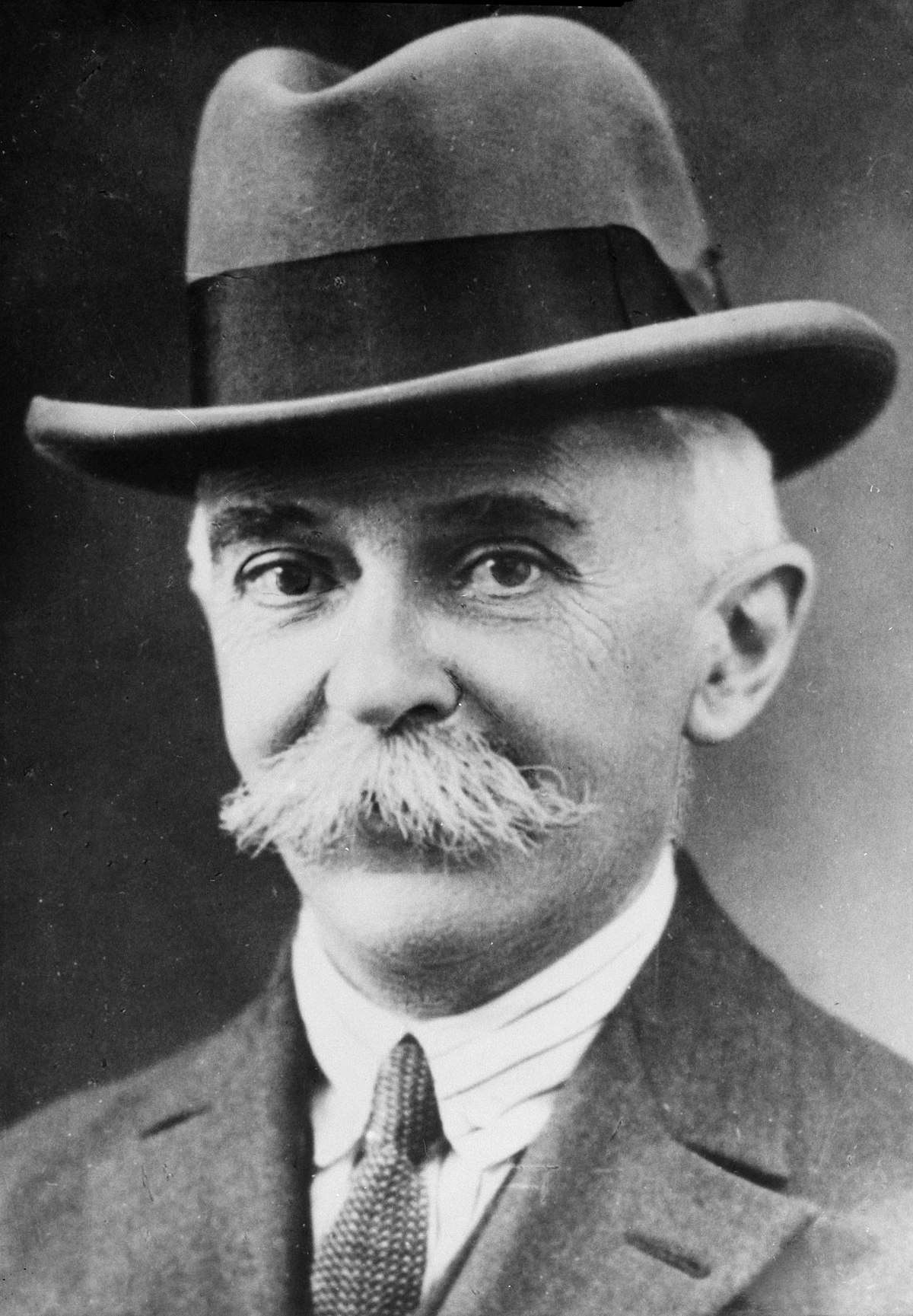
Pierre de Coubertin, born on January 1, 1863, in Paris, France, was a visionary who profoundly shaped the modern world through his dedication to education, sports, and internationalism. As the father of the modern Olympic Games, de Coubertin’s contributions extended far beyond sports; they embodied a philosophy of peace, understanding, and global unity. His life, marked by his aristocratic heritage, intellectual rigor, and relentless pursuit of his ideals, offers a fascinating glimpse into the man who reimagined the ancient Olympic Games for the modern era.
Early Life and Educational Background
Pierre de Frédy, later known as Baron Pierre de Coubertin, was born into the French aristocracy as the youngest of four children. His family enjoyed a privileged lifestyle, split between their Parisian home and a castle in Mirville, Normandy. This environment provided young Pierre with both intellectual stimulation and a love for outdoor activities, laying the foundation for his lifelong interest in sports and education.
From a young age, de Coubertin exhibited a keen intellect and a broad range of interests. He was educated by Jesuits, where he excelled academically and developed a passion for history, the arts, and physical activity. His talents were not confined to the classroom; de Coubertin was an accomplished pianist, a skill he maintained throughout his life.
Despite the expectations of his social class to pursue a military or legal career, de Coubertin chose a different path. After obtaining his diploma in 1880, he pursued political science and law at the University of Paris. However, his true calling lay in the field of education, where he sought to implement reformative ideas that would modernize the French educational system.
The Genesis of the Olympic Movement
The turning point in de Coubertin’s life came on June 23, 1894, at the Sorbonne in Paris. It was here that he first publicly proposed the idea of reviving the ancient Olympic Games in a modern format. This proposal was not merely an attempt to rekindle interest in classical antiquity but was rooted in a broader educational and social vision. De Coubertin believed that sports could play a crucial role in fostering international cooperation and peace, promoting the idea that “the important thing in life is not the triumph but the struggle; the essential thing is not to have conquered but to have fought well.”
De Coubertin’s efforts led to the formation of the International Olympic Committee (IOC), of which he became the secretary-general. He played a pivotal role in establishing the first modern Olympic Games, which were held in Athens in 1896. The choice of Athens as the host city was symbolic, linking the new games to their ancient roots in Greece. The 1896 Olympics were a resounding success, marking the beginning of what would become a global sporting phenomenon.
Challenges and Triumphs in Establishing the Olympics
The early years of the modern Olympic Games were fraught with challenges. The 1900 Paris Olympics and the 1904 St. Louis Olympics were overshadowed by the World’s Fairs held concurrently, leading to disappointing public and media attention. However, de Coubertin’s determination to see his vision through never wavered. Despite these setbacks, he continued to advocate for the Olympics, traveling extensively to promote the Games and the ideals they represented.
A significant breakthrough came with the 1906 Intercalated Games in Athens, which reignited public interest in the Olympics and laid the groundwork for future successes. De Coubertin’s efforts were further validated during the 1912 Stockholm Olympics, where he introduced the modern pentathlon, a sport he invented to reflect the skills of an ideal soldier.
De Coubertin’s contributions to the Olympics extended beyond organizing the events. He was instrumental in adding symbolic elements such as the Olympic rings, which represent the unity of the five continents, and the Olympic Oath, emphasizing fair play and sportsmanship. These symbols have become integral to the identity of the Olympic Games, underscoring the values that de Coubertin sought to promote.
The Olympic Games as a Tool for Peace
At the core of de Coubertin’s vision for the Olympics was the idea that sports could serve as a means of promoting peace and understanding among nations. He believed that by bringing together athletes from around the world, the Olympics could help break down barriers of prejudice and foster a spirit of camaraderie and mutual respect. This philosophy was particularly poignant in the context of the early 20th century, a time of rising nationalism and political tension.
De Coubertin’s commitment to the Olympic movement was also reflected in his decision to relocate the IOC headquarters to Lausanne, Switzerland, in 1915. Switzerland’s neutral status made it an ideal location for the IOC, symbolizing the Olympic ideal of peace above all else. De Coubertin remained president of the IOC until 1925, overseeing the growth and development of the Games.
The 1924 Paris Olympics, often referred to as the “Games of the VIII Olympiad,” were a crowning achievement for de Coubertin. These Games were a resounding success, drawing large crowds and widespread media coverage. They marked a significant departure from the difficulties faced in the early years and solidified the Olympics as a major international event.
Legacy and Impact Beyond Sports
Pierre de Coubertin’s influence extended far beyond the realm of sports. He was a prolific writer and thinker, producing numerous works on education, history, and sociology. His ideas about the role of sports in education were revolutionary, advocating for physical activity as an essential component of a well-rounded education. De Coubertin believed that sports could teach valuable life lessons, such as discipline, teamwork, and perseverance, which were just as important as academic achievements.
In addition to his work with the Olympics, de Coubertin was deeply involved in promoting international cooperation and understanding through education. In 1926, he founded the Union Pédagogique Universelle (Universal Pedagogical Union), an organization dedicated to advancing educational reform on a global scale. His efforts in this area were a testament to his belief that education was the key to building a more peaceful and just world.
De Coubertin’s legacy is also reflected in his historical writings. Between 1926 and 1927, he published a comprehensive history of the world, a four-volume work that showcased his breadth of knowledge and his commitment to understanding the forces that shape human civilization. This work further cemented his reputation as a thinker who was deeply engaged with the intellectual and social currents of his time.
Final Years and Enduring Legacy
After retiring from the IOC in 1925, Pierre de Coubertin continued to devote his energies to promoting the values he held dear. He spent his final years in Switzerland, where he continued to write and speak on issues related to sports, education, and internationalism. Despite facing financial difficulties, he remained committed to his vision, using his own resources to support his initiatives.
Pierre de Coubertin passed away on September 2, 1937, in Geneva, Switzerland, following a heart attack. His death marked the end of a remarkable life, but his legacy endures. He was buried in Lausanne, the city that had become the symbolic home of the Olympic movement. In a fitting tribute to his contributions, his heart was interred separately at a monument near the ruins of ancient Olympia in Greece, the birthplace of the original Olympic Games.
Today, Pierre de Coubertin is remembered not only as the founder of the modern Olympic Games but also as a visionary who saw the potential of sports to bring people together and promote peace. His ideas continue to influence the Olympic movement, which has grown into one of the most significant global events, embodying the values of excellence, friendship, and respect.
The Olympic Games, now watched by billions around the world, are a testament to de Coubertin’s vision and the enduring power of sports to unite humanity. His life and work serve as a reminder of the importance of perseverance, innovation, and the belief that even the most ambitious dreams can be realized with determination and passion.


