
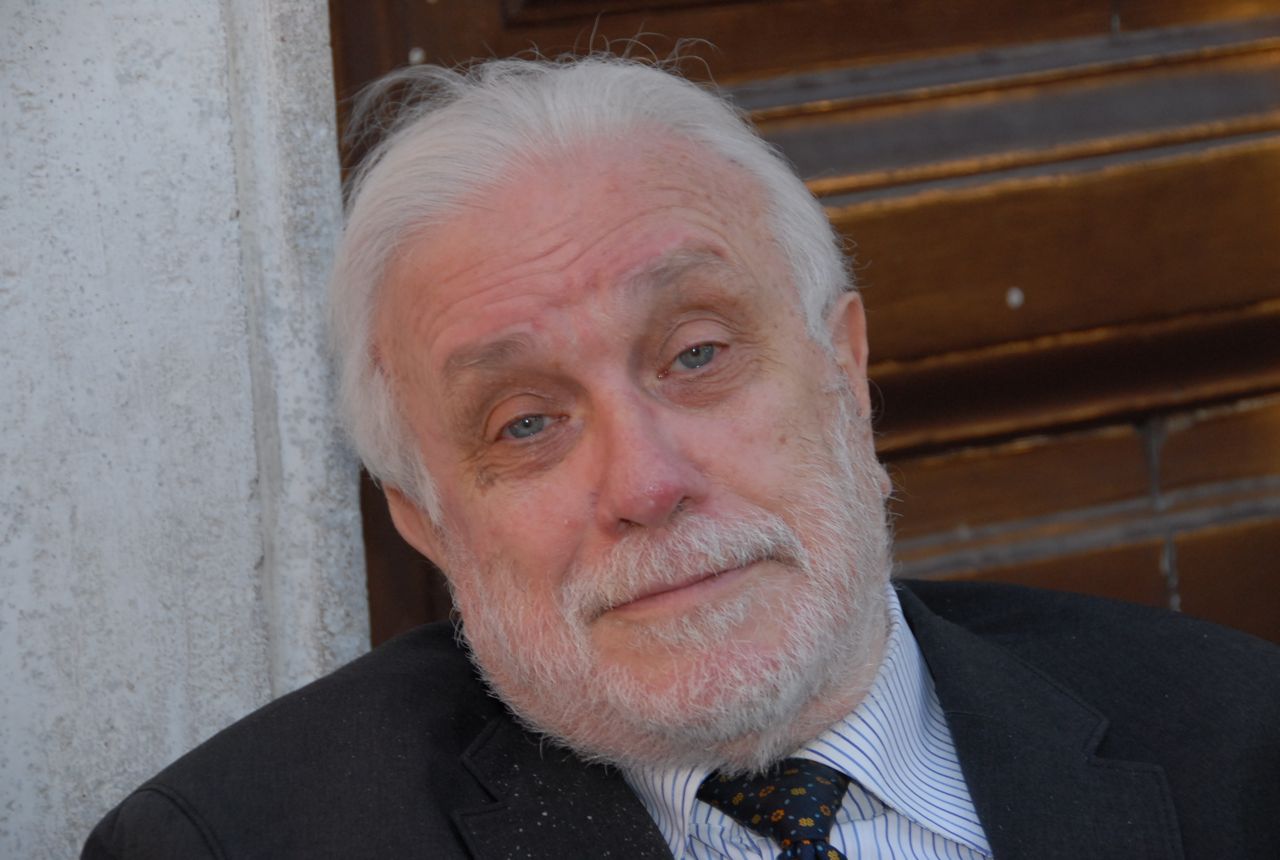
Luciano De Crescenzo, born on August 18, 1928, in the Santa Lucia district of Naples, Italy, was a multifaceted figure in Italian culture. Known primarily as a writer, philosopher, and humorist, De Crescenzo’s life was rich with experiences that spanned the realms of literature, film, and philosophy. His works brought complex philosophical ideas to the masses in an accessible and often humorous way, making him one of Italy’s most beloved cultural figures.
Early Life and Academic Background
Luciano De Crescenzo was born into a family of humble origins in Naples. His early life was marked by the simplicity of his surroundings and the influence of his parents, who were quite elderly at the time of his birth. Interestingly, one of De Crescenzo’s childhood neighbors was Carlo Pedersoli, better known as the actor Bud Spencer. This connection to another iconic figure of Italian culture was one of the many serendipitous elements of De Crescenzo’s life.
Growing up in Naples, De Crescenzo was immersed in the vibrant cultural atmosphere of the city, which deeply influenced his worldview and later works. He was a bright student, and after completing his primary education, he went on to study engineering at the University of Naples. De Crescenzo excelled academically, graduating with top honors. During his time at university, he was particularly inspired by Renato Caccioppoli, a renowned Neapolitan mathematician. De Crescenzo developed a close intellectual bond with Caccioppoli, often accompanying him on walks after lectures. The tragic suicide of Caccioppoli in 1959 had a profound impact on De Crescenzo, marking one of the great sorrows of his early life.
Career Beginnings: From Engineering to Writing
After earning his degree in engineering, De Crescenzo began working at IBM Italy as a sales representative. His mother had initially hoped he would secure a more traditional position at the Banco di Napoli, but De Crescenzo’s career took a different path. His natural charisma and wit made him exceptionally successful in his role at IBM, where he eventually rose to the rank of director. De Crescenzo’s approach to sales was unique; he often downplayed the act of selling, creating an atmosphere where clients felt at ease and were drawn to him personally, leading to impressive sales figures.
Despite his success in the corporate world, De Crescenzo harbored a deep passion for writing and philosophy. This passion eventually led him to leave his stable career at IBM to pursue a life dedicated to literature and cultural commentary. His first book, Così parlò Bellavista (“Thus Spoke Bellavista”), was published in 1977 and quickly became a bestseller. The book was a collection of philosophical musings and humorous observations about life in Naples, presented through the character of Professor Bellavista, who would become a recurring figure in De Crescenzo’s work.
Literary Success and Philosophical Exploration
Luciano De Crescenzo’s literary career took off with the success of Così parlò Bellavista, which resonated with readers for its blend of humor, philosophy, and insights into Neapolitan life. The book was eventually adapted into a successful film, directed by De Crescenzo himself, further cementing his status as a cultural icon. Over the years, De Crescenzo published more than 25 books, many of which were dedicated to making philosophy accessible to the general public.
One of De Crescenzo’s most significant contributions was his ability to distill complex philosophical ideas into simple, relatable concepts. His works often focused on the great philosophers of ancient Greece, such as Heraclitus, Socrates, and Plato. In Panta Rei (“Everything Flows”), for example, De Crescenzo explored the philosophy of Heraclitus, introducing readers to the idea that change is the only constant in life. His approachable style and engaging narrative made these philosophical concepts accessible to those who might otherwise have found them daunting.
De Crescenzo’s writing was characterized by a deep love for humanity and a belief in the power of humor as a tool for understanding life’s complexities. His books often included personal anecdotes, reflections on everyday life, and philosophical discussions, all delivered with a lightness and wit that endeared him to a broad audience. While some critics dismissed his work as lacking in scholarly rigor, De Crescenzo’s popularity and influence were undeniable. He succeeded in bringing philosophy out of the ivory tower and into the homes of everyday people, making it a subject of conversation and reflection.
Transition to Film and Television
In addition to his literary achievements, Luciano De Crescenzo also made significant contributions to Italian cinema and television. His first foray into film came with the adaptation of Così parlò Bellavista in 1984. The film, like the book, was a huge success and showcased De Crescenzo’s talent for storytelling and his deep connection to Neapolitan culture.
De Crescenzo went on to direct several other films, including Il mistero di Bellavista (“The Mystery of Bellavista”) and 32 dicembre (“32 December”). These films, much like his books, combined humor, philosophy, and a keen observation of human nature. While his work as a director did not achieve the same level of acclaim as his writing, it further demonstrated his versatility as an artist and his commitment to exploring philosophical themes in various media.
De Crescenzo also appeared as an actor in several films, including a notable collaboration with Renzo Arbore in Il pap’occhio (“The Pope’s Eye”). His performances were marked by the same charm and wit that characterized his writing, making him a beloved figure both on and off the screen.
Philosophical Contributions and Cultural Impact
Luciano De Crescenzo’s work was not only popular but also had a lasting impact on Italian culture. His ability to make philosophy accessible to the masses earned him a unique place in the hearts of his readers and viewers. De Crescenzo’s books were translated into multiple languages, and his influence extended beyond Italy to an international audience.
One of the central themes of De Crescenzo’s work was the importance of maintaining a sense of humor in the face of life’s challenges. He believed that humor was not just a coping mechanism but a way of gaining a deeper understanding of the human condition. This philosophy was reflected in his writing, where he often used humor to explore complex ideas and to bring people closer to philosophical concepts that might otherwise seem distant or abstract.
De Crescenzo’s portrayal of Naples and its people also contributed to a broader appreciation of Neapolitan culture. His works celebrated the city’s unique character, its vibrant street life, and the warmth and resilience of its inhabitants. In doing so, he helped to challenge stereotypes and to present a more nuanced view of Naples to the world.
Later Life and Legacy
Luciano De Crescenzo continued to write and engage with the public well into his later years. His later works, including Il tempo e la felicità (“Time and Happiness”), reflected a mature perspective on life, focusing on themes of time, aging, and the pursuit of happiness. These books were well-received and demonstrated that De Crescenzo’s insights and humor had not diminished with age.
De Crescenzo passed away on July 18, 2019, at the age of 90 in Rome. His death marked the end of an era for Italian culture, but his legacy lives on through his books, films, and the countless people he inspired. De Crescenzo’s works continue to be read and appreciated by new generations, and his influence on Italian literature and philosophy remains significant.
Luciano De Crescenzo’s life and career are a testament to the power of storytelling, humor, and philosophy. He was a man who believed in the importance of understanding the world through multiple lenses, whether through the rigors of philosophy, the humor of everyday life, or the warmth of human connection. His ability to bring these elements together in his work has left an indelible mark on Italian culture and beyond.
In remembering Luciano De Crescenzo, we celebrate a life dedicated to the pursuit of knowledge, the joy of humor, and the love of humanity. His works remind us that even the most complex ideas can be understood with a smile, and that philosophy, far from being a distant academic discipline, is a vital part of our everyday lives.


