
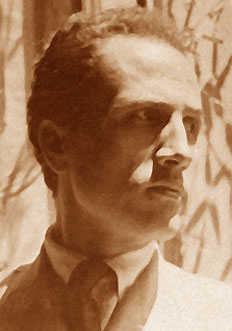
Aurelio De Felice, born on October 29, 1915, in the medieval village of Torreorsina, near Terni, Italy, was a prominent 20th-century Italian sculptor known for his distinctive style and contributions to the art world. His life, marked by an unwavering commitment to his craft and a deep connection to his roots, is a testament to his enduring legacy in the world of sculpture.
Early Life and Artistic Beginnings
Aurelio De Felice was born into a modest family in Torreorsina, where he spent his early childhood. From a young age, he displayed a keen interest in the arts, particularly in poetry and drawing. His natural inclination towards sculpture became evident during his elementary school years, where he began experimenting with different materials and techniques.
In 1928, at the age of 13, De Felice enrolled in the industrial school in Terni, where he studied in the “Ebanisti-intagliatori” section, also known as the “artistic section.” This period was crucial for his artistic development, as he was introduced to various mediums, including clay modeling, wood carving, drawing, and art history. His early works, characterized by a photographic realism, often depicted the people of his village.
However, De Felice’s path to becoming an artist was not without challenges. After completing his studies, his father insisted that he work in the Terni arms factory to contribute to the family’s income. But De Felice’s passion for art was too strong to be suppressed. After three months of working in the factory, he decided to follow his dreams, leaving his family and heading to Rome, much to the dismay of his father, who destroyed his early sculptures in a fit of anger.
Struggles and Triumphs in Rome
De Felice’s early years in Rome were marked by hardship and poverty. He took on menial jobs during the day to survive and attended evening classes at an art-industrial school. This period was one of the most difficult in his life, as he faced not only financial struggles but also severe illness. Despite these challenges, De Felice’s determination never wavered, and he eventually recovered from his illness, which he considered nothing short of miraculous.
During this time, De Felice met and befriended fellow artists, including the sculptor Pericle Fazzini and the painter Ferruccio Ferrazzi. These friendships were instrumental in his artistic growth, as they provided him with both emotional support and professional guidance. It was also in Rome that De Felice began to develop his unique sculptural style, which combined elements of realism with a deep emotional expression.
In 1936, De Felice’s talent began to be recognized. An art collector purchased one of his small sculptures and helped him enroll in the prestigious Accademia di Belle Arti in Rome. However, De Felice was not content to simply follow the traditional methods taught at the Academy. In his thesis, he boldly criticized the conservative nature of the institution, calling for the closure of all art academies unless they were reformed. This outspoken stance led to his temporary expulsion from the Academy, but it also marked him as a radical thinker who was unafraid to challenge the status quo.
The Rise to Prominence
De Felice’s early success came in the form of several awards and recognitions. In 1938, he won the first prize at the Mostra Sindacale dell’Umbria, and in 1939, he took first prize at the Mostra Sindacale del Lazio. His sculpture “Adolescente con l’ocarina” won first place in a national competition in 1940, further establishing his reputation as a rising star in the Italian art world.
By 1940, De Felice had graduated from the Accademia di Belle Arti and was appointed as a professor-assistant at the same institution. His first solo exhibition in Rome, curated by the renowned artist Renato Guttuso, was well-received, leading to further exhibitions in major Italian cities such as Genoa, Milan, Florence, and Naples. De Felice’s work during this period was characterized by a departure from the official rhetoric and monumentalism of the time, aligning him with the “Scuola Romana,” a group of artists who sought to explore new artistic directions.
During World War II, De Felice continued to work and exhibit his art, despite the difficult circumstances. He developed a deep friendship with the painter and shoemaker Orneore Metelli, whose naïve style greatly impressed him. De Felice vowed to promote Metelli’s work globally, a promise he fulfilled by organizing exhibitions of Metelli’s paintings from 1942 onward.
International Recognition and the Paris Years
After the war, De Felice’s reputation began to extend beyond Italy. In 1946, he traveled to Switzerland for the first time, where he held exhibitions in Geneva and Zurich. These exhibitions marked the beginning of his international career, with subsequent shows in Paris, Frankfurt, Vienna, and other European cities.
In 1950, De Felice was commissioned by the Italian Ministry of Foreign Affairs to establish the “Scuola d’Arte Italiana” in Paris, dedicated to the arts of Ravenna mosaic and Faenza ceramics. This school, which he founded in collaboration with the painter Gino Severini, became a significant cultural institution in Paris, attracting students and artists from around the world. De Felice’s time in Paris also brought him into contact with some of the most influential artists of the 20th century, including Pablo Picasso, Fernand Léger, Jean Cocteau, and Ossip Zadkine.
Despite the success of his Parisian venture, De Felice decided to return to Italy in 1955, where he continued his artistic endeavors. His exhibitions in cities like Turin, Milan, and Florence were met with critical acclaim, and in 1956, he held a major solo exhibition in Rome. The exhibition’s catalog was prefaced by art critic Marco Valsecchi, who hailed De Felice as the “enfant prodige” of the Scuola Romana, highlighting his contributions to the development of modern sculpture.
Later Career and Legacy
In 1958, De Felice was appointed director of the Scuola d’Arte di Volterra, a position that allowed him to influence a new generation of artists. He continued to exhibit his work in Italy and abroad, with shows in cities such as Livorno, Lione, Braunschweig, and Cologne. In 1961, he was instrumental in founding the Istituto Statale d’Arte in Terni, his home region, where he served as the director until his retirement.
As the years passed, De Felice’s work continued to evolve. He became increasingly introspective, reflecting on the deeper meanings and purposes of his art. This period of self-reflection led him to withdraw from the public eye in the 1970s, choosing instead to live a quiet life in his native Torreorsina. Despite his retreat from the art world, De Felice remained dedicated to his craft, continuing to create and refine his sculptures away from the limelight.
In 1977, De Felice was invited by the Museum of Modern Art in Tokyo to deliver a lecture on “I pittori naif e Orneore Metelli,” showcasing his ongoing commitment to the promotion of Italian art. His final years were marked by declining health, but this did not deter him from continuing to contribute to the art world. In February 1993, he traveled to Kobe, Japan, to inaugurate the Nunobiki Park dedicated to love, where he donated his sculpture “Maternità.”
Aurelio De Felice passed away on June 14, 1996, in his home in Torreorsina, at the age of 80. His death marked the end of a remarkable journey, but his legacy as one of Italy’s most important sculptors lives on. De Felice’s work, characterized by its emotional depth, technical mastery, and commitment to artistic innovation, continues to inspire and influence artists and art lovers around the world.
Artistic Style and Influence
Aurelio De Felice’s artistic style is difficult to categorize, as it evolved significantly over the course of his career. His early works were heavily influenced by the traditions of realism, but as he matured, his style became more expressive and abstract. De Felice was deeply connected to his cultural heritage, and this connection is evident in his use of traditional Italian materials and techniques. However, he was also open to experimentation, incorporating elements of modernism and other contemporary movements into his work.
One of De Felice’s most significant contributions to the art world was his ability to bridge the gap between tradition and modernity. He was a key figure in the Scuola Romana, a movement that sought to move away from the rigid academicism of the past and embrace new artistic possibilities. His work is characterized by a deep emotional resonance, often exploring themes of humanity, spirituality, and the natural world.
De Felice’s influence extends beyond his own work. As a teacher and mentor, he played a crucial role in the development of many young artists, both in Italy and abroad. His dedication to promoting Italian art and culture was unwavering, and his legacy is preserved not only in his sculptures but also in the institutions he helped to establish and the students he inspired.
In conclusion, Aurelio De Felice was a sculptor of extraordinary talent and vision. His life and work reflect a deep commitment to the pursuit of artistic excellence, and his contributions to the world of sculpture have left an indelible mark on the history of art. De Felice’s legacy is one of passion, innovation, and a profound connection to his cultural roots, making him a true master of 20th-century sculpture.


