
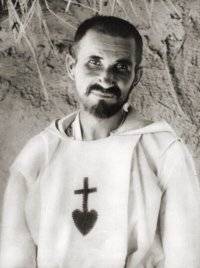
Charles de Foucauld is a name that resonates deeply within the realms of spirituality, adventure, and cultural exploration. His life, marked by a profound transformation from a military man to a religious hermit, has left an indelible impact on both the Christian faith and the cultural understanding of the Tuareg people. Born on September 15, 1858, in Strasbourg, France, Foucauld’s journey from nobility to sainthood is a compelling tale of faith, exploration, and dedication to the underprivileged.
Early Life and Background
Charles Eugène de Foucauld was born into a noble family, holding the title of Viscount of Pontbriand. His early life, however, was marred by tragedy. When Charles was just six years old, he lost both his parents and was subsequently raised by his maternal grandfather. This loss would shape much of his early character, leading to a period of rebellion and uncertainty.
At the age of 18, Foucauld entered the prestigious École Spéciale Militaire de Saint-Cyr, a military academy in France. His time there was marked by a lack of discipline and a series of distractions, notably a relationship with a woman of questionable reputation. Despite inheriting a significant fortune from his grandfather, Foucauld squandered it rapidly, reflecting his troubled state of mind during these formative years.
Military Career and Exploration
Foucauld’s military career, though brief, played a crucial role in shaping his future endeavors. At the age of 22, he was stationed in Algeria, where he began to gain recognition as a soldier. However, his military service was short-lived as he soon abandoned it to embark on a series of geographic expeditions. Under the guidance of Rabbi Mardochée Aby Serour, Foucauld undertook a perilous journey through Morocco, a country then largely unknown to Europeans. His exploration of Morocco earned him the Gold Medal of the French Geographical Society, a testament to his courage and commitment to discovery.
During his travels, Foucauld immersed himself in the study of Arabic and Hebrew, further deepening his understanding of the cultures he encountered. His engagement to Marie-Marguerite Titre, a relationship ultimately thwarted by her family’s disapproval, added another layer of personal struggle to his life.
Religious Conversion and Spiritual Awakening
The turning point in Charles de Foucauld’s life came in 1886 when he returned to France after his explorations. Despite his previous indifference to religion, he experienced a profound spiritual awakening. This marked the beginning of his journey toward Catholicism and a life devoted to faith. Foucauld’s conversion was not a mere formality; it was a radical transformation that would guide his actions for the rest of his life.
By 1889, Foucauld found himself in Nazareth, seeking solitude and a deeper connection with God. A year later, he joined the Trappist monastery of Notre Dame des Neiges in France, but his quest for spiritual purity led him to an even more austere monastery in Akbes, Syria. It was during this time that Foucauld began to conceive the idea of founding a religious congregation, though it would take years before this dream would fully materialize.
Priesthood and Life in the Sahara
In 1901, after years of spiritual preparation and service, Charles de Foucauld was ordained as a priest in France. His ordination marked the beginning of a new chapter in his life, one that would take him to the desolate expanses of the Sahara Desert. Foucauld settled in Beni Abbes, a small oasis town in Algeria, where he dedicated himself to a life of prayer, manual labor, and service to the poor.
Foucauld’s time in the Sahara was characterized by his commitment to living among the local population, sharing in their hardships, and offering whatever help he could. He founded a hermitage in Beni Abbes, which became a sanctuary for the poor and a center of spiritual reflection. It was here that Foucauld began to formulate the idea of the “Little Brothers of the Sacred Heart,” a religious congregation dedicated to living out the Gospel in simplicity and humility.
Engagement with the Tuareg Culture
One of the most significant aspects of Charles de Foucauld’s life was his deep engagement with the Tuareg people of the Sahara. To better understand and connect with them, Foucauld immersed himself in their language and culture. His linguistic efforts resulted in the creation of a Tuareg-French dictionary, a monumental work spanning four volumes that served as an encyclopedic record of Tuareg society.
Foucauld’s work with the Tuareg went beyond mere academic interest; it was a manifestation of his desire to bring the message of the Gospel to all people, regardless of their background. He translated the Gospels into the Tuareg language and composed numerous works of Tuareg poetry, enriching the cultural heritage of the region.
Martyrdom and Legacy
Charles de Foucauld’s life came to a tragic end on December 1, 1916, when he was killed by a group of marauders in Tamanrasset, Algeria. His death, however, was not the end of his story. Foucauld’s commitment to living a life of simplicity, humility, and service has inspired countless individuals and religious communities around the world.
In 2005, Pope Benedict XVI beatified Charles de Foucauld, recognizing his life as one of heroic virtue. His canonization by Pope Francis on May 15, 2022, further solidified his place among the saints of the Catholic Church.
Historical Context and Influence
To fully appreciate the significance of Charles de Foucauld’s life, it is essential to understand the broader historical context in which he lived. The late 19th and early 20th centuries were a time of great upheaval and change, both in Europe and in the regions where Foucauld carried out his work. The colonization of Africa by European powers, the spread of modernity, and the increasing interaction between different cultures all played a role in shaping Foucauld’s mission.
Foucauld’s decision to live among the Tuareg people, a group largely marginalized and misunderstood by the colonial powers, reflects his deep sense of justice and his commitment to seeing the humanity in all people. His work laid the groundwork for greater understanding and respect between different cultures and religious traditions.
Moreover, Foucauld’s life serves as a reminder of the potential for personal transformation. His journey from a life of privilege and indulgence to one of self-denial and service is a powerful testament to the possibility of change, no matter how entrenched one might be in their ways.
Conclusion
Charles de Foucauld’s life is a rich tapestry of adventure, faith, and cultural exploration. From his early years of rebellion to his ultimate martyrdom in the Sahara, Foucauld’s story is one of profound transformation and unwavering commitment to his beliefs. His legacy continues to inspire, offering a powerful example of how one person’s life can bridge the gap between different worlds and leave a lasting impact on both faith and culture.


