
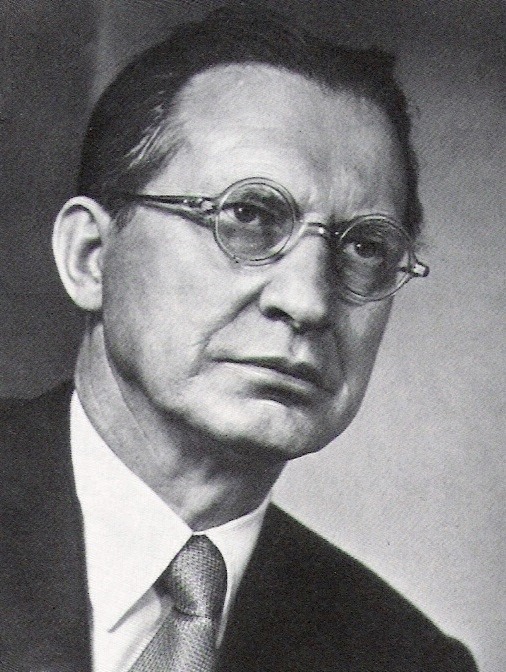
Alcide De Gasperi is a towering figure in the history of Italy, known for his pivotal role in the political and economic reconstruction of the country after World War II. His life, which spanned from April 3, 1881, to August 19, 1954, is a testament to the power of vision, resilience, and dedication to democratic principles. This article delves into the life of Alcide De Gasperi, exploring his early years, political career, and lasting impact on both Italy and Europe.
Early Life and Background
Alcide De Gasperi was born in Pieve Tesino, a small town in the Trentino region of what was then the Austro-Hungarian Empire. The Trentino area, although Italian-speaking, was part of the Austro-Hungarian Empire until after World War I, a fact that significantly influenced De Gasperi’s early life and political formation. Raised in a region caught between Italian national identity and Austro-Hungarian rule, De Gasperi developed a keen understanding of the complexities of nationalism, minority rights, and political autonomy.
From a young age, De Gasperi was drawn to politics. He pursued higher education at the University of Vienna, where he studied philosophy and literature. It was during his university years that De Gasperi became deeply involved in the political discourse of the time, particularly concerning the Italian-speaking populations within the Austro-Hungarian Empire. This early exposure to the challenges of governance in a multi-ethnic empire would later inform his approach to the European integration process.
Entry into Politics: The Austro-Hungarian Parliament
De Gasperi’s political career began in the Austro-Hungarian Parliament, where he represented the Italian-speaking minority of Trentino. His involvement in the parliament was characterized by a strong advocacy for the rights of Italians within the empire, pushing for greater autonomy and cultural recognition. This period in De Gasperi’s life was crucial in shaping his diplomatic skills and his ability to navigate complex political landscapes, skills that would prove invaluable in the post-war years.
Transition to Italian Politics: The Rise of the Popular Party
With the end of World War I and the subsequent annexation of Trentino by Italy, De Gasperi transitioned to Italian politics. He joined the newly formed Italian People’s Party (Partito Popolare Italiano, PPI), led by the Catholic priest Don Luigi Sturzo. The PPI was a centrist party that sought to represent the interests of Italy’s Catholic population, advocating for social justice, economic reform, and political democracy. De Gasperi quickly rose through the ranks of the PPI, becoming one of its most prominent leaders.
The early 1920s were a tumultuous time in Italy, marked by the rise of Benito Mussolini and the Fascist Party. De Gasperi, a staunch opponent of fascism, found himself increasingly at odds with the political climate of the time. Despite the growing danger, he refused to compromise his principles, becoming one of the few political leaders who openly opposed Mussolini’s regime. His resistance led to his arrest and imprisonment in 1926, a clear indication of the risks he was willing to take in defense of democracy.
Exile and Resistance: The Vatican Years
Following his release from prison, De Gasperi was forced to withdraw from active political life due to the increasing repression under Mussolini. He found refuge in the Vatican, where he worked as a librarian. During these years, De Gasperi remained politically active behind the scenes, maintaining contact with other anti-fascist leaders and working to preserve the ideals of democracy. His time in the Vatican also allowed him to develop a close relationship with the Catholic Church, which would later play a crucial role in his political career.
During World War II, De Gasperi was instrumental in the founding of the Christian Democracy (Democrazia Cristiana, DC) party, which was established as a continuation of the PPI’s legacy. The DC aimed to provide a centrist alternative to both fascism and communism, rooted in Christian social principles. As World War II came to an end, De Gasperi emerged as a key figure in the reconstruction of Italy, advocating for a new democratic government that would be aligned with the Western Allies.
Post-War Leadership: Prime Minister and Architect of Modern Italy
The end of World War II marked the beginning of De Gasperi’s most significant contributions to Italian and European history. In 1945, he was appointed as the Prime Minister of Italy, a position he held until 1953. During his tenure, De Gasperi played a pivotal role in the political and economic reconstruction of Italy, guiding the country through a period of immense challenge and transformation.
One of De Gasperi’s most notable achievements was his leadership in the establishment of the Italian Republic. After the fall of Mussolini, Italy was faced with the task of rebuilding its political institutions. De Gasperi was a key advocate for the abolition of the monarchy and the establishment of a republic, which was confirmed by a popular referendum in 1946. His government also played a crucial role in drafting the new Italian Constitution, which enshrined democratic principles and human rights at its core.
Economically, De Gasperi’s policies were aimed at stabilizing the Italian economy and promoting growth. He was a strong proponent of the Marshall Plan, which provided American financial aid for the reconstruction of Europe. Under his leadership, Italy joined the Organisation for European Economic Co-operation (OEEC) and later became a founding member of the European Coal and Steel Community, the precursor to the European Union. De Gasperi’s commitment to European integration was driven by his belief that a united Europe was essential for lasting peace and prosperity.
Foreign Policy and European Integration
De Gasperi’s foreign policy was marked by a clear alignment with the Western powers, particularly the United States. He was a staunch anti-communist and believed that Italy’s future lay with the democratic nations of the West. This conviction led to Italy’s membership in the North Atlantic Treaty Organization (NATO) in 1949, a move that secured Italy’s place in the Western bloc during the early years of the Cold War.
However, De Gasperi’s vision extended beyond mere alliance politics. He was one of the leading proponents of European integration, seeing it as a means to prevent future conflicts and promote economic development. Alongside leaders like Konrad Adenauer of Germany and Robert Schuman of France, De Gasperi worked tirelessly to lay the foundations for what would eventually become the European Union. His efforts culminated in the signing of the Treaty of Paris in 1951, which established the European Coal and Steel Community and marked the first step towards European unity.
Challenges and Decline
Despite his many successes, De Gasperi’s later years in office were marked by increasing challenges. The post-war recovery, while significant, was uneven, and Italy continued to face social and economic difficulties. The Christian Democracy party, under De Gasperi’s leadership, had to navigate a complex political landscape, balancing the demands of various interest groups while maintaining a commitment to democratic principles.
By the early 1950s, De Gasperi’s influence was waning. The political climate in Italy was changing, with new forces emerging that challenged the dominance of the Christian Democracy party. In 1953, after losing the support of key political allies, De Gasperi resigned as Prime Minister. Although he continued to be involved in politics, his health was deteriorating, and he would pass away a year later in Sella di Valsugana.
Legacy and Historical Significance
Alcide De Gasperi’s legacy is immense, both in Italy and across Europe. He is remembered as one of the founding fathers of modern Italy, a leader who guided the country through one of its most challenging periods and helped to establish the democratic institutions that continue to shape Italian politics today.
Moreover, De Gasperi’s vision for a united Europe remains one of his most enduring contributions. At a time when Europe was deeply divided, he saw the potential for cooperation and integration as a path to lasting peace. His work laid the groundwork for the European Union, an institution that continues to be a cornerstone of European and global politics.
In Italy, De Gasperi is often celebrated for his integrity, humility, and unwavering commitment to democratic principles. He was a leader who understood the complexities of governance and was able to navigate the challenges of his time with wisdom and foresight. His life and career serve as a reminder of the importance of principled leadership, particularly in times of crisis.
Conclusion
Alcide De Gasperi’s life is a story of resilience, vision, and dedication to the ideals of democracy and European unity. From his early days in the Austro-Hungarian Parliament to his role as the architect of post-war Italy, De Gasperi consistently demonstrated a commitment to the common good, even in the face of immense challenges. His legacy continues to influence both Italian and European politics, and his contributions to the creation of a united Europe are particularly relevant in today’s globalized world.
As we reflect on De Gasperi’s life and achievements, it is clear that his impact goes far beyond the borders of Italy. He was a statesman of international stature, whose vision of a peaceful and prosperous Europe continues to resonate today. In a world that often seems increasingly divided, De Gasperi’s example reminds us of the power of cooperation, dialogue, and a shared commitment to common values.


