
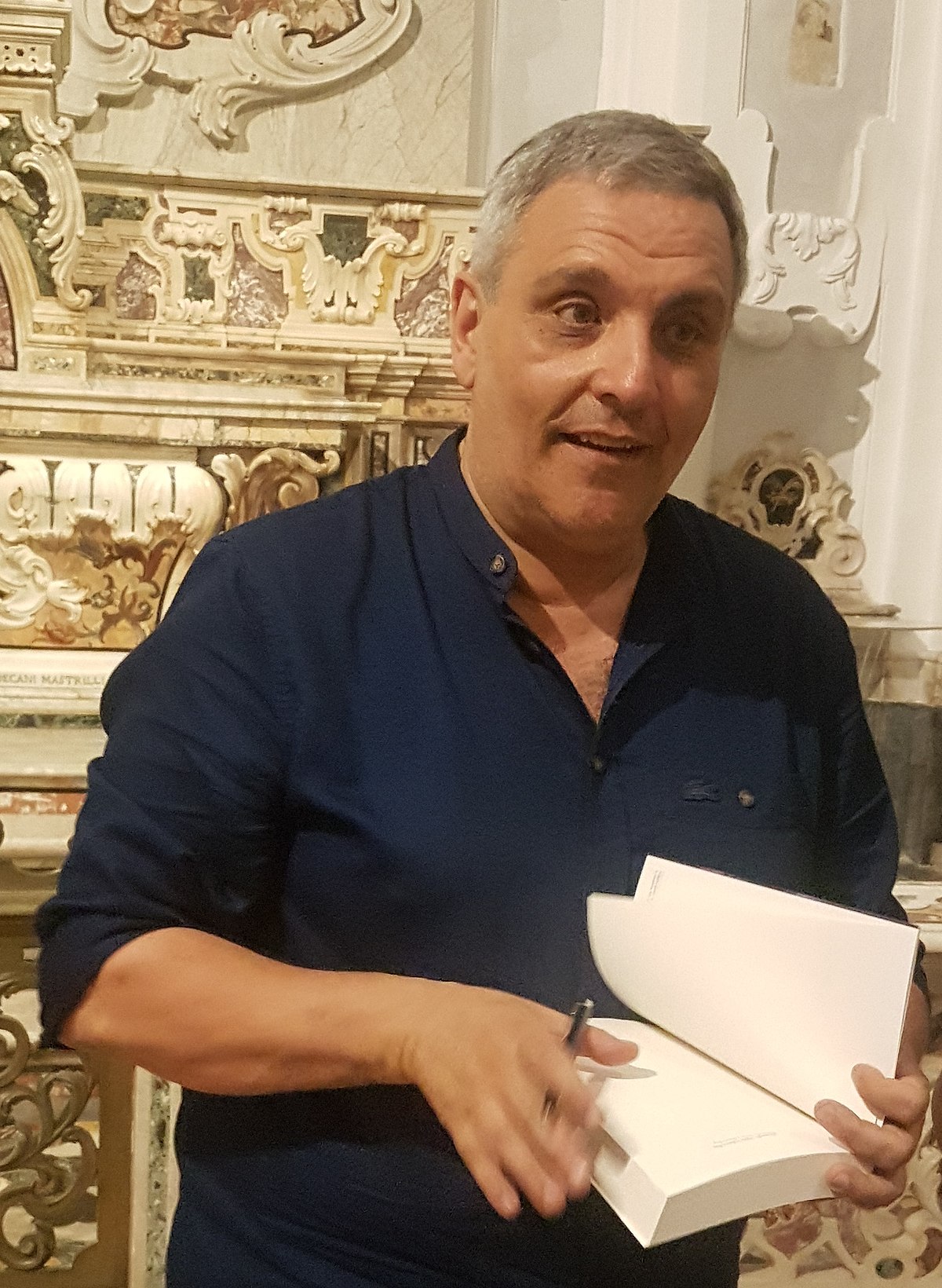
Maurizio de Giovanni, born on March 31, 1958, in Naples, Italy, is a prominent Italian author known for his richly textured crime novels, particularly the Commissario Ricciardi and Bastardi di Pizzofalcone series. His literary works have captured the imaginations of readers not only in Italy but across the globe, earning him a reputation as one of the most significant contemporary writers in the crime and noir genres. This article explores the life, career, and contributions of Maurizio de Giovanni, offering detailed insights into his journey from a late-blooming author to a household name in Italian literature.
Early Life and Education
Maurizio de Giovanni was born and raised in Naples, a city that would later become the vivid backdrop for many of his novels. The rich cultural and historical tapestry of Naples profoundly influenced de Giovanni’s writing, infusing his work with a strong sense of place and authenticity.
After completing his classical studies at the Istituto Pontano in Naples, de Giovanni pursued a degree in Classical Literature, reflecting his deep-rooted interest in history, language, and storytelling. His academic background provided a solid foundation for his future literary endeavors, equipping him with the skills to craft intricate narratives steeped in historical and cultural detail.
Despite his literary inclinations, de Giovanni initially pursued a career in banking. He worked for many years at the Banco di Napoli, a career path that seemed far removed from the world of literature. However, this period of his life was crucial in shaping his understanding of human nature, societal structures, and the complexities of life—all themes that would later feature prominently in his novels.
A Late Start to Literary Fame
Maurizio de Giovanni’s foray into writing came relatively late in life. It wasn’t until 2005, at the age of 47, that he achieved his first significant success as a writer. His entry into the literary world was rather unconventional: he participated in a writing contest organized by Porsche Italia, which sought to discover emerging crime writers. For this contest, de Giovanni penned a short story titled I vivi e i morti (“The Living and the Dead”), introducing the character of Commissario Ricciardi, a melancholic detective with the unique ability to perceive the final thoughts of murder victims.
The story, set in 1930s Naples, won the contest and marked the beginning of what would become the widely celebrated Commissario Ricciardi series. The first full-length novel, Il senso del dolore (“The Sense of Pain”), was published in 2007, laying the foundation for a series that would span multiple books, each aligned with the seasons of the year.
The Commissario Ricciardi Series: A Masterpiece of Historical Noir
The Commissario Ricciardi series is perhaps Maurizio de Giovanni’s most acclaimed work. Set in Fascist-era Naples, the novels offer a unique blend of historical fiction, crime, and supernatural elements. The protagonist, Luigi Alfredo Ricciardi, is a complex and introspective figure, burdened by his ability to hear the last words of murder victims—a gift he perceives more as a curse.
This series not only captivated readers with its intricate plots and compelling characters but also provided a haunting portrayal of Naples during a tumultuous period in Italian history. De Giovanni’s meticulous research and deep understanding of the era allowed him to depict the socio-political climate with accuracy and sensitivity, earning him both critical and commercial success.
Titles in the series include:
- Il senso del dolore (“The Sense of Pain”)
- La condanna del sangue (“Blood Curse”)
- Il posto di ognuno (“Everyone’s Place”)
- Il giorno dei morti (“The Day of the Dead”)
These novels explore themes of justice, morality, and human suffering, all against the backdrop of a city struggling under the weight of Fascism. The series’ success cemented de Giovanni’s reputation as a master of the historical noir genre.
Expansion into Contemporary Crime Fiction: The Bastardi di Pizzofalcone Series
Following the success of the Commissario Ricciardi series, Maurizio de Giovanni expanded his literary horizons with the Bastardi di Pizzofalcone series. This series marked a shift from the historical setting of the 1930s to contemporary Naples, reflecting de Giovanni’s versatility as a writer.
The Bastardi di Pizzofalcone series is inspired by the 87th Precinct novels of Ed McBain, an American author whom de Giovanni greatly admires. The series centers around a group of misfit detectives—each with their own troubled past—who work together to solve crimes in one of Naples’ most notorious neighborhoods.
The first book, I bastardi di Pizzofalcone (“The Bastards of Pizzofalcone”), introduces readers to this ensemble cast of characters, each of whom is struggling with personal demons while trying to prove their worth in a police force that has little faith in them. The series has been praised for its gritty realism, complex characters, and its unflinching portrayal of the darker side of Naples.
Other titles in the series include:
- Buio (“Darkness”)
- Gelo (“Cold”)
- Cuccioli (“Puppies”)
- Pane (“Bread”)
The popularity of the Bastardi di Pizzofalcone series led to its adaptation into a successful television series, which brought de Giovanni’s characters to an even wider audience. The show, which aired on RAI, Italy’s national broadcaster, featured Alessandro Gassmann in the lead role and received critical acclaim for its faithful adaptation of the books.
Beyond Crime Fiction: Exploring Other Genres
While Maurizio de Giovanni is best known for his crime novels, his literary talents extend beyond this genre. Throughout his career, he has experimented with various forms of storytelling, including short stories, plays, and even sports writing. His versatility as a writer is evident in his ability to move seamlessly between different genres while maintaining a high standard of literary quality.
In addition to his crime novels, de Giovanni has written several plays, some of which have been adapted into successful stage productions. His play Il silenzio grande (“The Great Silence”), directed by Alessandro Gassmann, was particularly well-received and later adapted into a film in 2021, further showcasing de Giovanni’s skill as a storyteller.
De Giovanni’s love for sports, particularly soccer, has also found expression in his writing. As a passionate fan of SSC Napoli, he has penned several works related to the sport, including Juve-Napoli 1-3 – La presa di Torino and Miracolo a Torino – Juve-Napoli 2-3. These works highlight his ability to capture the emotional intensity and cultural significance of soccer in Naples, a city where the sport is almost a religion.
Recognition and Awards
Maurizio de Giovanni’s contributions to literature have not gone unnoticed. Over the years, he has received numerous awards and honors, both in Italy and internationally. In 2021, he was awarded an honorary degree in Modern Philology from the University of Naples Federico II, a testament to his impact on Italian literature and culture.
De Giovanni has also been recognized for his work in promoting Italian literature abroad. His books have been translated into several languages, allowing non-Italian readers to experience the rich cultural and historical contexts of his stories. His ability to transcend cultural and linguistic barriers speaks to the universal themes present in his work—themes of justice, morality, and the human condition.
Maurizio de Giovanni Today: Continuing to Inspire
As of 2024, Maurizio de Giovanni remains an active and prolific writer. He continues to publish new works, including recent novels such as Il concerto dei destini fragili (“The Concert of Fragile Destinies”) and L’equazione del cuore (“The Equation of the Heart”). These books further explore the themes of human fragility, destiny, and the complexities of life—hallmarks of de Giovanni’s writing.
De Giovanni’s influence extends beyond the written word. He is actively involved in various cultural initiatives, particularly those aimed at promoting literature and the arts in Naples. He frequently participates in literary festivals, conferences, and public readings, where he engages with readers and aspiring writers, sharing his insights and experiences.
Conclusion
Maurizio de Giovanni’s journey from a late-blooming author to a celebrated literary figure is a testament to his talent, determination, and deep connection to his roots. His works, whether set in the historical past or the contemporary present, offer readers a rich tapestry of human experiences, set against the vibrant backdrop of Naples.
De Giovanni’s ability to blend historical detail with compelling narratives has earned him a place among the greats of Italian literature. His characters—whether the haunted Commissario Ricciardi or the determined detectives of Pizzofalcone—resonate with readers for their depth, complexity, and humanity.
As he continues to write and explore new creative avenues, Maurizio de Giovanni remains a significant voice in contemporary literature, inspiring readers and writers alike with his storytelling prowess and his commitment to the craft. His legacy is one of perseverance, creativity, and a profound love for his city, Naples, which continues to be the heart and soul of his literary world.


