
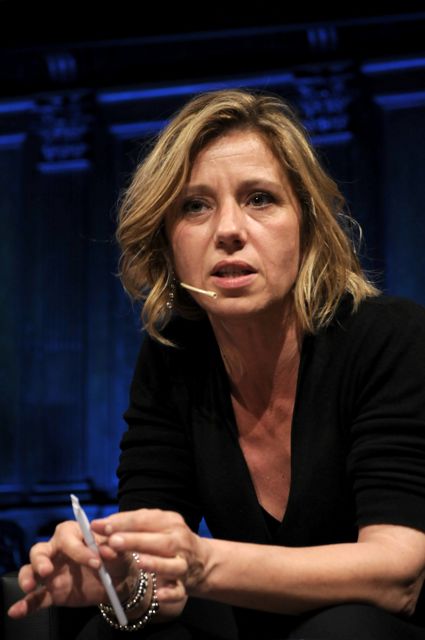
Concita De Gregorio is one of Italy’s most respected journalists, authors, and television hosts, with a career spanning over three decades. Born on November 19, 1963, in Pisa, Italy, De Gregorio has made significant contributions to the fields of journalism and literature, becoming a prominent voice in Italian media. Her work is characterized by a deep commitment to social issues, a passion for storytelling, and an unwavering dedication to uncovering the truth.
Early Life and Education
Concita De Gregorio was born into a family that valued intellect and public service. Her father, Paolo De Gregorio, was a magistrate from Tuscany, and her mother, Concha, hailed from Barcelona, Spain. Interestingly, Concita’s name was passed down from her mother and grandmother, following a tradition in Catalonia of naming the firstborn daughters after their maternal ancestors.
Her early life was marked by frequent relocations due to her father’s profession, which took the family from Pisa to Biella in Northern Italy, where she attended elementary school. As a teenager, she returned to Livorno, a coastal city in Tuscany, where she completed her high school education at the prestigious Liceo Classico “Niccolini Guerrazzi.” De Gregorio’s academic journey continued at the University of Pisa, where she graduated with a degree in Political Science. During her university years, she developed a keen interest in journalism, which would later define her career.
Early Career in Journalism
Concita De Gregorio began her career in journalism while still a university student. She worked for various local television and radio stations in Tuscany, gaining valuable experience in the field. In 1985, she joined Il Tirreno, a regional newspaper based in Livorno, where she covered various beats, including crime reporting in Livorno, Piombino, Pistoia, and Lucca. Her work in crime reporting honed her investigative skills and established her as a journalist who was unafraid to tackle difficult and often controversial topics.
The Move to La Repubblica and National Recognition
In 1990, De Gregorio’s career took a significant leap forward when she joined La Repubblica, one of Italy’s most prestigious newspapers. Her entry into La Repubblica was facilitated by winning the Mario Formenton Award, a highly coveted prize that opened doors to the country’s top media outlets. At La Repubblica, she was mentored by renowned journalists Eugenio Scalfari and Giampaolo Pansa, who recognized her potential and helped shape her journalistic voice.
At La Repubblica, De Gregorio quickly made a name for herself by covering internal politics and major national events. She introduced the term “girotondini” to describe the Italian anti-corruption movement, showcasing her ability to capture the essence of political movements in memorable ways. Her reporting was marked by a combination of insightful analysis and a deep understanding of Italy’s complex political landscape.
Personal Life and Literary Pursuits
Concita De Gregorio’s personal life has also been closely intertwined with her professional achievements. In 1994, she became a mother for the first time, giving birth to her son Pietro Cecioni. She married Alessandro Cecioni, a fellow journalist known for his work on the infamous “Monster of Florence” case, further cementing her ties to the world of investigative journalism. Over the next few years, De Gregorio expanded her family, welcoming two more sons, Lorenzo in 1996 and Bernardo in 2003.
In addition to her journalistic career, De Gregorio began exploring the world of literature. Her first book, Non lavate questo sangue. I giorni di Genova, was published in 2001 and focused on the violent events during the G8 summit in Genoa that year. The book was a powerful exploration of state violence and civil unrest, cementing her reputation as a writer who was unafraid to tackle difficult subjects head-on.
In 2006, she published her second book, Una madre lo sa. Tutte le ombre dell’amore perfetto, a poignant exploration of motherhood and the complexities of maternal love. The book was well-received and was shortlisted for the prestigious Premio Bancarella, a significant literary award in Italy. De Gregorio also contributed to the postscript of Rosalind B. Penfold’s book Le pantofole dell’orco. Storia di un amore crudele, highlighting her engagement with social issues beyond her journalistic work.
Breaking Barriers as Editor-in-Chief of L’Unità
One of the most significant milestones in Concita De Gregorio’s career came in 2008 when she was appointed editor-in-chief of L’Unità, a historic Italian newspaper founded by the Italian Communist Party in 1924. Her appointment was groundbreaking, as she became the first woman to hold this prestigious position. However, her appointment was not without controversy. The news of her appointment was leaked through an interview in the magazine Prima Comunicazione, which led to protests from the editorial committee of L’Unità. Despite the initial uproar, De Gregorio officially took the helm on August 22, 2008, at the strong recommendation of Walter Veltroni, a prominent Italian politician.
As editor-in-chief, De Gregorio brought a fresh perspective to the newspaper, steering it through challenging times while maintaining its legacy as a voice for leftist ideals in Italy. Her leadership was marked by a commitment to investigative journalism and a focus on social justice issues. During her tenure, she also authored several books, including Malamore. Esercizi di resistenza al dolore, which delved into the themes of love, pain, and resilience.
Return to La Repubblica and Continued Literary Success
In 2011, after three years at L’Unità, De Gregorio stepped down from her role as editor-in-chief and returned to La Repubblica. Her departure from L’Unità was influenced by political pressures, as Pierluigi Bersani, then-leader of the Democratic Party, preferred Claudio Sardo for the editor-in-chief role. However, De Gregorio’s return to La Repubblica marked a new chapter in her career, as she continued to contribute thought-provoking articles and essays on current events.
In the same year, she published Così è la vita. Imparare a dirsi addio, a book that explored the theme of death and the various ways people come to terms with loss. The book resonated with readers, offering a compassionate and introspective look at one of life’s most challenging experiences. De Gregorio also wrote the preface for Sul velo. Lettere aperte alle donne musulmane by Nicla Vassallo and Marnia Lazreg, further showcasing her engagement with issues of social and cultural importance.
Her journalistic integrity and fearless approach to reporting were once again evident in 2011 when she made headlines for revealing that a high-ranking official within the Democratic Party admitted to deliberately losing the 2010 regional elections in Lazio to favor Renata Polverini, a candidate backed by Gianfranco Fini. This revelation sparked widespread controversy and highlighted De Gregorio’s commitment to exposing political machinations, even when it involved her own political affiliations.
In 2013, De Gregorio published Io vi maledico, an investigative book that delved into the growing sentiment of anger and disillusionment in contemporary Italy. The book captured the frustration of a nation grappling with economic hardships and political instability, further cementing De Gregorio’s reputation as a journalist and author who could capture the pulse of the nation.
Television and Radio Career
In addition to her work in print journalism, Concita De Gregorio has made significant contributions to Italian television and radio. From 2013 to 2016, she hosted Pane quotidiano on Raitre, a daily cultural and literary program that aired every weekday morning. The show was well-received, with De Gregorio’s thoughtful interviews and discussions bringing a fresh perspective to cultural programming in Italy.
In September 2018, she expanded her media presence by becoming a radio host on Radio Capital, where she launched the program Cactus, basta poca acqua. The show, which continues to be popular, reflects De Gregorio’s ability to connect with a wide audience on various platforms, from print to broadcast media.
Recent Work and Current Projects
The 2020s have seen Concita De Gregorio continue to thrive in her multifaceted career. In 2021, she co-hosted the summer edition of In onda on LA7 with David Parenzo. The positive reception of the show extended its run into the winter season, further solidifying her presence on Italian television.
In the fall of 2021, De Gregorio released her latest book, Lettera a una ragazza del futuro. The book, featuring beautiful illustrations by Mariachiara Di Giorgio, was praised for its insightful and hopeful message to future generations. De Gregorio’s ability to address complex social issues with clarity and compassion continues to resonate with readers and viewers alike.
In March 2023, De Gregorio made a courageous public appearance on the television program Belve on Rai 2, where she was interviewed by Francesca Fagnani. During the interview, De Gregorio revealed that she had undergone surgery for cancer, sharing her personal battle with the disease. Her openness about her health struggles was met with widespread support and admiration, further endearing her to the Italian public.
Legacy and Impact
Concita De Gregorio’s career is a testament to her resilience, intelligence, and unwavering commitment to the truth. Over the years, she has broken barriers as a journalist and editor, becoming a role model for women in media. Her work has consistently focused on social justice, political integrity, and cultural exploration, making her one of Italy’s most respected and influential media figures.
Her ability to navigate the complexities of Italian society and politics, coupled with her talent for storytelling, has earned her a lasting place in the annals of Italian journalism. As she continues to write, broadcast, and engage with the public, Concita De Gregorio’s influence on Italian media and culture shows no signs of waning.
Her journey from a young journalist in Livorno to one of the most prominent voices in Italian media is a story of dedication, courage, and the relentless pursuit of truth. As she continues to inspire and challenge her audience, De Gregorio remains a vital and dynamic presence in the ever-evolving landscape of journalism and media in Italy.


