
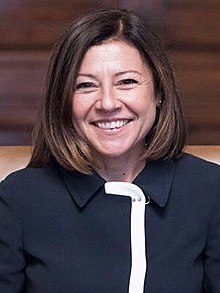
Paola De Micheli, born on September 1, 1973, in Piacenza, Italy, is a prominent Italian politician and manager whose career has been marked by significant contributions to both the public and private sectors. Over the years, De Micheli has become a key figure in Italian politics, holding several high-profile positions, including Minister of Infrastructure and Transport. Her journey through the political landscape reflects her deep commitment to public service and her ability to navigate the complexities of Italian governance. This article delves into her life, career, and the pivotal moments that have defined her path.
Early Life and Education
Paola De Micheli was born and raised in Piacenza, a city known for its rich history and cultural heritage. Her early life was shaped by the values of hard work and dedication, which were instilled in her by her family. She pursued higher education at the prestigious Catholic University of Milan, where she earned a degree in Political Science. This academic background provided her with a solid foundation in understanding the intricacies of political systems and governance, which would later prove invaluable in her political career.
After completing her education, De Micheli entered the workforce, initially taking on roles in the private sector. She worked as a manager in a company specializing in the transformation of tomatoes into sauces—a key industry in the agricultural sector of Italy. Her experience in this field gave her a practical understanding of the challenges and opportunities within the agro-industrial sector, and it also marked the beginning of her involvement with cooperatives.
De Micheli’s early professional life was characterized by her work with agricultural cooperatives, particularly through her leadership roles in organizations like the Consorzio Cooperativo Conserve Italia. She served as the president and CEO of Agridoro, a cooperative in the same sector. However, her tenure at Agridoro was not without controversy; the cooperative faced liquidation due to non-compliance issues in 2003, and De Micheli was later fined by a court in Piacenza in 2013. Despite these challenges, her early career provided her with critical insights into the workings of both the public and private sectors, laying the groundwork for her future political endeavors.
Entry into Politics and Early Political Career
Paola De Micheli’s political career began in 1998 when she became involved with the Christian Democracy (Democrazia Cristiana) party. Her early foray into politics saw her engage with the youth wing of the party, where she quickly rose through the ranks. Her work with the Christian Democrats set the stage for her later political alignment with center-left parties in Italy.
In 1999, De Micheli was elected to the City Council of Pontenure, a small town in the province of Piacenza. She held this position until 2004, gaining valuable experience in local governance. Her work at the municipal level provided her with a deeper understanding of the challenges faced by local administrations, particularly in managing budgets and personnel—a skill set that would later prove crucial in her national political career.
Her political journey continued as she transitioned to national politics. In 2007, De Micheli joined the Democratic Party (PD), a major center-left political party in Italy, which was formed through the merger of several left-leaning parties, including the Democrats of the Left and the Margherita party. Her involvement with the PD marked a significant turning point in her political career, as she began to focus more on national issues.
In the same period, she served as an assessor for the budget and personnel in the municipality of Piacenza, further solidifying her expertise in financial management and public administration. De Micheli’s ability to manage complex budgets and her understanding of the economic challenges facing Italy made her a valuable asset to the PD, particularly as the country grappled with the effects of the global financial crisis.
National Political Career and Rise to Prominence
Paola De Micheli’s national political career took off in 2008 when she was elected to the Italian Chamber of Deputies, representing the Emilia-Romagna region. Her election to Parliament marked the beginning of her rise to national prominence. As a member of the Chamber of Deputies, De Micheli became actively involved in legislative work, focusing on issues related to the economy, infrastructure, and public administration.
One of her significant early roles in Parliament was as a member of the Budget Committee, where she was involved in overseeing the country’s financial policies. Her work on the Budget Committee was instrumental in shaping Italy’s economic strategies during a period of considerable financial instability. De Micheli’s expertise in economic matters led to her appointment as the National Head of Small and Medium Enterprises (PMI) within the Democratic Party. In this role, she advocated for policies that supported the growth and sustainability of SMEs, which are the backbone of the Italian economy.
De Micheli’s influence within the Democratic Party continued to grow, and she became known for her pragmatic approach to politics. Her ability to navigate the complexities of Italy’s political landscape earned her the trust of party leaders, and she was appointed to several key positions within the party’s hierarchy.
In 2012, De Micheli participated in the Democratic Party’s primary elections and was re-elected to the Chamber of Deputies in the general elections of 2013. During the XVII legislature, she served as the Deputy Group Leader for the PD, playing a crucial role in coordinating the party’s activities in Parliament. Her leadership skills were further recognized when she was appointed Undersecretary of the Economy in the government led by Prime Minister Matteo Renzi.
Ministerial Roles and Key Achievements
Paola De Micheli’s career reached new heights in 2017 when she was appointed Commissioner for the Reconstruction of the areas affected by the central Italy earthquakes of 2016, succeeding Vasco Errani. In this role, De Micheli was responsible for overseeing the recovery and rebuilding efforts in the earthquake-stricken regions. Her work as Commissioner was widely praised for its efficiency and effectiveness, as she managed to balance the immediate needs of the affected communities with the long-term planning required for sustainable reconstruction.
In September 2019, Paola De Micheli was appointed Minister of Infrastructure and Transport in the second government of Prime Minister Giuseppe Conte. This role placed her at the helm of one of Italy’s most critical ministries, responsible for the development and maintenance of the country’s transportation networks and infrastructure. As Minister, De Micheli oversaw significant projects aimed at improving Italy’s infrastructure, including initiatives to modernize the country’s railways, roads, and ports.
One of her notable achievements as Minister was her work on the expansion of Italy’s high-speed rail network, a project that aimed to enhance connectivity between major cities and boost economic growth. De Micheli also focused on promoting sustainable transportation, supporting initiatives that encouraged the use of public transport and the development of green infrastructure.
Her tenure as Minister was not without challenges. She had to navigate complex negotiations with various stakeholders, including regional governments, transportation unions, and private sector companies. Despite these challenges, De Micheli’s leadership was marked by a commitment to transparency and accountability, qualities that earned her respect from both her colleagues and the public.
Political Philosophy and Influence
Paola De Micheli’s political philosophy is closely aligned with the reformist wing of the Democratic Party, known as Area Riformista. This faction of the PD advocates for progressive policies aimed at modernizing Italy’s economy and social systems while maintaining a commitment to social justice and equality. De Micheli has been a vocal supporter of policies that promote economic growth, job creation, and innovation, particularly in the context of small and medium enterprises.
Her involvement in the Sinistra è Cambiamento (The Left is Changing) movement within the PD reflects her belief in the need for the left to adapt to the changing political and economic landscape. This movement, which she helped to found, sought to renew the Italian left by embracing reforms that would make it more relevant and responsive to the needs of contemporary society.
De Micheli’s influence within the PD and her role in shaping the party’s economic policies have made her a key figure in Italian politics. Her pragmatic approach and ability to build consensus have positioned her as a potential future leader within the party, particularly as the PD continues to navigate the challenges of governing in a complex and often fragmented political environment.
Personal Life and Other Interests
Outside of her political career, Paola De Micheli is known for her commitment to family and community. She is married to Giacomo Massari, and the couple has a son named Pietro, who was born in 2016. Despite her demanding career, De Micheli has managed to balance her professional responsibilities with her role as a mother, often highlighting the importance of family in her public statements.
In addition to her political work, De Micheli has a strong interest in sports, particularly volleyball. In 2016, she made history by becoming the first female president of the Italian Volleyball League (Lega Pallavolo Serie A), a position that underscores her commitment to promoting sports and physical activity in Italy. Her leadership in this role has been praised for its focus on increasing the visibility of volleyball and supporting the development of young athletes.
De Micheli is also an author; in 2017, she published a book titled Se chiudi ti compro: Le imprese rigenerate dai lavoratori (If You Close, I’ll Buy You: Companies Regenerated by Workers), co-written with Stefano Imbruglia and Antonio Misiani, with a preface by former Italian Prime Minister Romano Prodi. The book explores the concept of worker cooperatives and the role they can play in revitalizing struggling businesses. Through this work, De Micheli has contributed to the broader discourse on economic sustainability and social responsibility in Italy.
Conclusion
Paola De Micheli’s life and career reflect a deep commitment to public service and a determination to make a positive impact on Italian society. From her early days in local politics to her leadership roles at the national level, De Micheli has demonstrated a strong understanding of the challenges facing Italy and a clear vision for how to address them. Her work in infrastructure, economic policy, and disaster recovery has left a lasting mark on the country, and her influence within the Democratic Party continues to shape the direction of Italian politics.
As she continues her career, Paola De Micheli remains a figure to watch in Italian politics. Her ability to navigate complex issues, build consensus, and advocate for progressive policies makes her a key player in the ongoing efforts to modernize and strengthen Italy’s economy and social systems. Whether in her role as a politician, author, or sports leader, De Micheli’s dedication to her work and her country is evident, and her contributions are likely to continue to resonate for years to come.


