
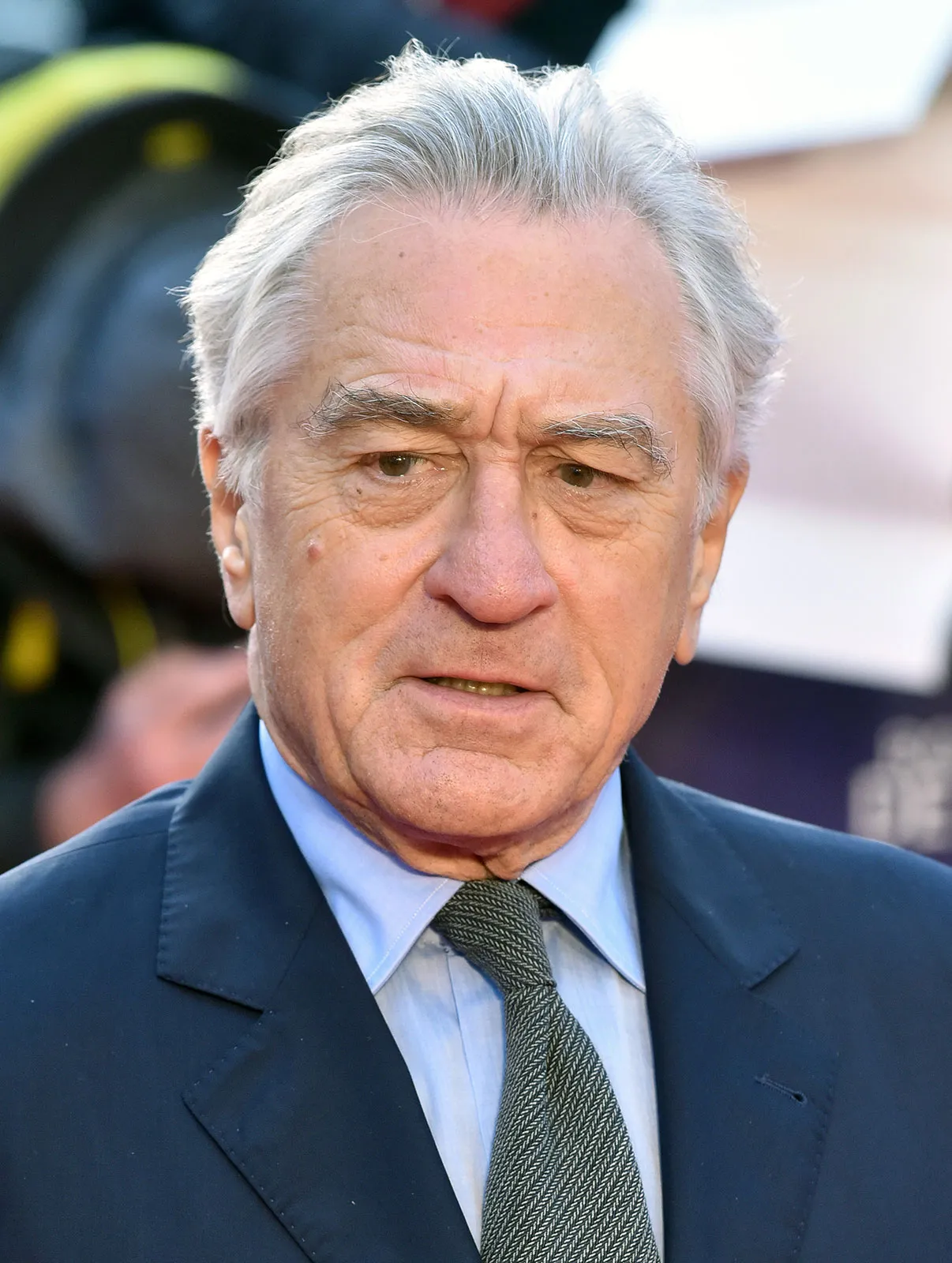
Robert De Niro, born on August 17, 1943, in New York City, is widely regarded as one of the most influential and talented actors in the history of cinema. With a career spanning over five decades, De Niro has become synonymous with method acting and intense character portrayals that have left an indelible mark on both American and global cinema. This article provides an in-depth exploration of Robert De Niro’s age, rise to fame, and the key highlights of his illustrious career, delving into the nuances of his performances, his contributions to the film industry, and his enduring legacy.
Early Life and Artistic Roots
Robert De Niro was born into an artistic family, which laid the groundwork for his future in the arts. His mother, Virginia Admiral, was a respected painter, while his father, Robert De Niro Sr., was a celebrated artist in his own right, known for his work as a painter, sculptor, and poet. This rich artistic environment influenced De Niro from an early age, though his childhood was reportedly marked by a deep sense of loneliness and introspection. These formative years, characterized by a blend of artistic exposure and personal solitude, would later inform the depth and complexity of his performances.
De Niro’s early education included attending the Fiorello H. LaGuardia High School of Music & Art and Performing Arts in New York City. He further honed his craft at the Stella Adler Conservatory and later at Lee Strasberg’s Actors Studio, where he immersed himself in method acting. This training would become a cornerstone of his career, enabling him to transform into the deeply layered characters for which he would become famous.
Breakthrough and Early Successes
Robert De Niro’s path to stardom was gradual, marked by a series of roles that showcased his versatility and dedication to his craft. His early work in the 1960s included roles in films directed by Brian De Palma, such as “Greetings” (1968) and “Hi, Mom!” (1970). These films, while not widely known today, were significant in establishing De Niro as a promising young actor willing to take on unconventional roles.
However, it was his collaboration with legendary directors like Francis Ford Coppola and Martin Scorsese that truly launched De Niro into the upper echelons of Hollywood. In 1974, De Niro’s portrayal of a young Vito Corleone in Coppola’s “The Godfather Part II” earned him his first Academy Award for Best Supporting Actor. This role not only cemented his place in Hollywood but also established him as an actor capable of delivering powerful performances with subtlety and nuance.
The Scorsese Partnership: A Cinematic Legend
One of the most significant aspects of Robert De Niro’s career is his long-standing collaboration with director Martin Scorsese. The duo’s partnership has produced some of the most iconic films in cinema history, starting with “Mean Streets” (1973), where De Niro’s portrayal of the reckless Johnny Boy brought him critical acclaim. This film marked the beginning of a creative partnership that would span decades.
In 1976, De Niro starred in Scorsese’s “Taxi Driver,” delivering one of the most memorable performances in film history. His portrayal of Travis Bickle, a mentally unstable Vietnam War veteran, is often cited as one of the greatest performances of all time. The film’s famous line, “You talkin’ to me?” has since become a cultural touchstone, epitomizing De Niro’s ability to delve deep into the psyche of his characters.
De Niro and Scorsese continued to collaborate on a series of films that would define both of their careers. “Raging Bull” (1980), in which De Niro portrayed the troubled boxer Jake LaMotta, earned him an Academy Award for Best Actor. The film is lauded for its raw, unflinching depiction of LaMotta’s life, with De Niro’s transformation—both physically and emotionally—setting a new standard for method acting.
Their other collaborations, including “Goodfellas” (1990), “Cape Fear” (1991), and “Casino” (1995), further solidified De Niro’s status as a leading actor of his generation. These films not only showcased his range but also highlighted his ability to convey complex, morally ambiguous characters with remarkable authenticity.
Expanding Horizons: Beyond Acting
While Robert De Niro is best known for his acting, his contributions to the film industry extend far beyond his on-screen performances. In 1989, he co-founded TriBeCa Productions, a film production company, and later, the Tribeca Film Festival, which has become one of the most important platforms for independent filmmakers. Through these ventures, De Niro has played a crucial role in supporting and nurturing new talent in the industry.
De Niro also ventured into directing, making his debut with the critically acclaimed film “A Bronx Tale” in 1993. The film, which explores themes of loyalty, family, and the struggles of growing up in a tough New York neighborhood, was well-received and showcased De Niro’s ability to tell compelling stories from behind the camera.
In addition to his work in film, De Niro is also a successful entrepreneur. He co-owns several restaurants, including the high-end Nobu chain, which has become a global brand. Despite his significant business interests, De Niro remains deeply committed to his craft, continuing to take on challenging roles that push the boundaries of his acting abilities.
Later Career and Continued Success
As De Niro moved into the later stages of his career, he continued to take on a diverse range of roles, demonstrating his enduring appeal and versatility as an actor. In the 1990s and 2000s, he appeared in a mix of serious dramas and comedies, further showcasing his range. Films like “Heat” (1995), “The Score” (2001), and “Meet the Parents” (2000) highlighted his ability to navigate different genres with ease.
One of his most notable performances in recent years came in the 2012 film “Silver Linings Playbook,” directed by David O. Russell. De Niro’s portrayal of Pat Solitano Sr., a father struggling to connect with his mentally ill son, earned him critical acclaim and another Academy Award nomination. The role demonstrated that even after decades in the industry, De Niro was still capable of delivering emotionally resonant performances that connected with audiences.
In 2019, De Niro reunited with Martin Scorsese for “The Irishman,” a sprawling epic that chronicles the life of a hitman involved in the disappearance of union leader Jimmy Hoffa. The film, which utilized groundbreaking de-aging technology to allow De Niro to portray his character across several decades, was hailed as a masterpiece and earned numerous accolades. De Niro’s performance was praised for its depth and subtlety, reaffirming his status as one of the greatest actors of his generation.
Personal Life: The Man Behind the Legend
Despite his immense fame, Robert De Niro has always been fiercely protective of his privacy. Known for his aversion to the celebrity spotlight, De Niro rarely participates in the glitzy world of Hollywood parties and events, preferring to keep his personal life out of the public eye.
De Niro has been married twice and has seven children. He married his first wife, actress Diahnne Abbott, in 1976, and they had a son, Raphael, before divorcing in 1988. De Niro later had twin sons, Julian and Aaron, with model Toukie Smith through a surrogate. In 1997, he married Grace Hightower, with whom he has two children, including Elliot, who was born in 1998 and diagnosed with autism. De Niro and Hightower separated in 2018, but their relationship remains a subject of public interest.
In May 2023, De Niro welcomed his seventh child, Gia Virginia, with Tiffany Chen, continuing his legacy both on and off the screen. Despite the challenges of balancing a demanding career with his responsibilities as a father, De Niro has always prioritized his family, often speaking about the joys and struggles of parenthood in interviews.
Health Battles and Resilience
In 2003, Robert De Niro faced a significant health challenge when he was diagnosed with prostate cancer. The actor underwent successful surgery at the Memorial Sloan-Kettering Cancer Center in New York and made a full recovery. His resilience in the face of illness is a testament to his strength and determination, qualities that have also defined his career.
Honors and Recognition
Robert De Niro’s contributions to the arts have been recognized with numerous awards and honors throughout his career. In addition to his Academy Awards, De Niro has received the AFI Life Achievement Award, the Golden Globe Cecil B. DeMille Award, and the Presidential Medal of Freedom, one of the highest civilian honors in the United States.
In 2004, De Niro was granted honorary citizenship by the Italian town of Ferrazzano, where his ancestors originated. Two years later, in 2006, he was officially naturalized as an Italian citizen, fulfilling a long-held desire to reconnect with his Italian heritage. These honors reflect De Niro’s deep connection to his roots and his enduring impact on the world of cinema.
Legacy and Influence
As Robert De Niro continues to work well into his 70s, his legacy as one of the greatest actors of all time is secure. His influence extends far beyond his performances; he has shaped the careers of countless actors and filmmakers, both through his work in front of the camera and his efforts to promote independent cinema.
De Niro’s dedication to his craft, his willingness to take risks, and his ability to bring authenticity and depth to every role have set a standard for generations of actors to follow. His films have not only entertained audiences but have also offered profound insights into the human condition, making him a true icon of American cinema.
In conclusion, Robert De Niro’s life and career are a testament to the power of talent, perseverance, and artistic integrity. From his early days as a struggling actor to his status as a Hollywood legend, De Niro has consistently pushed the boundaries of what is possible in cinema. His contributions to the film industry, his commitment to his craft, and his influence on future generations ensure that his legacy will endure for years to come.


