
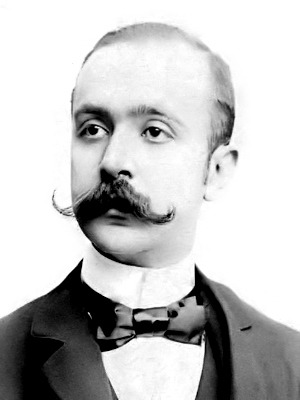
Federico De Roberto was a prominent Italian author and journalist, born on January 16, 1861, in Naples, Italy. He was a key figure in the literary movement of Verismo, which aimed to depict life as it truly was, without embellishment or romanticization. De Roberto’s contributions to Italian literature are significant, and his works continue to be studied for their deep psychological insights, historical context, and social commentary. This article delves into his life, his literary journey, and the impact he left on the world of literature.
Early Life and Education
Born into a family of noble origins, Federico De Roberto’s early life was marked by both privilege and tragedy. His father, Ferdinando De Roberto, was an officer in the General Staff, while his mother, Marianna degli Asmundo of Trapani, came from a distinguished Sicilian family. However, at the tender age of 10, Federico experienced the loss of his father, a life-changing event that led his mother to move the family to her native city of Catania.
In Catania, De Roberto pursued his education, initially focusing on the sciences. He attended the prestigious University of Catania, where he studied physical, mathematical, and natural sciences. However, his true passion lay elsewhere. Despite his initial foray into the sciences, De Roberto soon abandoned his studies to dedicate himself entirely to literature, a decision that would shape the rest of his life.
Early Writings and Entry into the Literary World
Federico De Roberto’s literary career began at a young age. By the time he was 18, his writings had already appeared in several prominent publications, including “Rassegna settimanale,” “Rivista europea” of Florence, and “Esploratore” of Milan. His early work was marked by a sharp intellect and a keen understanding of the social and political dynamics of his time.
In 1881, De Roberto took a significant step in his career by publishing and directing the magazine “Don Chisciotte.” This period marked his first major foray into the world of journalism, where he quickly became known for his incisive commentary and critical essays. He also engaged in public debates, most notably siding with the poet Mario Rapisardi in a well-known polemic against the famous poet Giosuè Carducci. De Roberto’s sharp pen and wit earned him a reputation as a formidable intellectual voice in Italian literature.
The Sicilian Influence and the School of Verismo
Federico De Roberto’s move to Catania exposed him to the vibrant literary scene of Sicily. It was here that he came into contact with some of the most important figures of Italian Verismo, including Luigi Capuana and Giovanni Verga. These interactions had a profound impact on De Roberto’s writing, as he became increasingly drawn to the Verismo movement, which sought to portray the harsh realities of life, particularly in the rural and impoverished regions of Italy.
One of De Roberto’s early works, “La malanova,” published in the newspaper “Fanfulla,” is an excellent example of his commitment to the Verismo style. This work, like much of his later writing, focused on the struggles of ordinary people, depicted with unflinching realism. It was during this period that De Roberto also founded the literary series “Sempre vivi” and published “Arabeschi” in 1883, a collection of critical essays on renowned authors like Flaubert, Zola, and Capuana.
Transition from Verismo to Psychological Exploration
As De Roberto’s career progressed, his writing began to evolve. While he remained deeply influenced by the principles of Verismo, he started to incorporate more psychological elements into his work. This shift is most evident in his 1891 novel “L’illusione,” which marked the beginning of what would later be known as the “cycle of the Uzeda.”
“L’illusione” tells the story of Teresa Uzeda, a restless Sicilian aristocrat, and her journey from childhood to adulthood. The novel explores themes of disillusionment, marital disappointment, and extramarital passion, drawing comparisons to Flaubert’s “Madame Bovary.” However, unlike Flaubert, De Roberto focused more on the psychological depth of his characters, offering readers a nuanced exploration of their inner lives.
In “L’illusione,” De Roberto masterfully blends the objective, observational style of Verismo with a deep psychological analysis of his characters. This combination of external realism and internal exploration would become a hallmark of his later works.
“I Viceré”: The Masterpiece of Historical and Psychological Fiction
Federico De Roberto’s most celebrated work is undoubtedly “I Viceré,” a novel that stands as a monumental achievement in both historical and psychological fiction. Written between 1892 and 1893, “I Viceré” is a sprawling epic that traces the fortunes of the aristocratic Uzeda family over several generations. The novel is set against the backdrop of the Italian unification, a period of great political and social upheaval.
“I Viceré” is more than just a family saga; it is a penetrating critique of the Italian aristocracy and its resistance to change. De Roberto’s portrayal of the Uzeda family is unflinching in its depiction of their decadence, corruption, and moral decay. Through this family, De Roberto offers a broader commentary on the failure of the Italian ruling class to adapt to the new realities of a unified Italy.
The novel’s historical setting allows De Roberto to explore themes of power, politics, and identity, while its psychological depth provides a rich analysis of the motivations and inner conflicts of its characters. “I Viceré” was groundbreaking in its combination of historical detail and psychological insight, making it a seminal work in Italian literature.
“L’Imperio”: The Final Chapter in the Cycle of the Uzeda
Following the success of “I Viceré,” Federico De Roberto continued to explore the lives of the Uzeda family in his novel “L’Imperio.” Written in 1893 but published posthumously in 1929, “L’Imperio” picks up where “I Viceré” left off, following the fortunes of Consalvo Uzeda as he becomes a member of the Italian Parliament.
“L’Imperio” delves into the political disillusionment of the post-Risorgimento period, highlighting the betrayal of the ideals that had driven the unification of Italy. The novel is marked by a deep sense of pessimism and a critique of the emerging parliamentary class, which De Roberto saw as corrupt and self-serving.
In “L’Imperio,” De Roberto continues his exploration of the psychological complexities of his characters, offering a bleak view of human nature and the consequences of power. The novel’s themes of political corruption and moral decay resonate with the broader currents of European literature at the time, particularly in the works of authors like Emile Zola and Henrik Ibsen.
Federico De Roberto’s Later Works and Legacy
In the years following the publication of “I Viceré” and “L’Imperio,” Federico De Roberto continued to write, although his later works did not achieve the same level of recognition. Among his notable later works are “L’amore. Fisiologia, psicologia, morale” (1895) and “Spasimo” (1897), the latter of which was adapted into a play.
De Roberto also became a regular contributor to several prominent Italian newspapers, including “Il Corriere della Sera” and “Roma di Roma.” His journalism was characterized by the same sharp intellect and keen social commentary that marked his fiction.
In the early 20th century, De Roberto’s writing took on a more experimental tone, particularly in his war-themed stories. These works, such as “Al rombo del cannone” (1919) and “La cocotte” (1923), explored the impact of war on individuals and society, blending naturalism with a new psychological realism.
Unfortunately, Federico De Roberto’s later years were marked by personal and professional difficulties. He struggled with health issues, including a debilitating case of phlebitis, which caused him great discomfort in his final years. Despite these challenges, De Roberto continued to write, although his output slowed significantly.
The Final Years and Posthumous Recognition
Federico De Roberto’s final years were spent in relative obscurity, as his health declined and his literary output dwindled. He devoted much of his time to caring for his ailing mother, Marianna, who passed away in 1926. De Roberto himself passed away just eight months later, on July 26, 1927, in Catania.
At the time of his death, Federico De Roberto was not widely recognized as one of Italy’s great authors. However, in the years following his death, his work began to receive renewed attention, particularly “I Viceré,” which has since been hailed as a masterpiece of Italian literature. The novel’s exploration of power, politics, and the human psyche continues to resonate with readers and scholars alike.
Today, Federico De Roberto is remembered as one of the most important Italian authors of the late 19th and early 20th centuries. His works, particularly “I Viceré,” are studied for their historical significance, psychological depth, and social commentary. De Roberto’s legacy is that of a writer who sought to understand and portray the complexities of human nature and the forces that shape our lives.
Conclusion
Federico De Roberto’s life and work offer a fascinating glimpse into the literary and intellectual currents of his time. From his early days as a young writer in Catania to his later years as a novelist and journalist, De Roberto remained committed to exploring the realities of life, both external and internal. His contributions to Italian literature, particularly his masterful blend of historical and psychological fiction, have earned him a lasting place in the canon of world literature.
As we reflect on the life and legacy of Federico De Roberto, we are reminded of the power of literature to illuminate the human condition and to challenge us to see the world in new and profound ways. De Roberto’s work continues to inspire readers and writers alike, offering a rich and nuanced exploration of the forces that shape our lives and our societies.


