
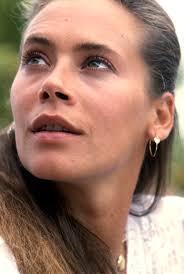
Barbara De Rossi, born on August 9, 1960, in Rome, Italy, is a celebrated Italian actress known for her diverse roles in film, television, and theater. With a career spanning several decades, De Rossi has become a prominent figure in the Italian entertainment industry, recognized for her talent, versatility, and enduring appeal. This article delves into the life and career of Barbara De Rossi, exploring her journey from a young beauty queen to one of Italy’s most beloved actresses.
Early Life and Entry into the Entertainment Industry
Barbara De Rossi was born and raised in Rome, a city known for its rich cultural heritage and vibrant arts scene. From a young age, she exhibited a natural inclination towards the performing arts. Her big break came in 1976, at the age of 16, when she won the “Miss Teenager” beauty contest. The competition, judged by notable figures in the industry, including the esteemed director Alberto Lattuada, marked the beginning of De Rossi’s career in the entertainment world.
Lattuada, impressed by De Rossi’s poise and charm, cast her in a feature for the television show “Odeon. Tutto quanto fa spettacolo.” This exposure led to her cinematic debut in the film “Così come sei” (Stay as You Are), where she played the daughter of the legendary Marcello Mastroianni. The role was a significant stepping stone, introducing De Rossi to the Italian film industry and setting the stage for her future success.
Rise to Fame in the 1980s
The 1980s were a pivotal decade for Barbara De Rossi, as she transitioned from a promising newcomer to a household name in Italy. In 1982, she gained widespread recognition for her role in the television drama “Storia d’amore e d’amicizia” (A Story of Love and Friendship), directed by Franco Rossi. The series, which featured a stellar cast including Elena Fabrizi, Massimo Bonetti, Ferruccio Amendola, and Claudio Amendola, was a critical and commercial success. De Rossi’s portrayal of one of the lead characters resonated with audiences, establishing her as a rising star in Italian television.
Following this success, De Rossi continued to make her mark on the big screen. In 1983, she starred in “I paladini – Storia d’armi e d’amori” (The Paladins – A Story of Arms and Love), a historical epic directed by Giacomo Battiato. The film, which featured Ronn Moss (later famous for his role as Ridge Forrester in “The Bold and the Beautiful”), showcased De Rossi’s ability to adapt to various genres, further enhancing her reputation as a versatile actress.
However, it was her role in the 1984 television miniseries “La piovra” (The Octopus) that truly cemented her status as a leading actress. Directed by Damiano Damiani, “La piovra” was a groundbreaking series that delved into the dark world of the Mafia in Italy. De Rossi played Titti Pecci Scialoia, a young aristocratic woman struggling with heroin addiction. Her powerful performance garnered widespread acclaim, making her a fixture in Italian households and a symbol of the quality and intensity of Italian television drama.
Continued Success and Expansion into International Cinema
The latter half of the 1980s saw Barbara De Rossi expanding her horizons, taking on a variety of challenging roles that demonstrated her range as an actress. In 1985, she appeared in “Quo Vadis?” directed by Franco Rossi, where she portrayed Eunice, a slave in ancient Rome. The miniseries, which starred Frederic Forrest, was another success, further establishing De Rossi’s presence on Italian television.
Around the same time, De Rossi also starred in “Io e il duce” (Mussolini and I), a miniseries directed by Alberto Negrin. The production featured an all-star cast, including Vittorio Mezzogiorno, Annie Girardot, Susan Sarandon, Anthony Hopkins, and Bob Hoskins. De Rossi played Claretta Petacci, the mistress of Benito Mussolini. Her portrayal of Petacci was both nuanced and compelling, earning her praise from critics and audiences alike.
In 1985, De Rossi participated in the Venice Film Festival with the movie “Mamma Ebe,” directed by Carlo Lizzani. The film, which starred Alessandro Haber, Stefania Sandrelli, and Berta D. Dominguez, highlighted De Rossi’s ability to tackle complex and emotionally demanding roles. Her involvement in this film was a testament to her growing influence in the Italian film industry.
De Rossi continued to work prolifically, taking on diverse roles that showcased her adaptability. She appeared in the thriller “Caramelle da uno sconosciuto” (Sweets from a Stranger) and “Vado a riprendermi il gatto” (I’m Going to Get My Cat), where she played a prostitute. These roles, along with her performance as a middle school teacher fighting against the ‘Ndrangheta in the TV movie “Uomo contro uomo” (Man Against Man), underscored her commitment to exploring different facets of the human experience through her craft.
Her international career also began to take shape during this period. De Rossi starred alongside Klaus Kinski in “Nosferatu a Venezia” (Nosferatu in Venice), a horror film directed by Augusto Caminito. She also appeared in two French films, “Giorni felici a Clichy” (Happy Days in Clichy), directed by Claude Chabrol, and “L’orchestre rouge” (The Red Orchestra), directed by Jacques Rouffio. These roles allowed her to expand her acting repertoire and gain recognition beyond Italy.
The 1990s: A Period of Intense Activity
The 1990s were a busy decade for Barbara De Rossi, as she continued to work across multiple mediums, including film, television, and theater. In 1992, she starred in the miniseries “La storia spezzata” (The Broken Story), where she portrayed an alcoholic woman, a role that required her to delve deep into the complexities of addiction and personal struggle.
De Rossi’s television work during this decade was particularly prolific. She appeared in “La scalata” (The Climb) and the TV movie “Sì, ti voglio bene” (Yes, I Love You), where she starred alongside Johnny Dorelli. Her performances in these productions were well-received, further solidifying her status as a reliable and talented actress in Italian television.
She returned to the big screen with the ensemble comedy “Maniaci sentimentali” (Sentimental Maniacs), which featured a star-studded cast including Alessandro Benvenuti, Monica Scattini, and Ricky Tognazzi. De Rossi also ventured into theater, performing in “L’anatra all’arancia” (The Orange Duck), a stage production that paired her with popular Italian actor Marco Columbro.
The 2000s: Television Stardom and Beyond
By the 2000s, Barbara De Rossi had become a familiar face on Italian television, particularly in the realm of fiction. She starred in several successful series, including “In fondo al cuore” (Deep in the Heart), “Senso di colpa” (Sense of Guilt), “Inviati speciali” (Special Envoys), and “Cinecittà,” a series that explored the glamorous world of Italian cinema.
In 2004, De Rossi was one of the leads in the miniseries “Amiche” (Friends), alongside Lorella Cuccarini, Claudia Koll, and Maria Amelia Monti. The show, which aired on Raidue, was a hit with audiences, thanks in part to the chemistry between its leading ladies. De Rossi also starred in “La stagione dei delitti” (The Season of Crimes), further cementing her reputation as a leading actress in Italian television drama.
Perhaps one of her most significant roles during this period was in “Un ciclone in famiglia” (A Cyclone in the Family), a comedic series on Canale 5 where she starred opposite Massimo Boldi for five seasons. The show’s success was a testament to De Rossi’s ability to handle both dramatic and comedic roles with equal finesse. However, the follow-up series “Fratelli Benvenuti” did not achieve the same level of success.
The 2010s: A New Chapter
The 2010s marked a new chapter in Barbara De Rossi’s career, as she continued to diversify her roles and explore new opportunities in the entertainment industry. In 2010, she participated in the popular dance competition show “Ballando con le stelle” (Dancing with the Stars), hosted by Milly Carlucci on Raiuno. Paired with professional dancer Simone Di Pasquale, De Rossi impressed both the judges and the audience, finishing in third place.
Following her stint on “Ballando con le stelle,” De Rossi became a television personality, serving as a commentator on “L’Isola dei Famosi” (The Celebrity Island), a reality show hosted by Nicola Savino on Raidue. Her sharp insights and candid opinions made her a popular figure on the show.
De Rossi returned to acting with a role in the popular drama series “Le tre rose di Eva” (The Three Roses of Eva), where she portrayed Eva Taviani. The show, which aired on Canale 5, was a hit with viewers and further showcased De Rossi’s talent for bringing complex characters to life.
In 2013, De Rossi took on a new role as the host of “Amore criminale” (Criminal Love), a program on Raitre that focused on true crime stories, particularly those involving domestic violence. Her empathetic and sensitive approach to the subject matter resonated with viewers, and she continued to host the show for several seasons.
De Rossi also made a return to competitive reality television in 2015, participating in “Notti sul ghiaccio” (Nights on Ice), another show hosted by Milly Carlucci. In the same year, she published her autobiography, “Bibbi esce dall’acqua. Una donna, tante donne, la forza di lottare per amore” (Bibbi Comes Out of the Water: A Woman, Many Women, the Strength to Fight for Love), which offered a candid look at her life, career, and the challenges she had faced.
Legacy and Impact
Barbara De Rossi’s career is a testament to her talent, resilience, and adaptability. Over the years, she has proven herself to be a versatile actress capable of tackling a wide range of roles, from drama to comedy, and from television to film and theater. Her ability to connect with audiences, whether through her performances or her work as a television host, has made her a beloved figure in Italian entertainment.
De Rossi’s impact extends beyond her work in the entertainment industry. As the host of “Amore criminale,” she brought attention to important social issues, particularly those related to domestic violence and women’s rights. Her willingness to use her platform to advocate for these causes has earned her respect and admiration.
Conclusion
Barbara De Rossi’s journey from a young beauty queen to a celebrated actress and television personality is a story of passion, perseverance, and continuous reinvention. Her career, which spans several decades, is marked by a commitment to her craft and a deep connection with her audience. As she continues to evolve and explore new opportunities, there is no doubt that Barbara De Rossi will remain a significant figure in Italian culture and entertainment.
Her legacy is not just in the roles she has played, but in the way she has used her career to make a difference, both on-screen and off. Barbara De Rossi’s story is one of enduring relevance, and her impact will be felt for many years to come.


