
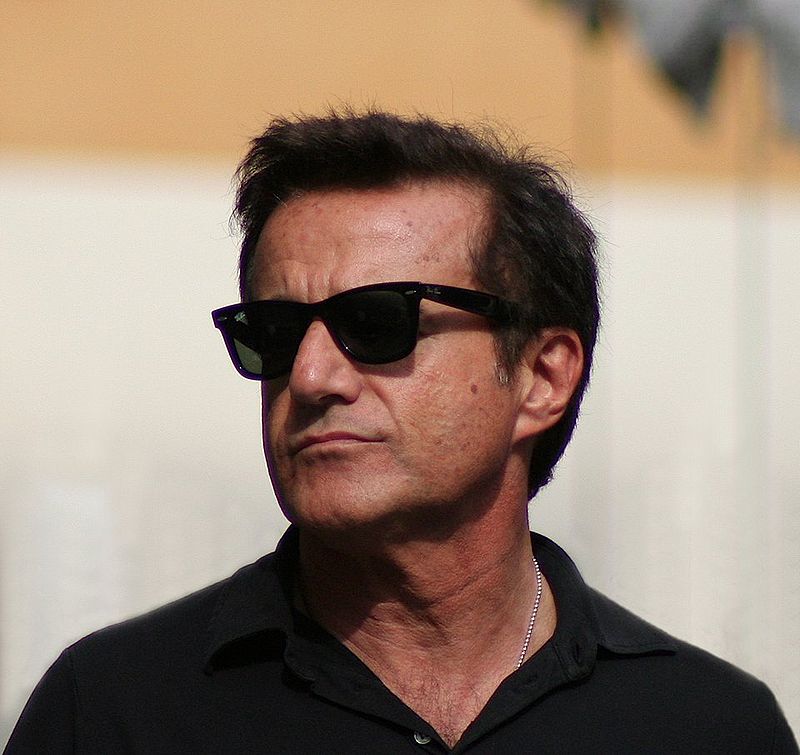
Christian De Sica is a name that resonates deeply within the Italian entertainment industry, symbolizing a legacy of cinema, music, and performance. Born on January 5, 1951, in Rome, Italy, De Sica has built a career that spans decades, rooted in a family legacy that has profoundly influenced Italian cinema. As an actor, director, and singer, De Sica’s multifaceted career reflects the rich cultural tapestry of Italy’s post-war film industry, contributing significantly to the nation’s artistic heritage.
Early Life and Family Legacy
Christian De Sica’s life story is one steeped in the history of Italian cinema. He is the son of Vittorio De Sica, one of the most revered directors in Italian and global cinema. Vittorio De Sica was a leading figure in the neorealism movement, best known for his work on films like Bicycle Thieves (1948) and Umberto D. (1952). Growing up in such an environment, Christian was naturally inclined towards the arts, exposed to the inner workings of filmmaking from a young age.
His mother, María Mercader, was a Spanish actress who also had a significant influence on his life and career. The blend of his father’s cinematic genius and his mother’s acting prowess set the stage for Christian’s future in the entertainment industry. It’s important to note that growing up in a family with such a towering legacy could have been daunting, but Christian De Sica embraced it with a unique blend of reverence and independence.
Entry into the World of Cinema
Christian De Sica made his cinematic debut in the 1970s, during a period when Italian cinema was transitioning from the neorealist era to a more commercial, genre-driven phase. His early roles were in films that leaned heavily on comedy, a genre that would come to define much of his career. De Sica quickly became known for his comedic timing and charisma, traits that endeared him to audiences across Italy.
One of his early successes was in the “Fantozzi” series, where he played the role of a slick and humorous character, setting the tone for his future roles in Italian comedy. The 1980s and 1990s were particularly prolific for De Sica, as he starred in a string of box office hits that cemented his reputation as one of Italy’s leading comedic actors. His collaborations with director Carlo Vanzina and actor Massimo Boldi in a series of Christmas-themed comedies (cinepanettoni) became a hallmark of his career.
The Rise of a Comedic Icon
Christian De Sica’s comedic style is deeply rooted in the Italian tradition of commedia all’italiana, a genre that blends humor with social commentary. His characters often embody the quirks and idiosyncrasies of the Italian middle class, making them relatable to a broad audience. De Sica’s performances are characterized by a vibrant energy and an ability to seamlessly transition between slapstick comedy and more subtle, nuanced humor.
The cinepanettoni films, named after the Italian Christmas cake, became a cultural phenomenon in Italy. These films, which typically released during the Christmas season, were known for their light-hearted humor and satirical take on contemporary Italian society. De Sica’s roles in these films often involved him playing the archetype of a well-meaning, if slightly bumbling, Italian everyman—a character that resonated deeply with audiences.
A Multifaceted Talent: Director and Singer
In addition to his acting career, Christian De Sica has also made significant contributions as a director and singer. His directorial work includes films like “Faccione” (1991) and “Tre Tigri contro Tre Tigri” (1977), which showcase his versatility and understanding of the cinematic medium. While his directorial ventures did not achieve the same level of commercial success as his acting roles, they are nonetheless important in understanding his approach to cinema.
De Sica’s foray into music is another facet of his career that highlights his diverse talents. He has released several albums, often covering classic Italian songs and occasionally performing original material. His musical performances are marked by a deep affection for the traditional Italian pop music of the 1950s and 1960s, a nostalgic nod to the era in which he grew up.
Christian De Sica’s Impact on Italian Culture
Christian De Sica’s impact on Italian culture extends beyond his contributions to cinema and music. He is a symbol of continuity in Italian entertainment, bridging the gap between the post-war generation of filmmakers and the contemporary era. His work in comedy has particularly been influential, shaping the genre and inspiring a new generation of Italian actors and directors.
Moreover, De Sica’s career reflects broader trends in Italian society, particularly the evolution of the Italian middle class in the late 20th and early 21st centuries. His characters often grapple with issues of economic change, social mobility, and the tension between tradition and modernity—themes that have been central to Italy’s post-war narrative.
Personal Life and Legacy
Despite his public persona, Christian De Sica has managed to keep much of his personal life private. He married Silvia Verdone, the sister of actor and director Carlo Verdone, and together they have two children. His marriage to Silvia is often seen as a continuation of his familial ties to the Italian film industry, further cementing his legacy.
Christian De Sica’s legacy is not just in the films he has made but in the way he has navigated his career. He has managed to carve out his niche in an industry that is both competitive and ever-changing. His ability to stay relevant over the decades is a testament to his talent, adaptability, and understanding of the entertainment industry.
Conclusion: A Pillar of Italian Entertainment
Christian De Sica is more than just an actor; he is a pillar of Italian entertainment. His contributions to film, both in front of and behind the camera, as well as his musical endeavors, make him a multifaceted talent whose influence will be felt for generations to come. De Sica’s ability to capture the essence of Italian life, with all its humor and complexity, has earned him a place in the pantheon of Italy’s great entertainers.
As Christian De Sica continues to work and contribute to the industry, his legacy grows richer, ensuring that his name will be remembered not just as the son of Vittorio De Sica, but as a legendary figure in his own right.


