
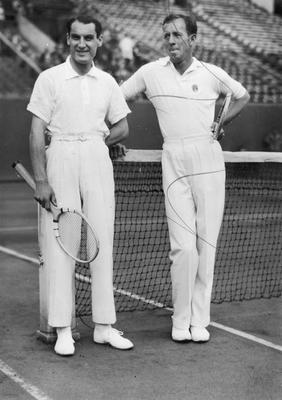
Giorgio De Stefani, born on February 24, 1904, in Verona, Italy, was a multifaceted individual whose life and career spanned the realms of sports, law, and international sports governance. Best known for his contributions to tennis as both a player and an administrator, De Stefani’s influence extended far beyond the court. His remarkable achievements in tennis, coupled with his significant roles in international sports organizations, made him a key figure in the development of Italian and global sports.
Early Life and Introduction to Tennis
Giorgio De Stefani was born into a well-educated family in Verona. From an early age, he displayed a keen interest in sports, particularly tennis. His love for the game grew during his youth, and he quickly distinguished himself as a talented player. Despite his deep passion for tennis, De Stefani pursued a formal education, earning a law degree, which would later play a crucial role in his career in sports administration.
De Stefani’s entry into the world of competitive tennis was marked by his ambidexterity, a rare and highly advantageous trait that set him apart from many of his contemporaries. His ability to play with both hands allowed him to execute a wide range of shots, making him a formidable opponent on the court. His technical prowess, combined with his strategic understanding of the game, led to his rapid rise within the Italian tennis community.
Rise to Prominence in Tennis
By the 1920s, Giorgio De Stefani had established himself as one of Italy’s top tennis players. His skill and determination earned him a place on the Italian Davis Cup team, where he competed for 14 years, from 1925 to 1939. During his tenure with the team, De Stefani played in 66 matches, securing 44 victories—a testament to his consistency and excellence as a player.
De Stefani’s career was highlighted by numerous national and international achievements. He competed in 38 international tournaments and was crowned Italian champion multiple times. His dominance on the court and his sportsmanship made him a respected figure not only in Italy but also on the international tennis circuit.
One of the most notable aspects of De Stefani’s playing style was his technical mastery. He was known for his precise strokes, exceptional footwork, and the ability to outmaneuver his opponents with a combination of power and finesse. His ambidexterity gave him a unique advantage, allowing him to switch hands seamlessly and keep his opponents guessing. This versatility made him a challenging competitor and contributed to his long and successful career.
Transition to Sports Administration
After retiring from competitive tennis, Giorgio De Stefani seamlessly transitioned into sports administration, where he continued to make significant contributions to the world of tennis. In 1950, he was appointed as a member of the Executive Committee of the International Lawn Tennis Federation (ILTF), the governing body of world tennis at the time. His leadership skills and deep understanding of the sport quickly earned him respect within the organization.
In 1955, De Stefani was elected president of the ILTF, a position he held for several years, serving multiple terms. His presidency marked a period of significant growth and development for international tennis. Under his leadership, the ILTF worked to promote the sport globally, ensuring that tennis remained a competitive and widely respected sport across different continents. De Stefani’s efforts were instrumental in expanding the reach of tennis and enhancing its status as a global sport.
De Stefani’s contributions were not limited to tennis alone. His passion for sports in general led him to take on various roles in other sports organizations. From 1958 to 1969, he served as the president of the Italian Tennis Federation (FIT), where he focused on developing tennis at the grassroots level in Italy. His vision was to create a strong foundation for the sport in his home country, ensuring that future generations of Italian players would have the resources and opportunities to succeed on the international stage.
Involvement in the Olympic Movement
Giorgio De Stefani’s influence extended beyond tennis and into the broader world of international sports. His involvement in the Olympic movement is one of the most significant aspects of his career. In 1951, De Stefani was elected as a member of the International Olympic Committee (IOC) for Italy, a position he held for several decades. His commitment to the Olympic ideals and his dedication to promoting the values of sportsmanship and fair play made him a respected figure within the IOC.
De Stefani played a key role in the organization of several major sporting events, including the 1956 Winter Olympics in Cortina d’Ampezzo and the 1960 Summer Olympics in Rome. As a member of the organizing committees for these events, De Stefani was instrumental in ensuring their success. His legal background and organizational skills were invaluable in navigating the complexities of hosting large-scale international competitions.
In addition to his work with the IOC, De Stefani served on various committees within the organization. From 1964 to 1968, he was a member of the IOC Executive Board, where he contributed to shaping the direction of the Olympic movement during a critical period in its history. He was also a member of the IOC Commission for the International Olympic Academy and served on the committee for Olympic programs, helping to develop and refine the events included in the Olympic Games.
Legacy and Honors
Giorgio De Stefani’s contributions to sports, both on and off the court, earned him numerous accolades and honors throughout his lifetime. In recognition of his achievements as a tennis player and his contributions to sports administration, he was awarded the Gold Medal for Athletic Valor, one of Italy’s highest honors for athletes. This award was a testament to his dedication to promoting sports and his role in elevating the status of tennis in Italy and around the world.
In addition to his national honors, De Stefani received recognition from various international organizations. He was named Honorary President of the Italian Tennis Federation and Honorary Vice President of the International Tennis Federation, positions that reflected his enduring influence on the sport.
De Stefani’s legacy is also preserved through his work with the Associazione Azzurri d’Italia, an organization dedicated to supporting former Italian athletes. As president of the association, De Stefani worked tirelessly to ensure that retired athletes received the recognition and support they deserved. His commitment to the welfare of athletes extended beyond their competitive careers, emphasizing the importance of supporting athletes in all stages of their lives.
Final Years and Death
Giorgio De Stefani remained active in sports administration and the Olympic movement well into his later years. His lifelong dedication to sports and his unwavering commitment to the values of fair play and sportsmanship left a lasting impact on the organizations he served. De Stefani passed away on October 22, 1992, in Rome, leaving behind a legacy that continues to inspire athletes and sports administrators around the world.
Conclusion: A Legacy of Excellence and Dedication
Giorgio De Stefani’s life and career are a testament to the power of dedication, passion, and the pursuit of excellence. From his early days as a tennis prodigy to his influential roles in international sports administration, De Stefani consistently demonstrated a commitment to the ideals of sportsmanship and fair play. His contributions to tennis, the Olympic movement, and sports governance have left an indelible mark on the world of sports.
As a player, De Stefani’s technical skill and ambidexterity set him apart, allowing him to compete at the highest levels of international tennis. As an administrator, his leadership and vision helped shape the future of tennis and the Olympic movement, ensuring that both continued to grow and thrive.
Giorgio De Stefani’s legacy is one of excellence, integrity, and a lifelong dedication to the advancement of sports. His achievements continue to serve as an inspiration to athletes, sports administrators, and all those who share his passion for the world of sports.


