
Introduction
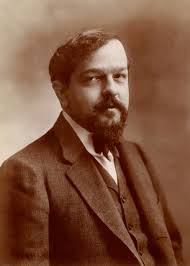
Claude-Achille Debussy, born on August 22, 1862, in Saint-Germain-en-Laye, France, is one of the most influential composers in the history of Western music. His innovative approach to composition, marked by a break from traditional harmonic structures and a penchant for evoking imagery and emotion through sound, has made him a central figure in the world of music. Debussy’s life was as complex and layered as his compositions, filled with passionate relationships, artistic triumphs, and personal struggles.
Early Life and Musical Beginnings
Claude Debussy was born into a middle-class family that sold porcelain. His musical talent was evident from a young age, and by the time he was ten, he had been admitted to the prestigious Paris Conservatoire. At the Conservatoire, Debussy studied under some of the most renowned musicians of the time, including Albert Lavignac, Émile Durand, and Antoine Marmontel. His early education at the Conservatoire provided him with a solid foundation in classical music, but Debussy’s natural inclination was towards experimentation and innovation.
During his teenage years, Debussy became involved in a secretive romantic relationship with Blanche Vasnier, the wife of a Parisian lawyer. This relationship, which lasted for eight years, was one of the many tumultuous love affairs that would characterize Debussy’s life.
The Prix de Rome and Italian Influence
In 1884, Debussy won the prestigious Prix de Rome for his composition “L’enfant prodigue.” This award allowed him to study in Rome, where he spent the next few years immersed in Italian culture and music. It was during this period that Debussy’s style began to evolve, influenced by the music of composers such as Wagner, as well as the traditional music of Java, which he encountered at the 1889 Paris Exposition Universelle.
Debussy’s time in Rome was not without its challenges. He found the rigid academic environment stifling and often clashed with the expectations of his teachers. Despite this, his exposure to new musical ideas during this period would profoundly shape his future compositions.
Relationships and Personal Life
Debussy’s personal life was as complex and unconventional as his music. After returning to Paris from Rome, he entered into a long-term relationship with Gabrielle Dupont, the daughter of a tailor. The couple lived together for nearly a decade, but their relationship was fraught with difficulties. Debussy eventually left Gabrielle for Rosalie Texier, a friend of Gabrielle’s, whom he married in 1899. This decision led Gabrielle to attempt suicide, an event that caused a scandal in Parisian society.
Debussy’s marriage to Rosalie was troubled, partly due to her lack of cultural and musical sensitivity, which Debussy found frustrating. In 1904, he began an affair with Emma Bardac, the wife of a wealthy banker. Emma, a refined and talented singer, became the muse for some of Debussy’s most famous works, including “L’isle joyeuse.” The scandal surrounding this affair was so intense that Debussy and Emma fled to England in 1905, where they lived in seclusion until the birth of their daughter, Claude-Emma, affectionately known as “Chou-Chou.”
Artistic Development and Major Works
Debussy’s music is often associated with the Impressionist movement, although he himself rejected this label. His compositions are characterized by their use of non-traditional scales, such as the whole tone scale, and their emphasis on tone color and atmosphere over traditional harmonic progression.
One of Debussy’s early masterpieces is “Prélude à l’après-midi d’un faune” (1894), a symphonic poem inspired by a poem by Stéphane Mallarmé. This work is often cited as a turning point in the history of Western music, marking the beginning of modern music. Its lush, sensuous harmonies and innovative orchestration broke away from the conventions of the time and established Debussy as a leading figure in the avant-garde movement.
Another significant work from this period is “Nocturnes” (1899), a set of three orchestral pieces that evoke various moods and atmospheres through their use of unconventional structures and harmonies. “La mer” (1905), a three-movement orchestral work that depicts the sea in all its moods, is perhaps Debussy’s most famous orchestral composition. It showcases his ability to create complex musical landscapes that are both evocative and deeply emotional.
Debussy’s piano music is also highly regarded, with works such as “Clair de Lune” from the “Suite Bergamasque” (1905) and the “Children’s Corner Suite” (1908) becoming staples of the piano repertoire. The latter was composed for his daughter Chou-Chou and reflects his fascination with the innocence and wonder of childhood.
Later Years and Legacy
In the years leading up to World War I, Debussy continued to compose prolifically, producing works such as “Images” (1905-1912), “Jeux” (1913), and the ballet “La boîte à joujoux” (1913). However, his health began to deteriorate, and he was diagnosed with rectal cancer in 1915. Despite his illness, Debussy remained active in the Parisian music scene, continuing to compose and perform until his death on March 25, 1918.
Debussy’s funeral took place in Paris during the German bombardment of the city, and as a result, it was a subdued affair. He was buried in the Cimetière de Passy, and his death marked the end of an era in French music.
Debussy’s influence on music cannot be overstated. He is often credited with laying the groundwork for many of the innovations that would define 20th-century music, including the use of non-traditional scales, the emphasis on tone color, and the exploration of new forms and structures. His work has inspired countless composers, including Maurice Ravel, Igor Stravinsky, and Olivier Messiaen.
Historical Context and Musical Impact
To fully appreciate Debussy’s impact on music, it is essential to understand the historical context in which he lived and worked. The late 19th and early 20th centuries were a time of significant change in the arts, with traditional forms and conventions being challenged and redefined. Debussy was at the forefront of this movement in music, pushing the boundaries of what was considered acceptable and exploring new ways of expressing emotion and atmosphere through sound.
Debussy’s rejection of the traditional tonal system and his use of unconventional scales and harmonies were revolutionary. His music often eschews traditional harmonic progressions in favor of creating a sense of ambiguity and fluidity. This approach is evident in works like “La mer,” where the music seems to ebb and flow like the sea itself, creating a sense of constant movement and change.
Debussy’s fascination with non-Western music, particularly the gamelan music of Java, also had a profound impact on his work. The use of pentatonic scales and other non-traditional elements in his compositions reflects his desire to break free from the constraints of Western classical music and explore new musical landscapes.
Debussy’s Legacy in Modern Music
Today, Debussy is celebrated as one of the most important composers in the history of Western music. His work has had a lasting impact on both classical and contemporary music, influencing a wide range of genres and styles. In classical music, his innovations in harmony, orchestration, and form have inspired generations of composers, from his contemporaries to the avant-garde movements of the mid-20th century.
Debussy’s influence can also be seen in popular music, particularly in the use of extended harmonies and unconventional chord progressions. Many jazz musicians, for example, have drawn inspiration from Debussy’s use of non-traditional scales and his emphasis on tone color and atmosphere.
In the world of film music, Debussy’s ability to evoke emotion and imagery through sound has made him a significant influence on composers such as John Williams, Ennio Morricone, and Hans Zimmer. His music’s ability to create mood and atmosphere has made it a favorite among filmmakers looking to add depth and emotion to their work.
Conclusion
Claude Debussy’s life and work represent a pivotal moment in the history of Western music. His innovative approach to composition, characterized by a break from traditional harmonic structures and a focus on tone color and atmosphere, has had a lasting impact on music in the 20th and 21st centuries. Despite the personal and professional challenges he faced, Debussy’s legacy as a pioneer of modern music remains secure. His work continues to inspire and influence musicians and composers around the world, ensuring that his place in the pantheon of great composers is assured for generations to come.


