
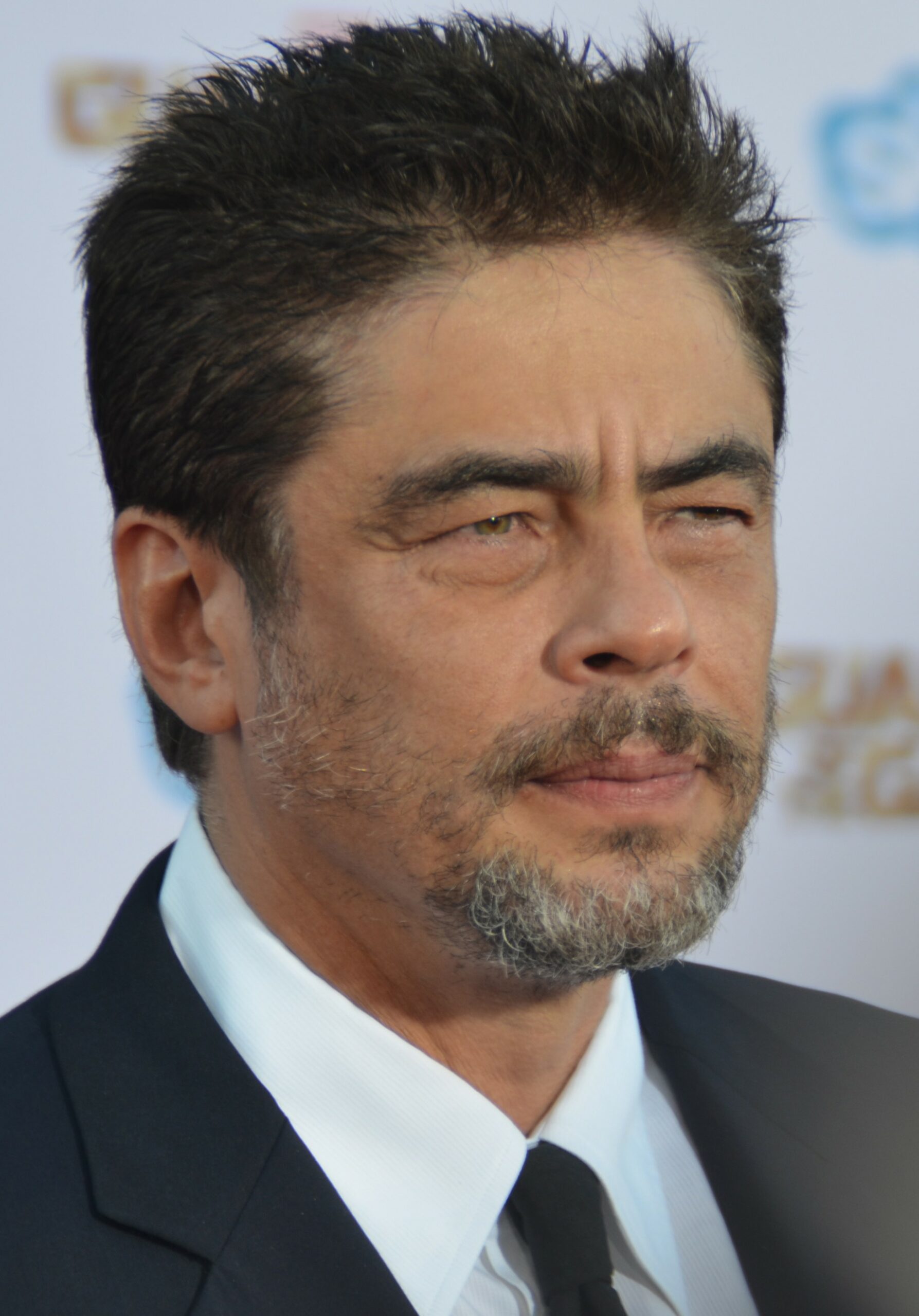
Benicio Del Toro, born on February 19, 1967, in Santurce, Puerto Rico, is one of the most enigmatic and talented actors of his generation. With his intense expressions and deep commitment to his craft, Del Toro has carved out a unique niche in Hollywood, earning critical acclaim and a dedicated fanbase. In this comprehensive look at his life, we will explore his age, rise to fame, and key highlights that have defined his illustrious career.
Early Life and Cultural Influences
Benicio Del Toro was born into a family of lawyers, but his life took a different path early on. His mother passed away when he was only nine years old, a tragedy that undoubtedly shaped his worldview and perhaps contributed to the depth of emotion he brings to his roles. Following his mother’s death, Del Toro, along with his father and younger brother, moved to a farm in Mercersburg, Pennsylvania. This move to the mainland United States marked a significant cultural shift for Del Toro, who had been raised in Puerto Rico’s vibrant and diverse environment.
The teenage years in Pennsylvania were formative for Del Toro. He attended Mercersburg Academy, a private preparatory school, where he began to nurture an interest in acting, although it would take some time before he fully committed to this path. After high school, Del Toro enrolled at the University of California, San Diego, initially pursuing a degree in business. However, a course in acting during his freshman year changed his trajectory forever. His passion for the craft led him to leave college and move to New York City, where he studied acting at the prestigious Circle in the Square Theatre School. He further honed his skills at the Stella Adler Conservatory and later in Los Angeles at the Actors Circle Theatre.
Breakthrough in Hollywood
Del Toro’s early career was marked by a series of small roles in television and film. In 1987, he appeared in popular TV series like “Miami Vice” and “Private Eye,” which gave him some exposure but did not yet catapult him to stardom. His film debut came the following year in “Big Top Pee-wee” (1988), a comedy directed by Randal Kleiser. Although the role was minor, it was a stepping stone that led to more substantial opportunities.
The 1990s proved to be a crucial decade for Del Toro as he started to gain recognition for his unique screen presence. His first major breakthrough came with the 1995 film “The Usual Suspects,” directed by Bryan Singer. Del Toro’s portrayal of Fred Fenster, a quirky, mumbling criminal, was unforgettable and earned him the Independent Spirit Award for Best Supporting Actor. This role established him as an actor capable of bringing depth and intrigue to even the most enigmatic characters.
Following this success, Del Toro continued to build his reputation with roles in films like Abel Ferrara’s “The Funeral” (1996), where he starred alongside Christopher Walken and Chris Penn. His performance as Benny Dalmau in “Basquiat” (1996), a biographical drama about the artist Jean-Michel Basquiat, won him another Independent Spirit Award. These roles demonstrated Del Toro’s versatility and his ability to disappear into his characters, making him a favorite among directors and critics alike.
The 2000s: Critical Acclaim and Awards
The turn of the millennium marked a golden era for Benicio Del Toro. His career reached new heights with the 2000 film “Traffic,” directed by Steven Soderbergh. In “Traffic,” Del Toro played Javier Rodriguez, a morally complex Mexican police officer caught in the crossfire of the drug war. His powerful performance earned him widespread acclaim, culminating in an Academy Award for Best Supporting Actor. Del Toro’s portrayal was lauded for its authenticity and emotional depth, making “Traffic” a pivotal film in his career.
Following “Traffic,” Del Toro continued to deliver memorable performances. In 2003, he starred in “21 Grams,” directed by Alejandro González Iñárritu. The film, which also starred Sean Penn and Naomi Watts, explored themes of life, death, and redemption through interconnected stories. Del Toro’s role as an ex-convict turned devout Christian was both harrowing and poignant, earning him another Oscar nomination for Best Supporting Actor.
In addition to acting, Del Toro has also ventured into directing and producing. In 1995, he wrote, produced, and directed the short film “Submission,” which starred Matthew McConaughey and Valeria Golino. The film was presented at the Venice Film Festival, showcasing Del Toro’s talent behind the camera.
Iconic Roles and Continued Success
As Del Toro’s career progressed, he continued to take on diverse and challenging roles. In 2005, he appeared in “Sin City,” a neo-noir crime film directed by Robert Rodriguez and Frank Miller. The film, based on Miller’s graphic novel series, featured Del Toro as the corrupt and sadistic cop, Jackie Boy. His chilling performance in “Sin City” added to his reputation as an actor who could portray morally ambiguous and dark characters with convincing intensity.
Del Toro’s next significant project came in 2008 when he starred as the revolutionary leader Che Guevara in Steven Soderbergh’s two-part biographical film “Che.” The role required Del Toro to fully immerse himself in the character, capturing both the charisma and complexities of Guevara. His dedication to the role paid off, as he won the Best Actor award at the Cannes Film Festival that year. Del Toro’s portrayal of Che Guevara is considered one of the defining performances of his career.
In 2010, Del Toro ventured into the horror genre with the film “The Wolfman,” a remake of the 1941 classic. Playing the titular character, Del Toro brought a brooding intensity to the role, blending the gothic horror elements with a tragic, humanizing portrayal of the cursed man. While the film received mixed reviews, Del Toro’s performance was widely praised.
The 2010s: Expanding Horizons and New Ventures
The 2010s saw Benicio Del Toro continuing to push the boundaries of his craft. In 2011, he became the first man to be featured as the protagonist of the Campari calendar, which had previously only featured female models. This recognition highlighted his status as a cultural icon, extending beyond the realm of film.
In 2014, Del Toro entered the Marvel Cinematic Universe, playing the enigmatic Collector in “Guardians of the Galaxy.” His character, an ancient and eccentric being who hoards rare artifacts, added a layer of mystique to the film. Del Toro reprised the role in “Thor: The Dark World” and “Avengers: Infinity War,” further embedding himself in popular culture.
Del Toro also took on the role of notorious drug lord Pablo Escobar in the 2014 film “Escobar: Paradise Lost.” His portrayal of Escobar was both terrifying and captivating, capturing the complexities of the infamous criminal. The film, directed by Andrea Di Stefano, provided Del Toro with another opportunity to delve into the psyche of a real-life figure, a challenge he has consistently embraced throughout his career.
In 2015, Del Toro was announced as part of the cast for “Star Wars: The Last Jedi,” directed by Rian Johnson. His role as DJ, a shady and morally ambiguous character, was one of the highlights of the film, further showcasing Del Toro’s ability to add depth to any role he undertakes.
Del Toro’s influence in the film industry extends beyond acting. In 2018, he served as the president of the jury for the Un Certain Regard section at the Cannes Film Festival, a testament to his standing in the global cinematic community. That same year, he starred in the crime thriller “Sicario: Day of the Soldado,” reprising his role from the 2015 film “Sicario.” His portrayal of the merciless hitman Alejandro Gillick once again demonstrated his ability to navigate complex, morally gray characters.
Legacy and Cultural Impact
Benicio Del Toro’s career is a testament to his dedication to the craft of acting. His ability to inhabit a wide range of characters—from real-life figures like Che Guevara and Pablo Escobar to fictional anti-heroes in films like “Traffic” and “Sicario”—has earned him a place among the most respected actors of his generation.
Del Toro’s impact on Hollywood and global cinema is undeniable. He has consistently chosen roles that challenge him and push the boundaries of traditional storytelling. His performances are marked by a deep understanding of the characters he portrays, often bringing out the nuances and complexities that make them unforgettable.
Moreover, Del Toro’s contributions to the film industry go beyond his on-screen work. His ventures into directing and producing, as well as his involvement in film festivals, demonstrate his commitment to the art of filmmaking in its entirety.
Conclusion: The Enduring Legacy of Benicio Del Toro
Benicio Del Toro’s journey from a young boy in Puerto Rico to an Oscar-winning actor in Hollywood is a story of perseverance, talent, and an unwavering dedication to his craft. Over the decades, he has proven himself to be a versatile and compelling actor, capable of bringing depth and intensity to every role he undertakes.
As Del Toro continues to take on new challenges in his career, his legacy as one of the most talented actors of his generation remains secure. His contributions to the film industry, both in front of and behind the camera, will undoubtedly influence future generations of actors and filmmakers.
Whether he is portraying a revolutionary leader, a corrupt cop, or a mythological creature, Benicio Del Toro brings a unique intensity and authenticity to his roles, making him a true icon of modern cinema.


