
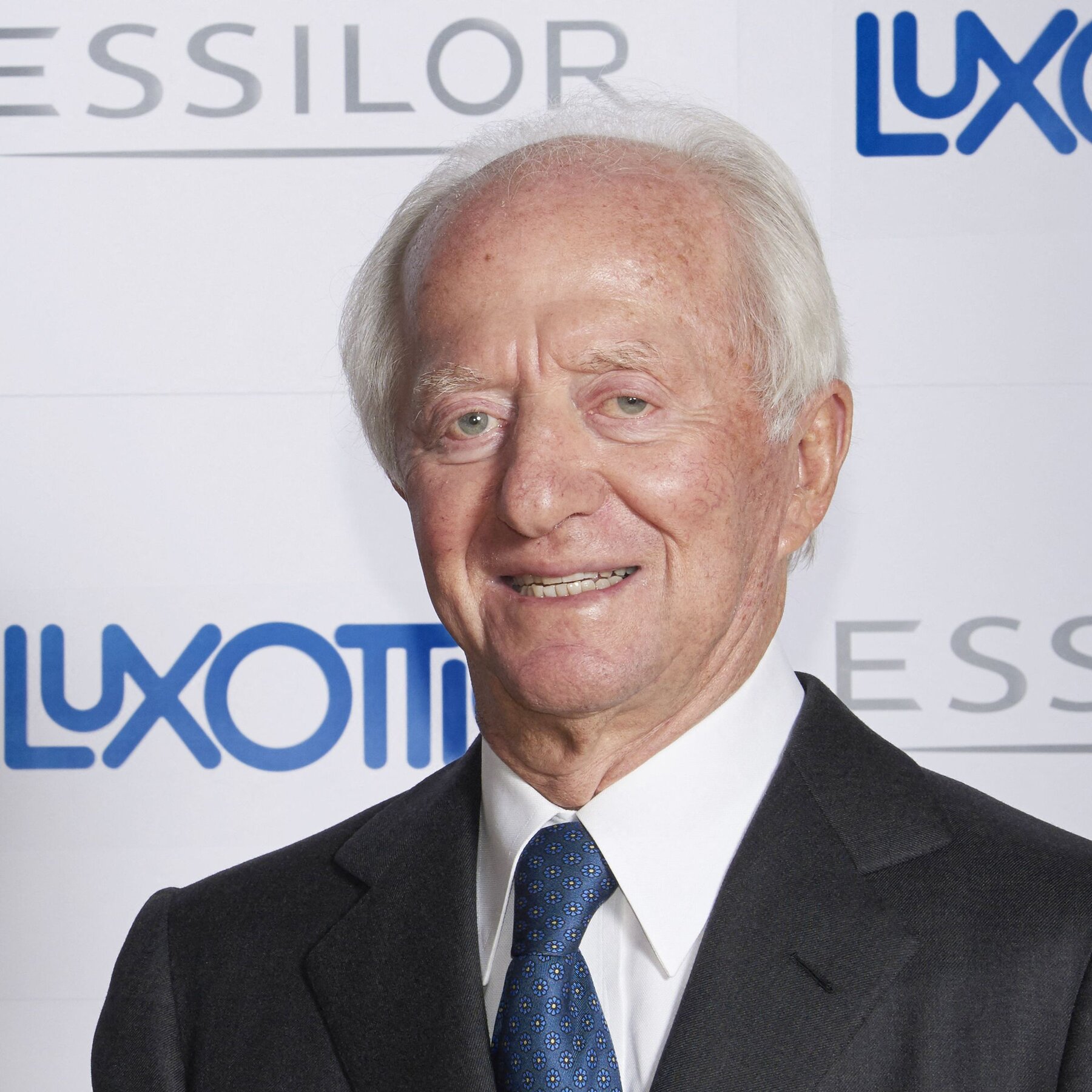
Leonardo Del Vecchio, born on May 22, 1935, in Milan, Italy, was a pioneering entrepreneur and the founder of Luxottica, one of the world’s largest eyewear companies. His journey from humble beginnings to becoming a global business magnate is a testament to his vision, resilience, and relentless pursuit of excellence. Del Vecchio’s life is marked by his transformation of a small optical workshop into a multinational giant, his strategic acquisitions, and his influence on the global eyewear industry. This article delves into his age, rise to fame, and key highlights that define his remarkable life and legacy.
Early Life: Humble Beginnings and the Seeds of Ambition
Leonardo Del Vecchio’s early life was anything but easy. Born into a family of modest means, his origins traced back to Trani, a town in the Puglia region of southern Italy. Tragedy struck early in his life when he was orphaned at a young age, leading him to spend his childhood at the Martinitt orphanage in Milan. This institution, known for providing care and education to orphans, played a crucial role in shaping Del Vecchio’s character, instilling in him a sense of discipline, resilience, and determination.
As a teenager, Del Vecchio entered the workforce, taking up an apprenticeship at a factory that produced metal parts for automotive components. It was here that he first encountered the world of eyewear manufacturing, as the factory also crafted frames for eyeglasses. This exposure sparked his interest in the optical industry, setting the stage for his future endeavors.
Despite the challenges he faced, Del Vecchio demonstrated an early aptitude for learning and craftsmanship. He pursued formal education in engraving, obtaining a diploma that would later prove invaluable in his career. His work in engraving medals and decorations, combined with his burgeoning interest in eyewear, laid the foundation for what would become a lifelong passion and the cornerstone of his future success.
The Birth of Luxottica: A Visionary’s Dream Takes Shape
In 1958, at the age of 23, Leonardo Del Vecchio made a bold decision that would alter the course of his life. He moved to Agordo, a small town in the Belluno province of northern Italy, which would later become known as the “Silicon Valley” of eyewear. Here, he established a small workshop dedicated to producing eyeglass frames. This venture, initially a modest operation with just a handful of employees, marked the birth of Luxottica.
Del Vecchio’s vision for Luxottica was clear from the outset. He recognized the potential in the eyewear market, which at the time was dominated by small, artisanal producers. He sought to revolutionize the industry by integrating the entire production process under one roof, from design and manufacturing to distribution and sales. This vertical integration strategy was a game-changer, allowing Luxottica to control the quality of its products and respond swiftly to market demands.
In 1961, Luxottica was officially founded, and the company quickly began to make a name for itself in the optical industry. Initially focused on producing metal components for eyeglasses, Luxottica gradually expanded its operations to include the entire eyewear manufacturing process. By 1967, the company had launched its first line of branded eyeglass frames, marking the beginning of its transformation from a supplier of parts to a full-fledged eyewear brand.
Strategic Expansion: The Making of a Global Empire
The 1970s and 1980s were decades of rapid growth and strategic expansion for Luxottica under Del Vecchio’s leadership. Recognizing the importance of branding and market presence, Del Vecchio made the pivotal decision to shift Luxottica’s focus from producing components for other companies to creating and marketing its own line of eyeglasses. This move allowed Luxottica to establish itself as a leading player in the eyewear industry, both in Italy and internationally.
A key milestone in Luxottica’s journey came in 1981 when the company began exporting its products to the United States. The entry into the American market was a critical step in Luxottica’s globalization strategy, providing the company with access to one of the largest and most lucrative markets in the world. Luxottica’s success in the U.S. was fueled by its commitment to quality, innovative designs, and effective marketing strategies.
In 1988, Luxottica achieved another major breakthrough with the acquisition of Italian eyewear brand Vogue Eyewear. This acquisition marked the beginning of Luxottica’s aggressive expansion through mergers and acquisitions, a strategy that would define the company’s growth in the following decades. By acquiring established brands, Luxottica was able to rapidly expand its product portfolio and strengthen its position in key markets.
The 1990s were a period of transformative acquisitions for Luxottica. In 1990, the company went public on the New York Stock Exchange, a move that provided the capital needed for further expansion. In 1995, Luxottica acquired the U.S.-based eyewear retailer LensCrafters, marking its entry into the retail sector. This acquisition was followed by the purchase of Ray-Ban, one of the world’s most iconic eyewear brands, in 1999. The acquisition of Ray-Ban, which had been struggling at the time, was a masterstroke by Del Vecchio, as he successfully revitalized the brand and restored it to its former glory.
Luxottica in the New Millennium: A Global Powerhouse
The new millennium saw Luxottica continue its meteoric rise under Del Vecchio’s visionary leadership. The company’s strategy of vertical integration, combined with its aggressive acquisition strategy, transformed it into a global powerhouse in the eyewear industry. By the early 2000s, Luxottica had become the world’s largest eyewear company, with a vast portfolio of brands and a significant presence in both wholesale and retail markets.
One of the most significant developments in Luxottica’s history occurred in 2007, when the company acquired Oakley, a leading sports eyewear brand. The acquisition of Oakley further diversified Luxottica’s product offerings and strengthened its position in the high-performance eyewear segment. This move was in line with Del Vecchio’s strategy of expanding Luxottica’s presence in different market segments and catering to a wide range of consumer preferences.
Luxottica’s global expansion continued with the acquisition of several other prominent eyewear and retail brands, including Persol, Oliver Peoples, and Sunglass Hut. These acquisitions not only expanded Luxottica’s product portfolio but also enhanced its retail footprint, making it a dominant force in both the luxury and mass-market eyewear segments.
Del Vecchio’s leadership and strategic vision earned him numerous accolades over the years. In 1986, he was awarded the title of Cavaliere del Lavoro (Knight of Labor) by the President of the Italian Republic, a prestigious honor recognizing his contributions to Italian industry. He also received honorary degrees from several universities, including a degree in Business Administration from Ca’ Foscari University in Venice and a degree in Materials Engineering from the Polytechnic University of Milan.
The Formation of EssilorLuxottica: A New Era
In 2016, Leonardo Del Vecchio achieved what he described as a “dream come true” with the merger of Luxottica and Essilor, a French company specializing in ophthalmic optics. The merger, which was officially completed in 2018, created EssilorLuxottica, a global giant in the eyewear and optical industry with a market capitalization of over 50 billion euros and a workforce of 140,000 employees.
The merger of Luxottica and Essilor was a strategic move aimed at combining Luxottica’s expertise in eyewear design, manufacturing, and retail with Essilor’s leadership in lens technology and innovation. The combined company, EssilorLuxottica, became the world’s leading player in the optical industry, offering a comprehensive range of products and services that cater to the entire eyewear market.
Del Vecchio, who became the largest shareholder and executive chairman of EssilorLuxottica, played a pivotal role in shaping the new company’s strategy and direction. The merger marked the culmination of his lifelong vision to create a fully integrated global leader in the eyewear industry, capable of addressing the diverse needs of consumers around the world.
Legacy and Impact: The Passing of a Titan
Leonardo Del Vecchio’s impact on the global eyewear industry is immeasurable. His innovative approach to business, combined with his relentless pursuit of excellence, transformed Luxottica from a small workshop in northern Italy into a global leader in eyewear. Del Vecchio’s legacy is not only reflected in the success of Luxottica and EssilorLuxottica but also in the profound influence he had on the industry as a whole.
Del Vecchio’s story is one of resilience, determination, and visionary leadership. He overcame significant challenges in his early life, including the loss of his parents and the hardships of growing up in an orphanage, to build one of the world’s most successful companies. His commitment to quality, innovation, and vertical integration set new standards in the eyewear industry and inspired countless entrepreneurs around the world.
On June 27, 2022, Leonardo Del Vecchio passed away in Milan at the age of 87. His death marked the end of an era for Luxottica and the global eyewear industry. However, his legacy lives on through the company he built and the countless lives he touched through his work.
Del Vecchio’s journey from orphan to billionaire industrialist is a powerful testament to the transformative power of vision, hard work, and perseverance. As the founder of Luxottica and a pioneer in the eyewear industry, Del Vecchio’s contributions will continue to shape the future of the industry for generations to come.
Conclusion: The Enduring Legacy of Leonardo Del Vecchio
Leonardo Del Vecchio’s life and career are a shining example of what can be achieved through vision, innovation, and determination. From his humble beginnings in Milan to the creation of a global eyewear empire, Del Vecchio’s story is one of extraordinary achievement and lasting impact. His legacy is not only reflected in the success of Luxottica and EssilorLuxottica but also in the inspiration he provides to entrepreneurs and business leaders around the world.
As we reflect on Del Vecchio’s life, it is clear that his influence extends far beyond the eyewear industry. He was a visionary leader who transformed an entire industry and left an indelible mark on the world of business. His story serves as a reminder that with determination and a clear vision, anything is possible.


