
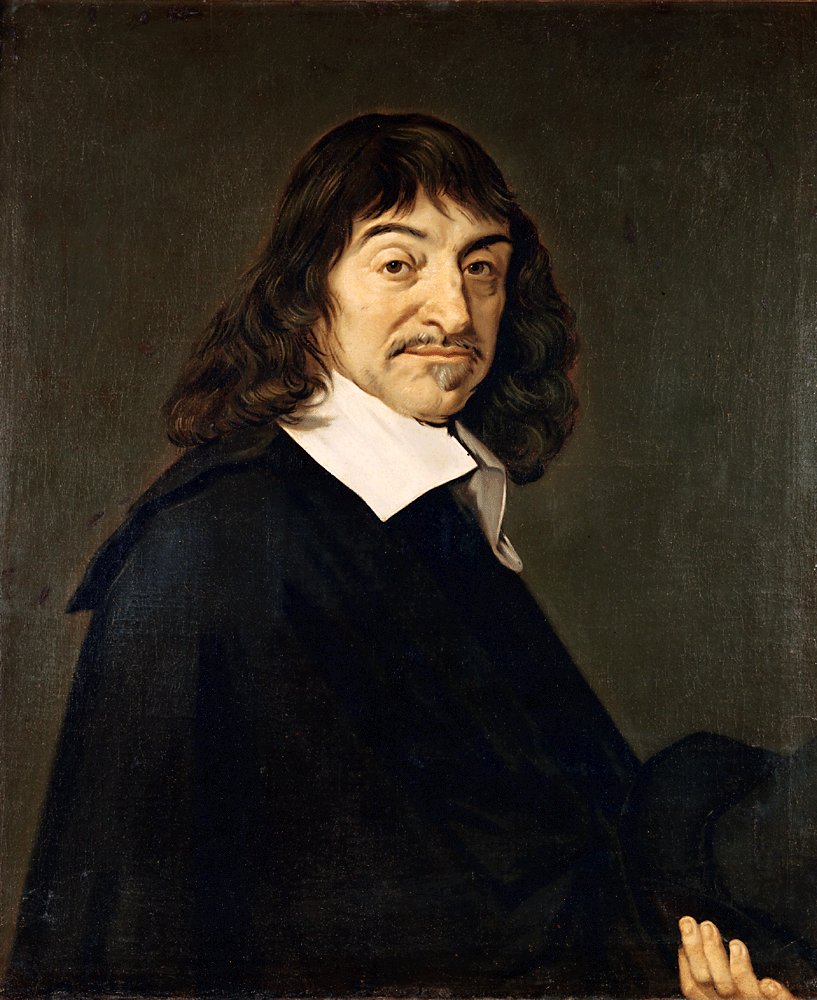
René Descartes, known as the father of modern philosophy, was born on March 31, 1596, in La Haye en Touraine, France. His Latinized name, “Cartesius,” reflects the widespread influence of his ideas, which have shaped centuries of thought in fields ranging from mathematics to metaphysics. Descartes is most famous for his declaration, “Cogito, ergo sum” (“I think, therefore I am”), a statement that encapsulates his approach to knowledge and existence. His life, marked by intellectual rigor, personal challenges, and an enduring legacy, offers a profound look into the development of Western philosophy.
Early Life and Education
René Descartes was born into a well-to-do family. His father, Joachim Descartes, was a lawyer and a counselor at the Parliament of Brittany, which provided the family with both social standing and financial stability. His mother, Jeanne Brochard, died shortly after giving birth to him, which led to René being raised by his maternal grandmother.
From an early age, Descartes displayed a keen intellect. However, he was often ill, which led to his education being conducted at home under the supervision of a tutor until he was sent to the Jesuit college of La Flèche at the age of eight. The Jesuits were known for their rigorous educational methods, and Descartes received a thorough grounding in classical studies, including rhetoric, philosophy, and mathematics. These subjects would become the foundation upon which he would build his later work.
Despite the breadth of his education, Descartes found himself dissatisfied with the scholastic philosophy that dominated the curriculum. He questioned the value of relying on established authorities like Aristotle and sought a method that would allow him to discover truth independently of tradition.
The Search for Knowledge and Military Service
After completing his education, Descartes followed his father’s wishes and enrolled at the University of Poitiers to study law. However, his restless intellect drove him to seek a broader understanding of the world. In 1618, he joined the Dutch States Army as a volunteer. Military service provided him with the opportunity to travel across Europe, exposing him to various intellectual currents and practical experiences that would influence his thinking.
During his time in the military, Descartes met Isaac Beeckman, a Dutch mathematician and scientist. Beeckman recognized Descartes’ talent and encouraged him to explore the application of mathematics to natural philosophy. This mentorship led Descartes to write his first known work, “Compendium Musicae,” which analyzed the mathematical relationships in music. This work marked the beginning of Descartes’ lifelong interest in the relationship between mathematics and the natural world.
Descartes’ military career also introduced him to the art of fortifications and engineering, fields that required a precise understanding of geometry and physics. These experiences deepened his appreciation for mathematics as a tool for understanding and controlling the physical world.
The Development of Cartesian Philosophy
In 1628, after years of travel and study, Descartes returned to France and settled in the countryside to focus on his philosophical work. This period of solitude and reflection was crucial in the development of his ideas. Descartes sought a method that would provide a firm foundation for all knowledge, one that could withstand the skepticism that was prevalent in intellectual circles at the time.
His first major philosophical work, “Regulae ad Directionem Ingenii” (“Rules for the Direction of the Mind”), laid out the principles that would guide his future inquiries. In this text, Descartes emphasized the importance of methodical doubt—a process of systematically questioning all beliefs to discover those that could be known with absolute certainty.
Descartes’ approach was revolutionary. By rejecting the traditional reliance on authority and the senses, he sought to establish a new foundation for knowledge based on reason and clear, distinct ideas. This method, known as Cartesian doubt, would later be central to his most famous work, “Meditations on First Philosophy.”
“Cogito, Ergo Sum” and the Birth of Modern Philosophy
Descartes’ most famous work, “Discourse on the Method,” was published in 1637. In this text, he presented his philosophical method in a way that was accessible to a broader audience. The “Discourse” is perhaps best known for the statement “Cogito, ergo sum” (“I think, therefore I am”), which Descartes used to establish the certainty of his own existence as the foundation for all knowledge.
The significance of “Cogito, ergo sum” cannot be overstated. Descartes argued that the act of thinking itself is proof of existence because one must exist to doubt or think. This insight provided a starting point for Descartes to build a new system of knowledge based on reason rather than sensory experience.
Following the “Discourse,” Descartes published “Meditations on First Philosophy” in 1641. This work delved deeper into the implications of his method, addressing questions about the nature of reality, the existence of God, and the relationship between mind and body. In the “Meditations,” Descartes introduced the concept of the “evil demon,” a hypothetical being that could deceive the senses, thereby reinforcing the need for a foundation of knowledge that could not be doubted.
Descartes’ dualism, the idea that the mind and body are distinct substances, became one of the central tenets of his philosophy. He argued that while the body is governed by physical laws, the mind is a non-material entity capable of thought and reflection. This separation of mind and body, known as Cartesian dualism, has had a profound influence on Western philosophy and continues to be a subject of debate in both philosophy and the sciences.
Later Works and Scientific Contributions
While Descartes is best known for his contributions to philosophy, his work in mathematics and science was equally groundbreaking. In 1637, alongside the “Discourse on the Method,” he published three scientific essays: “La Dioptrique” (Optics), “Les Météores” (Meteorology), and “La Géométrie” (Geometry). “La Géométrie” introduced the concept of Cartesian coordinates, a system that allows algebraic equations to be expressed as geometric shapes, laying the groundwork for analytical geometry.
Descartes’ work in mathematics had a lasting impact on the field, influencing future developments in calculus and physics. His approach to geometry, which emphasized the application of algebraic methods to geometric problems, was revolutionary and paved the way for the mathematical advancements of later scientists like Isaac Newton and Gottfried Wilhelm Leibniz.
In “La Dioptrique,” Descartes explored the nature of light and vision, proposing a mechanistic explanation for how light travels and how lenses can focus light to improve vision. His work in optics contributed to the development of better lenses for telescopes and microscopes, which would have profound implications for the scientific discoveries of the 17th century.
The Controversies and Challenges
Descartes’ innovative ideas did not go unchallenged. His rejection of the Aristotelian worldview and his mechanistic approach to science were met with resistance from the academic and religious institutions of the time. In 1633, when Descartes learned of Galileo Galilei’s condemnation by the Catholic Church for advocating the heliocentric model of the solar system, he chose to suppress his own work, “Le Monde” (The World), which supported similar ideas. Descartes’ caution in the face of potential persecution reflects the precarious position of intellectuals in a time when the Church wielded significant power over academic discourse.
Despite his efforts to avoid conflict, Descartes’ works were eventually scrutinized by the authorities. His “Meditations” were placed on the Catholic Church’s Index of Forbidden Books in 1663, more than a decade after his death. The condemnation of his ideas by both religious and academic institutions highlighted the radical nature of his philosophy and its challenge to established norms.
Final Years and Legacy
In the latter part of his life, Descartes sought a place where he could pursue his work free from the distractions and controversies of Parisian society. He moved to the Netherlands, where he lived in relative seclusion for over 20 years. During this time, he corresponded with some of the leading intellectuals of Europe, including Princess Elizabeth of Bohemia, with whom he discussed philosophical questions related to the mind-body problem.
In 1649, Descartes accepted an invitation from Queen Christina of Sweden to come to Stockholm and teach her philosophy. The harsh Swedish winter and the queen’s demanding schedule took a toll on Descartes’ health, and he succumbed to pneumonia on February 11, 1650, at the age of 53. Although his life was cut short, Descartes’ influence continued to grow after his death.
Descartes’ legacy is vast. His method of doubt laid the groundwork for the development of the scientific method, emphasizing the importance of questioning and rigorous reasoning in the pursuit of knowledge. His contributions to mathematics, particularly the invention of Cartesian coordinates, revolutionized the field and provided a new way to understand the relationship between algebra and geometry.
In philosophy, Descartes is remembered as the founder of modern rationalism, a school of thought that emphasizes reason as the primary source of knowledge. His ideas about the separation of mind and body have influenced debates in metaphysics, psychology, and cognitive science for centuries. The “Cogito,” in particular, remains one of the most famous and enduring ideas in Western philosophy, symbolizing the power of human reason to establish the certainty of existence.
Conclusion
René Descartes’ life and work represent a pivotal moment in the history of thought. His relentless pursuit of knowledge, his willingness to question established authority, and his groundbreaking contributions to philosophy, mathematics, and science have left an indelible mark on the intellectual landscape of the modern world. Descartes’ ideas continue to inspire and challenge scholars, reflecting the enduring relevance of his quest to understand the nature of reality and the foundations of human knowledge.
As we reflect on Descartes’ legacy, it is clear that his influence extends far beyond the confines of academic philosophy. His emphasis on reason, doubt, and the search for truth resonates with the core values of the Enlightenment and the modern scientific enterprise. In an era where the boundaries of knowledge are constantly being pushed, Descartes’ work serves as a reminder of the importance of critical thinking and the power of the human mind to uncover the mysteries of existence.


