
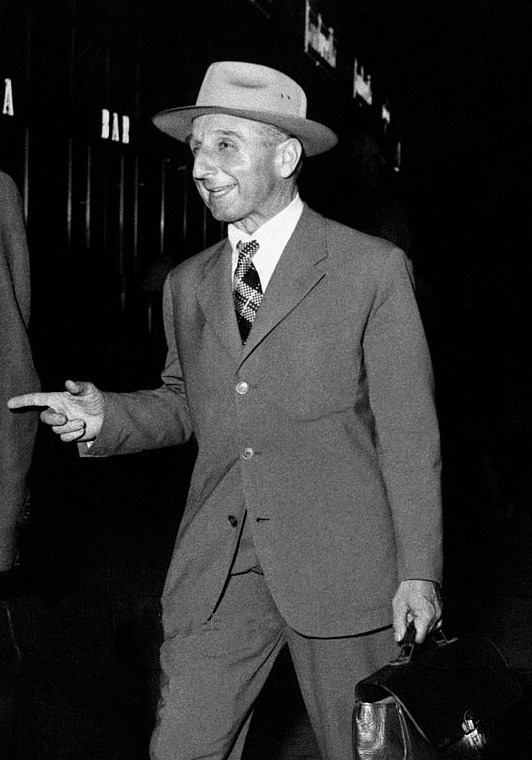
Ardito Desio, born on April 18, 1897, in Palmanova, Friuli, Italy, stands as a towering figure in the world of geology and exploration. His life, which spanned over a century, is a testament to human endurance, curiosity, and the unquenchable thirst for knowledge. Desio’s contributions to science and his daring expeditions have immortalized him as one of the most remarkable figures of the 20th century. This article delves into his age, fame, life highlights, and the historical context that shaped his extraordinary journey.
Early Life and Education
Ardito Desio was born in a small town in the Friuli region of Italy, a place known for its rich history and strategic military significance. His early years were marked by a profound curiosity about the natural world, a trait that would define his entire life. Desio’s educational journey began in earnest after he served as a volunteer in World War I, an experience that would profoundly influence his worldview.
Desio enrolled in the Faculty of Natural Sciences at the University of Florence, where he honed his skills in geology and paleontology. His academic prowess soon became evident, and he quickly established himself as a leading scholar in his field. However, Desio’s ambitions extended far beyond the confines of academia.
The 1920s: A Decade of Transformation
The 1920s were a transformative decade for Ardito Desio. After completing his studies, he began his career as a professor at the Polytechnic University of Milan. His work as an academic was distinguished by his ability to blend rigorous scientific inquiry with a deep-seated passion for exploration. Unlike many of his contemporaries, Desio was not content to study the Earth from a distance; he sought to experience its wonders firsthand.
This decade also saw Desio’s first forays into the world of exploration. In 1922, he embarked on a solo journey across the Aegean Sea, a trip that would mark the beginning of his lifelong love affair with adventure. By 1926, Desio was leading expeditions to some of the most remote and inhospitable regions of the world, including the Libyan desert. These early explorations laid the groundwork for the more ambitious projects that would define the rest of his life.
Ardito Desio’s Exploration and Expeditions
Ardito Desio was more than just a geologist; he was an intrepid explorer whose expeditions took him to the farthest corners of the Earth. His early explorations in the 1920s and 1930s were characterized by a relentless drive to uncover the Earth’s secrets. He led a series of groundbreaking expeditions, including a 1931 journey across the Sahara Desert on camelback, a 1933 expedition to the mountains of Persia, and a 1937 search for gold in Ethiopia.
Desio’s explorations were not limited to deserts and mountains; he also ventured into the polar regions. In 1961, he became the first Italian to reach the South Pole, a feat that cemented his reputation as one of the world’s foremost explorers. His Antarctic expedition was followed by explorations in Afghanistan, Burma, and Tibet, further expanding his already impressive list of accomplishments.
The Conquest of K2: A Defining Moment
Perhaps the most famous of Ardito Desio’s achievements was his role in the conquest of K2, the second-highest mountain in the world. The K2 expedition of 1954, which Desio led, is a defining moment in the history of mountaineering. The expedition was fraught with challenges, including harsh weather conditions, avalanches, and the ever-present threat of altitude sickness.
Despite these obstacles, Desio’s leadership and meticulous planning ensured the success of the mission. On July 31, 1954, Italian climbers Lino Lacedelli and Achille Compagnoni, under Desio’s guidance, became the first to reach the summit of K2. This achievement was not just a triumph for Italy; it was a milestone in the annals of human exploration.
The K2 expedition also highlighted Desio’s ability to inspire and lead. His unwavering determination and his ability to overcome seemingly insurmountable challenges earned him the respect and admiration of his peers. The success of the K2 expedition was a testament to Desio’s extraordinary character and his indomitable spirit.
The Legacy of Ardito Desio
Ardito Desio’s legacy extends far beyond his geological discoveries and his successful expeditions. He was a prolific writer, authoring over 450 publications during his lifetime. His books, including the acclaimed “Sulle vie della sete, dei ghiacci e dell’oro” (On the Paths of Thirst, Ice, and Gold), offer a fascinating insight into his life and the adventures that defined it. Desio’s writing is characterized by its clarity, elegance, and a deep understanding of the natural world.
In addition to his contributions to science and literature, Desio was also a dedicated educator. His teaching career spanned more than half a century, during which he mentored countless students and inspired a new generation of scientists and explorers. Desio’s impact on the academic world is immeasurable, and his influence continues to be felt today.
Historical Context: The World That Shaped Desio
To fully appreciate Ardito Desio’s achievements, it is important to understand the historical context in which he lived and worked. Desio’s life spanned some of the most tumultuous periods in modern history, including two world wars, the rise and fall of fascism, and the dawn of the nuclear age. These events had a profound impact on Desio and his work.
World War I, in particular, played a crucial role in shaping Desio’s character. As a young man, Desio volunteered to fight for Italy, serving in the “Volontari Ciclisti” (Cyclist Volunteers) unit. His experiences on the front lines, including a period of imprisonment in Bohemia, instilled in him a deep sense of resilience and a determination to overcome adversity. These qualities would serve him well in his later explorations.
The post-war period saw significant advancements in science and technology, which Desio eagerly embraced. He was at the forefront of the geological community, utilizing the latest tools and techniques to further his research. Desio’s work was not only a product of his time but also a driving force behind the scientific progress of the 20th century.
The End of an Era: Desio’s Later Years
Ardito Desio’s later years were marked by continued exploration and discovery. Even as he entered his 90s, Desio remained active in the field, conducting research in the Himalayas and participating in expeditions with the Italian National Research Council (CNR). His longevity and enduring passion for his work were nothing short of remarkable.
Desio’s life came to an end on December 12, 2001, at the age of 104. His passing marked the end of an era, but his legacy lives on. Desio’s contributions to science, exploration, and education have left an indelible mark on the world, and his name will forever be associated with the spirit of adventure and the pursuit of knowledge.
Conclusion: Ardito Desio’s Enduring Legacy
Ardito Desio was more than just a geologist and explorer; he was a pioneer who pushed the boundaries of human knowledge and achievement. His life was a testament to the power of curiosity, determination, and the unyielding desire to explore the unknown. Desio’s contributions to science and exploration have earned him a place among the greats, and his legacy continues to inspire new generations of adventurers and scholars.
From his early years as a student in Florence to his final days as a revered elder statesman of science, Ardito Desio’s life was one of constant discovery and exploration. His achievements on the world’s highest peaks, in its most desolate deserts, and in its most remote regions are a testament to the enduring human spirit. As we look back on his life, we are reminded of the importance of perseverance, curiosity, and the relentless pursuit of knowledge.


