
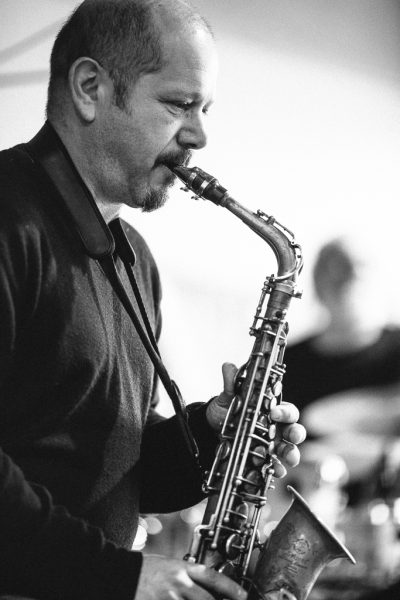
Stefano Di Battista, born on February 14, 1969, in Rome, Italy, is a prominent jazz saxophonist who has earned a distinguished reputation in the world of music. His journey from a young saxophonist in a neighborhood band to an internationally acclaimed jazz artist is a testament to his passion, dedication, and remarkable talent. This article delves into Stefano Di Battista’s age, rise to fame, and key life highlights, while also exploring the historical context that has shaped his illustrious career.
Early Life and Musical Beginnings
Stefano Di Battista was born into a family of musicians, which provided a fertile ground for his early interest in music. Growing up in a musically inclined household, Di Battista was exposed to a wide range of musical genres and traditions from an early age. His formal journey into music began at the age of 13 when he started learning the saxophone. The young Stefano quickly showed a natural affinity for the instrument, joining a local band composed mainly of young musicians.
By the age of 16, Di Battista had already gained significant experience playing in various settings, experimenting with different styles, and developing a unique sound characterized by its vibrancy and emotional depth. His early exposure to live performances and the joy of making music with others played a crucial role in shaping his musical identity.
Discovering Jazz and Early Influences
Stefano Di Battista’s musical path took a decisive turn when he discovered jazz, a genre that resonated deeply with him. He was particularly captivated by the sound of Art Pepper, an iconic American alto saxophonist whose lyrical style and emotive playing left a lasting impression on the young Italian musician. This discovery marked the beginning of Di Battista’s lifelong love affair with jazz, a genre that would come to define his career.
Another pivotal moment in Di Battista’s early career was his encounter with Massimo Urbani, a legendary Italian saxophonist. Urbani, known for his intense and passionate playing, became a mentor to Di Battista, offering guidance and inspiration. Under Urbani’s tutelage, Di Battista honed his skills, deepened his understanding of jazz, and began to see a clear path forward as a professional musician.
Formal Training and Early Career Development
To further refine his technique and gain a deeper understanding of the saxophone, Stefano Di Battista enrolled in a conservatory, where he immersed himself in the study of classical music. He completed his studies with top honors at the age of 21, emerging as a highly skilled and versatile saxophonist. While classical training provided a solid technical foundation, Di Battista remained deeply committed to jazz, constantly seeking opportunities to play and learn.
In 1992, a chance performance at the Calvi Jazz Festival marked a significant milestone in Di Battista’s career. During the festival, he encountered several French musicians, including Jean-Pierre Como, who invited him to perform in Paris. This invitation proved to be a turning point, as it opened the doors to the vibrant Parisian jazz scene, a city that would become a second home for Di Battista.
The Paris Years: A Flourishing Career
Stefano Di Battista’s arrival in Paris marked the beginning of a period of intense artistic growth and professional success. The Paris jazz scene, known for its rich history and vibrant community of musicians, offered Di Battista the perfect environment to further develop his craft. He began splitting his time between Rome and Paris, performing regularly and quickly building a reputation as a talented and innovative saxophonist.
One of the key events in this period was Di Battista’s performances at the Sunset, a renowned jazz club in Paris. He played two concerts with a trio featuring French bassist Michel Benita and Italian drummer Roberto Gatto. When Gatto was unable to continue, he was replaced by the celebrated drummer Aldo Romano. Romano was immediately struck by Di Battista’s distinctive style and the two developed a strong musical rapport, leading to a lasting friendship and collaboration.
This collaboration with Aldo Romano proved to be highly fruitful. Di Battista became a key member of Romano’s various ensembles, contributing to several recordings, including the albums Prosodie and Intervista. Additionally, Di Battista’s involvement with the Orchestre National de Jazz (ONJ), under the direction of Laurent Cugny, further solidified his position in the French jazz scene. His time with the ONJ allowed him to collaborate with some of the finest jazz musicians in Europe and broaden his musical horizons.
Breakthrough and Solo Success
The mid-1990s marked a turning point in Stefano Di Battista’s career as he transitioned from being a sought-after sideman to a leader of his own projects. In 1997, he released his debut album Volare under the Label Bleu imprint. The album featured an ensemble of talented musicians, including trumpeter Flavio Boltro, pianist Eric Legnini, drummer Benjamin Henocq, and bassist Rosario Bonaccorso. Volare showcased Di Battista’s unique voice as a composer and performer, blending his Italian heritage with a deep understanding of jazz traditions.
Following the success of Volare, Di Battista signed with the prestigious Blue Note Records, a label synonymous with some of the greatest names in jazz. His first album for Blue Note, A Prima Vista, was released in 1998 and featured the same ensemble that had become his regular touring and recording group. The album received widespread acclaim, further establishing Di Battista as one of the leading saxophonists of his generation.
In 2000, Di Battista released what is often considered one of his finest recordings: an eponymous album featuring the legendary drummer Elvin Jones, who had played with John Coltrane. The album also included contributions from pianist Jacky Terrasson and bassist Rosario Bonaccorso. This collaboration with Jones, in particular, was a dream come true for Di Battista, as it connected him with one of the most influential drummers in the history of jazz. The album was met with critical acclaim and achieved commercial success, topping European jazz charts and earning Di Battista the prestigious French Télérama award.
Tribute to Rome and Later Works
Stefano Di Battista has never forgotten his roots, and in 2002, he paid homage to his hometown with the album Round ’bout Roma. This album was a love letter to the Eternal City, capturing its essence through a series of compositions that blended the sounds of traditional Italian music with modern jazz. Round ’bout Roma was well-received and demonstrated Di Battista’s ability to infuse his music with a strong sense of place and identity.
In 2004, Di Battista released Parker’s Mood, a tribute to the great American saxophonist Charlie Parker. This album saw Di Battista exploring the bebop language pioneered by Parker while adding his unique interpretative style. The project was both a homage to one of his musical heroes and a demonstration of his deep understanding of the jazz tradition.
Di Battista continued to explore new musical territories with his 2007 album Trouble Shootin’, which further solidified his reputation as a leading figure in contemporary jazz. His ability to blend technical mastery with emotional depth and his willingness to push the boundaries of jazz made him a respected and influential voice in the global jazz community.
Collaborations and Television Appearances
Throughout his career, Stefano Di Battista has collaborated with numerous renowned artists, both within and outside the jazz world. In 2005, he participated in the Sanremo Music Festival alongside his wife, singer Nicky Nicolai, with the song Che mistero è l’amore. The song won the competition in the “Groups” category, bringing Di Battista’s music to a broader audience.
From 2005 to 2008, Di Battista and his quartet became a regular feature on Italian television, performing on the popular show Il senso della vita, hosted by Paolo Bonolis. This exposure helped to further increase Di Battista’s visibility and introduced his music to a wider Italian audience. In 2009, he returned to the Sanremo stage with Nicolai, presenting the song Più Sole, which was well-received by both critics and the public.
The Stefano Di Battista Jazz Quartet
Stefano Di Battista is currently the leader of the Stefano Di Battista Jazz Quartet, a group that has gained recognition for its dynamic performances and innovative approach to jazz. The quartet, which includes Amedeo Ariano on drums, Julian Oliver Mazzariello on piano, and Dario Rosciglione on bass, has been praised for its tight interplay, creativity, and ability to blend different musical influences into a cohesive and compelling sound.
The quartet’s performances are characterized by their energy, emotional intensity, and a deep sense of musical communication. Whether performing original compositions or reinterpreting jazz standards, Di Battista and his group continue to captivate audiences around the world with their virtuosic playing and heartfelt expression.
Conclusion: Stefano Di Battista’s Lasting Influence
Stefano Di Battista’s career is a remarkable story of passion, talent, and dedication to the art of jazz. From his early days playing in a neighborhood band to becoming one of the most respected saxophonists on the international stage, Di Battista has consistently pushed the boundaries of jazz while staying true to his musical roots.
His work as a solo artist, collaborator, and bandleader has left an indelible mark on the world of jazz, inspiring both his contemporaries and future generations of musicians. Stefano Di Battista’s music is a testament to the power of jazz as a universal language, capable of expressing the full range of human emotions and experiences.
As Di Battista continues to explore new musical horizons and share his love for jazz with audiences worldwide, his influence and legacy in the world of music will undoubtedly endure for many years to come.


