
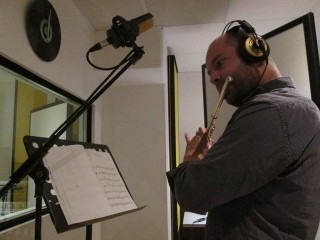
Marco Di Meco is an Italian composer, flutist, and poet, known for his unique blend of classical music training and jazz improvisation. Born on February 5, 1982, in Chieti, Italy, Di Meco has made a significant impact on the Italian and international music scene through his compositions, performances, and literary works. This article explores the life and career of Marco Di Meco, highlighting his musical journey, creative achievements, and the influences that have shaped his artistic expression.
Early Life and Musical Beginnings
Marco Di Meco’s journey into the world of music began at a young age. Growing up in Chieti, a city in the Abruzzo region of Italy, Di Meco was surrounded by the rich cultural heritage of his homeland. His first foray into music came when his paternal grandmother gifted him an “organetto,” a traditional accordion-like instrument popular in central Italy. Di Meco’s early success with the organetto in various local competitions and festivals hinted at his future in music.
However, it wasn’t long before Di Meco’s interests expanded beyond traditional instruments. He convinced his family to allow him to study the flute, an instrument that fascinated him from an early age. His determination and passion for the flute led him to begin private lessons, and he was soon accepted into the prestigious class of Maestro Sandro Carbone at the Conservatorio Statale di Musica “L. D’Annunzio” in Pescara. Here, Di Meco honed his skills, eventually earning a diploma in flute performance.
Educational Pursuits and Early Performances
While pursuing his musical education, Marco Di Meco also explored academic interests. He enrolled at the Istituto Statale “I. Gonzaga” in Chieti, where he earned a diploma in Socio-Psycho-Pedagogy with a thesis on Music Therapy, highlighting his interest in the therapeutic and psychological aspects of music. Despite his academic achievements, Di Meco’s passion for music remained the dominant force in his life.
In parallel with his formal education, Di Meco began to make a name for himself as a performer. His debut as a soloist came at the Auditorium “E. Flaiano” in Pescara, where he performed Mozart’s KV313 concerto with the orchestra of the Conservatorio “L. D’Annunzio,” under the direction of Maestro Rinaldo Muratori. This performance marked the beginning of Di Meco’s professional career and set the stage for his future endeavors in both classical and contemporary music.
A Musical Career Takes Shape: Jazz and Beyond
Marco Di Meco’s musical path took a significant turn when he developed an interest in jazz, a genre that allowed him to explore improvisation and creativity in ways that classical music did not. His transition into jazz was marked by a move to Switzerland, where he continued his studies at the Conservatorio della Svizzera Italiana in Lugano under the guidance of Maestro Mario Ancillotti. There, Di Meco earned a diploma in Interpretation and Performance, further refining his technical skills and deepening his understanding of musical expression.
During his time in Switzerland, Di Meco began composing his own music, drawing on his classical training and his newfound love for jazz. His compositions were influenced by the rich cultural history of the places he had studied, as well as by his personal experiences and reflections on the world around him. It was also during this period that Di Meco began to write poetry, using his literary talents to complement his musical creations.
The Return to Italy and First Solo Album
After completing his studies in Switzerland, Marco Di Meco returned to Italy, where he embarked on the next phase of his musical career. In 2012, he founded the Bimini project, a collaboration with fellow musicians that allowed him to experiment with different musical styles and arrangements. This project was instrumental in helping Di Meco develop the sound that would define his solo work.
In 2014, Di Meco released his first solo album, “5 Colori,” under the Wide Sound label. The album featured five original tracks that showcased his versatility as a composer and performer. Each piece was a reflection of Di Meco’s diverse musical influences, blending elements of classical music with jazz improvisation and contemporary rhythms. “5 Colori” was well-received by critics and established Di Meco as a rising star in the Italian jazz scene.
Continued Success and Recognition
Building on the success of his debut album, Marco Di Meco released his second album, “Rosalinda,” in 2015. The album, which included eleven original tracks, was a further exploration of Di Meco’s musical identity. Unlike his debut, “Rosalinda” featured a variety of ensemble configurations, ranging from duets to quintets, as well as a solo flute piece. This diversity in arrangements allowed Di Meco to explore different textures and dynamics, further establishing his reputation as an innovative composer and performer.
“Rosalinda” was followed by “Lucilla,” a double album released in April 2016. The nine original tracks on “Lucilla” continued the musical journey Di Meco had started with his previous albums, offering listeners a deeper insight into his creative process. The album was a critical success, earning Di Meco a nomination in the 2015 JAZZIT Awards as one of the top ten jazz flutists in Italy. This recognition cemented his status as a leading figure in the Italian jazz community.
Literary Contributions: Poetry and Didactics
In addition to his musical achievements, Marco Di Meco has made significant contributions to the literary world. Between 2005 and 2014, he published six collections of poetry, each reflecting his unique perspective on life, art, and the human condition. His early works, such as “Luci di Luna” (2005) and “Il Passo delle Sensazioni” (2005), explored themes of emotion and sensation, while later collections like “Le Isterie di Jennifer” (2012) and “Artemisia, la Rana Pittrice e la Farfalla” (2014) delved into more complex and abstract ideas.
Di Meco’s poetry is characterized by its vivid imagery and emotional depth, often drawing on his experiences as a musician and observer of the world. His writing is not only a complement to his music but also an extension of his artistic expression, offering readers a glimpse into the thoughts and ideas that inspire his compositions.
In addition to his poetry, Di Meco has also contributed to the field of music education. He authored “Armonia Applicata-Gli Accordi,” a didactic volume focused on harmony and chord structures. This work reflects Di Meco’s commitment to sharing his knowledge and expertise with aspiring musicians, helping them develop the skills needed to succeed in the world of music.
The Artistic Vision of Marco Di Meco
Marco Di Meco’s artistic vision is one that transcends genres and disciplines. His music, while rooted in classical training, is infused with the spontaneity and creativity of jazz, creating a sound that is both familiar and innovative. His compositions are often inspired by personal experiences, historical events, and literary works, resulting in music that is deeply expressive and thought-provoking.
Di Meco’s ability to blend different styles and influences has made him a unique voice in the world of contemporary music. Whether performing as a soloist or leading an ensemble, he brings a sense of authenticity and passion to his work, captivating audiences with his technical prowess and emotional depth.
The Role of Poetry in Di Meco’s Work
Poetry plays a crucial role in Marco Di Meco’s artistic output. For Di Meco, poetry is not just a form of expression but a way of processing and understanding the world. His poems often explore the same themes as his music, such as love, loss, and the passage of time, but they do so through the lens of language rather than sound.
The relationship between Di Meco’s music and poetry is symbiotic, with each form informing and enriching the other. His poems serve as a source of inspiration for his compositions, while his music provides a backdrop for the emotions and ideas expressed in his writing. This interplay between music and poetry is a defining feature of Di Meco’s work, setting him apart from other artists in his field.
Legacy and Future Directions
As Marco Di Meco continues to evolve as an artist, his work remains a testament to the power of creativity and the importance of staying true to one’s artistic vision. His contributions to both music and literature have earned him a place among the most respected and influential artists of his generation.
Looking to the future, Di Meco shows no signs of slowing down. With each new project, he continues to push the boundaries of what is possible in music and art, exploring new ideas and experimenting with different forms and techniques. His commitment to his craft and his willingness to take risks ensure that his work will continue to resonate with audiences for years to come.
Conclusion
Marco Di Meco is a multifaceted artist whose work encompasses music, poetry, and education. His journey from a young musician in Chieti to an internationally recognized flutist and composer is a story of passion, perseverance, and creativity. Through his music and writing, Di Meco offers a unique perspective on the world, one that is both deeply personal and universally relatable.
As he continues to create and inspire, Marco Di Meco’s legacy will undoubtedly grow, leaving an indelible mark on the world of art and music. Whether through his evocative compositions, his thought-provoking poetry, or his educational contributions, Di Meco’s influence will be felt for generations to come.


