
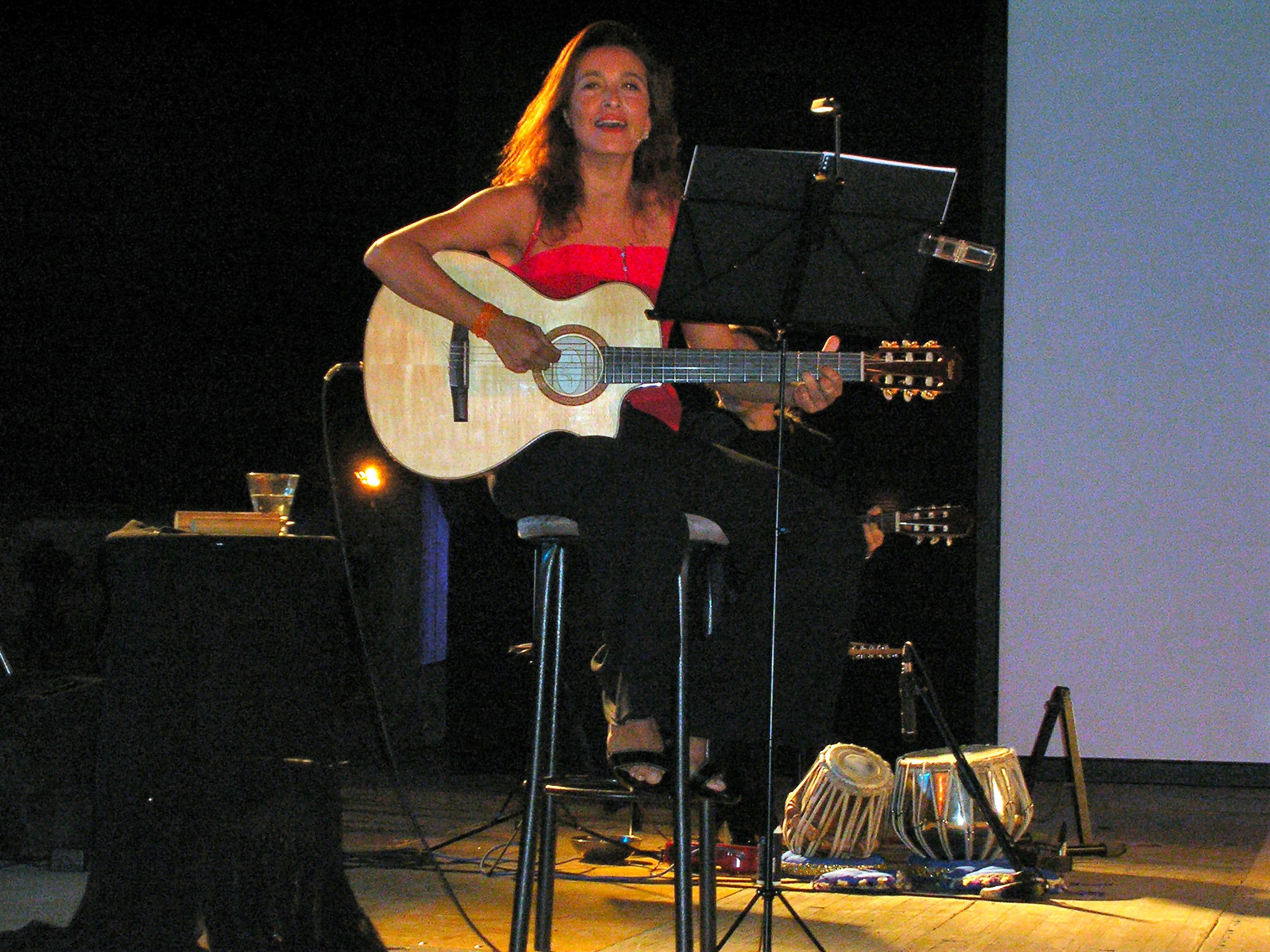
Grazia Di Michele, born on October 9, 1955, in Rome, is an influential figure in the Italian music scene, known for her unique voice, socially conscious lyrics, and contributions to Italian culture. Over the decades, she has carved out a significant niche in the music industry, not just as a singer-songwriter but also as a music educator, particularly through her role on the popular Italian television talent show Amici di Maria De Filippi. Her career spans over four decades, during which she has released numerous albums, performed in various theatrical productions, and become a prominent voice in the world of music therapy.
Early Life and Beginnings
Grazia Di Michele’s journey into the world of music began in the politically charged atmosphere of the 1970s. During this time, she co-founded the musical group Ape Di Vetro along with Clelia Lamorgese and Chiara Scotti. The group was known for its politically inspired music, often addressing pressing social issues of the time, such as women’s rights and abortion. Their music resonated with a generation seeking change, and they performed extensively across Italy, gaining a reputation for their commitment to social justice.
In 1977, Di Michele’s solo career began to take shape when she performed at the Folkstudio in Rome. Her unique voice and expressive singing style quickly garnered attention, setting the stage for her future success. Around this time, she also worked as a disk jockey and became involved with a cultural club, Johann Sebastian Bar, which served as a testing ground for emerging artists before their debut on Italian television.
Breakthrough and Early Albums
Grazia Di Michele’s first significant breakthrough came in 1978 with the release of her debut album, Cliché. Produced by Vincenzo Micocci, the album was notable for its socially engaged themes, particularly aligning with the feminist movement. The lyrics reflected her deep concern for social issues, which would remain a constant theme throughout her career.
Five years later, in 1983, she released Ragiona col cuore (Think with Your Heart), an album that displayed a more mature and nuanced approach to songwriting. While the album maintained her focus on social issues, it also explored more personal and introspective themes. The title track, which tells the story of a love affair between two women, was groundbreaking as it was one of the first songs in Italy to address such a topic. This boldness in addressing taboo subjects became a hallmark of her work.
In 1986, Di Michele released Le ragazze di Gauguin (The Girls of Gauguin), an album that included the title track, which became one of her signature songs. The success of this album earned her the Vela d’Argento (Silver Sail) award, solidifying her place in the Italian music industry. The following year, the album was reissued with an additional track, “Sha-la-la,” which she performed at the Festivalbar, further increasing her popularity.
1988-1990: Musical Evolution and Success at Sanremo
In 1988, Grazia Di Michele released L’amore è un pericolo (Love is a Danger), an album that saw her collaborate with notable artists such as Lucio Fabbri, Vittorio Cosma, and Eugenio Finardi. The lead single, “Solo i pazzi sanno amare” (Only Fools Know How to Love), was featured in the Cantagiro music festival, further expanding her audience.
Her growing popularity led to her debut at the Festival di Sanremo in 1990, one of Italy’s most prestigious music competitions, with the song “Io e mio padre” (Me and My Father). The song was well-received, and during the festival’s foreign artists’ night, it was performed by Nicolette Larson, bringing international attention to Di Michele’s work.
The following year, she returned to Sanremo with “Se io fossi un uomo” (If I Were a Man), a song penned by Peppi Nocera. The track was later translated into English and performed by Randy Crawford under the title “If I Were in Your Shoes,” achieving success in several countries, including Japan, Sweden, Switzerland, and Norway. This international recognition marked a significant milestone in Di Michele’s career.
1990s: Continued Success and Exploration
Throughout the 1990s, Grazia Di Michele continued to release music that resonated with her growing fanbase. Her self-titled album, Grazia Di Michele, was released in the early ’90s, showcasing her evolving sound and lyrical depth. She also participated in the TV show Sapore di mare (Taste of the Sea), where she performed classic Italian songs, further endearing her to the Italian public.
In 1993, Di Michele made another appearance at Sanremo, this time performing “Gli amori diversi” (Different Loves) in a duet with Rossana Casale. The song was part of her album Confini (Borders), which featured collaborations with artists like Cristiano De André and Eugenio Finardi. The album explored themes of love, identity, and the boundaries that define and separate us.
During this period, Warner Music Vision released a VHS collection of Di Michele’s music videos, some of which were directed by acclaimed filmmaker Gabriele Salvatores. This visual representation of her work further cemented her status as a multifaceted artist.
In 1995, Di Michele released Rudji, an album under the Sony label. However, her relationship with the label was short-lived due to dissatisfaction with the album’s promotion. Despite this setback, Di Michele continued to pursue her artistic vision, eventually releasing the album independently.
2000s: Diversification and New Ventures
The 2000s marked a period of diversification for Grazia Di Michele. In 2001, she released Naturale (Natural), an album produced by an independent label. The album included a duet with Luca Madonia and showcased Di Michele’s continued evolution as an artist. Around this time, she also earned a diploma in music therapy, a field that combines her passion for music with her desire to help others.
Di Michele’s involvement in music therapy led to numerous conferences and workshops, where she shared her knowledge and experience. Her work in this field highlights her commitment to using music as a tool for healing and personal growth.
In 2003, Di Michele became a household name in Italy when she joined the cast of Amici di Maria De Filippi, a popular talent show on Canale 5. As a vocal coach, she mentored young aspiring singers, helping them develop their skills and navigate the challenges of the music industry. Her role on the show brought her into the homes of millions of Italians, significantly increasing her visibility and influence.
Cultural Contributions and Theatrical Endeavors
Beyond her work in music, Grazia Di Michele has also made significant contributions to Italian culture through her involvement in theater and literature. In 2004, she published Le corde dell’anima (The Strings of the Soul), a book edited by Valeria Festa and Barbara Mengozzi that explores her life and career. The book was released to commemorate her 25 years in the music industry, offering fans a deeper insight into her artistic journey.
That same year, Di Michele teamed up with Maria Rosaria Omaggio for the theatrical production Chiamalavita (Call It Life). The show, which was also released as a CD, received critical acclaim and demonstrated Di Michele’s versatility as an artist.
In 2005, she released the album Respiro (Breath), which included the single “Habi,” a rock song that tells the story of a young female suicide bomber. The album was praised for its “musical-literary” value, earning Di Michele a special mention at the Premio Lunezia and the LuccAutori literary award for her work as a composer.
In 2008, she returned to the theater with the play Di’ a mia figlia che vado in vacanza (Tell My Daughter I’m Going on Vacation), directed by Maddalena Fallucchi. The play, which tells the story of two women sharing a prison cell, was performed at the Teatro Due in Rome for an entire month, further showcasing Di Michele’s talent as a performer and storyteller.
Later Years and Continued Influence
In 2009, Grazia Di Michele released Passaggi segreti (Secret Passages), an album that included the song “Il diritto d’amare” (The Right to Love), inspired by her recent theatrical experiences. She also contributed to Alberto Zeppieri’s project Capo Verde, terra d’amore (Cape Verde, Land of Love) with two songs, further expanding her musical repertoire.
In 2010, the song “Anja del settimo cielo” (Anja of the Seventh Heaven) from Passaggi segreti was nominated for the Premio Amnesty, an award recognizing songs that address human rights issues.
Throughout the 2010s, Di Michele continued to receive recognition for her contributions to music and culture. In 2011, she was awarded the Premio Culturale Mumi for her impact on Italian music and her role in discovering new talent. In 2012, she received the Premio Cantagiro Momenti musicali for her contributions to Italian music and her support of emerging artists.
Her 2012 album Giverny was inspired by the art of Claude Monet and was accompanied by the Giverny Tour, which saw her perform across Italy. The album and tour demonstrated her continued relevance and creativity in the music industry.
In 2014, Di Michele was honored with the Premio Giuni Russo in Alghero, Sardinia, in recognition of her enduring influence in the Italian music scene. Later that year, it was announced that she would be one of the twenty contestants in the Big category at the Festival di Sanremo 2015, where she performed the song “Io sono una finestra” (I Am a Window) in a duet with Platinette. This performance highlighted her ability to continue evolving as an artist and connect with contemporary audiences.
Legacy and Impact
Grazia Di Michele’s career is a testament to her versatility, creativity, and commitment to addressing important social issues through her music. From her early days with Ape Di Vetro to her continued success as a solo artist, Di Michele has consistently pushed the boundaries of what it means to be a singer-songwriter in Italy.
Her work in music therapy and her role as a vocal coach on Amici di Maria De Filippi have further solidified her reputation as a mentor and educator, helping to shape the next generation of Italian musicians. Her involvement in theater and literature has also expanded her influence beyond the music industry, making her a respected figure in Italian culture.
As an artist, Grazia Di Michele has never shied away from tackling difficult subjects, whether it be the complexities of love, the struggles of marginalized communities, or the impact of political and social issues on individual lives. Her music is not just entertainment; it is a reflection of the world around her, a tool for social change, and a means of exploring the human condition.
Her legacy is one of artistic integrity, social consciousness, and a deep commitment to her craft. Grazia Di Michele remains an essential figure in the Italian music scene, with a career that continues to inspire and influence artists and audiences alike.


