
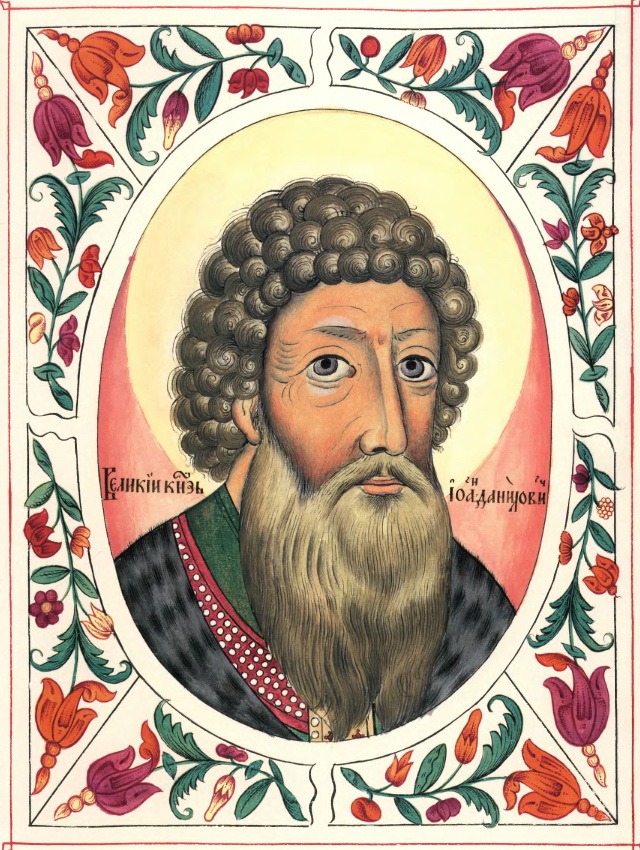
Ivan I of Russia, also known as Ivan Danilovich Kalita, is a historical figure of immense significance in Russian history. Born in 1288, likely in Moscow, Ivan’s life and reign were pivotal in shaping the trajectory of the Russian state during the early 14th century. As a Prince of Moscow and later as the Grand Prince of Vladimir, Ivan’s actions laid the groundwork for Moscow’s rise to prominence, eventually leading to the establishment of the Russian Empire. This article delves into Ivan I’s life, exploring his early years, rise to power, and the strategies he employed to secure Moscow’s dominance, as well as the historical context and nuances that defined his era.
Early Life and Background
Ivan I was born into a period of great turmoil and political fragmentation in Russia. The Russian lands were divided into numerous principalities, each ruled by local princes who often engaged in internecine conflicts. These principalities were nominally united under the suzerainty of the Mongol Empire, specifically the Golden Horde, which exerted considerable influence over the region. Ivan’s father, Daniil Aleksandrovich, was the Prince of Moscow, a relatively minor principality at the time. However, the foundations laid by Daniil would prove crucial for his son’s future endeavors.
Ivan was the third son of Daniil, which meant that he was not initially in line to inherit significant power or titles. His elder brother, Yuri Danilovich, inherited the title of Prince of Moscow after their father’s death in 1303. Ivan’s early life was likely shaped by the complex dynamics of princely succession and the ongoing power struggles among the Russian nobility.
The Struggles for Power: Moscow’s Rise
The early 14th century was marked by intense rivalry among the Russian principalities, particularly between Moscow and Tver, another powerful principality. Yuri, Ivan’s elder brother, was embroiled in a protracted conflict with Mikhail of Tver for the title of Grand Prince of Vladimir, a title that conferred legitimacy and recognition from the Mongol Khan. This title was crucial as it allowed the holder to collect tribute from other Russian princes on behalf of the Khan, a role that significantly increased the wealth and power of the Grand Prince.
While Yuri was engaged in these struggles, Ivan began to play a more prominent role in Moscow’s defense and administration. In 1317, Yuri secured a marriage alliance with Konchaka, the sister of the Khan of the Golden Horde, Uzbeg Khan. This alliance provided Yuri with Mongol military support, which he used to launch an attack on Tver. However, the campaign ended in disaster for Yuri, as he was defeated, and his wife Konchaka was captured and later died in captivity, leading to further tensions.
During these tumultuous years, Ivan proved himself to be a capable and shrewd leader. When Moscow was besieged by forces from Pereslavl-Zalessky and Tver, Ivan successfully defended the city. According to contemporary accounts, Ivan managed to rally the city’s defenders and launched a surprise counterattack that forced the besieging forces to retreat. This victory not only safeguarded Moscow but also enhanced Ivan’s reputation as a leader capable of defending his territory against formidable adversaries.
The Death of Yuri and Ivan’s Ascendancy
The power struggles between Moscow and Tver continued until 1325, when Yuri was assassinated in Sarai, the capital of the Golden Horde, by Dmitry of Tver, the son of Mikhail of Tver. This assassination was a turning point in Ivan’s life. With Yuri’s death, Ivan became the Prince of Moscow, inheriting a principality that was still recovering from years of conflict.
Ivan I, now the ruler of Moscow, faced the challenge of securing his position and expanding his influence. He recognized that direct military confrontation with rival princes could be perilous, especially without Mongol support. Therefore, Ivan adopted a more diplomatic and strategic approach, one that would ultimately earn him the nickname “Kalita,” which means “moneybag” in Russian.
The Strategy of Accumulating Wealth and Power
Ivan I’s reign marked a significant shift in Moscow’s strategy for gaining power. Instead of relying solely on military might, Ivan focused on accumulating wealth and using it to strengthen Moscow’s position. He maintained close relations with the Mongol rulers, ensuring that Moscow remained in the Khan’s favor. This relationship allowed Ivan to secure the title of Grand Prince of Vladimir in 1328, a title that had eluded his predecessors.
As the Grand Prince, Ivan was responsible for collecting tribute from the other Russian principalities and delivering it to the Mongol Khan. Ivan skillfully used this position to his advantage. He began to lend money to other princes who were struggling to pay their tribute, thereby indebting them to Moscow. Over time, this strategy allowed Ivan to extend Moscow’s influence over other principalities without resorting to outright conquest.
Ivan’s focus on financial and economic power was a departure from the traditional methods of expanding territorial control through warfare. By controlling the flow of money, Ivan could exert influence over other princes and gradually bring their territories under Moscow’s control. This approach laid the groundwork for the eventual unification of the Russian lands under Moscow’s leadership.
The Consolidation of Power and Legacy
Ivan I’s reign was characterized by a series of calculated moves that gradually increased Moscow’s power and prestige. One of his most significant achievements was convincing the Mongol Khan to make the title of Grand Prince of Vladimir hereditary within his family. This ensured that Ivan’s descendants would inherit both the title of Prince of Moscow and Grand Prince of Vladimir, further solidifying Moscow’s dominance in the region.
Ivan also used his wealth to strengthen Moscow’s defenses and infrastructure. He invested in the construction of new fortifications and religious buildings, including the Kremlin in Moscow, which became the center of political and spiritual life in Russia. By enhancing Moscow’s physical and religious stature, Ivan laid the foundations for its future role as the capital of a unified Russian state.
Ivan’s reign also marked the beginning of Moscow’s gradual detachment from Mongol influence. Although he maintained a cooperative relationship with the Mongols, Ivan’s policies set the stage for future rulers to assert greater independence from the Golden Horde. This shift in the balance of power would eventually lead to Moscow’s emergence as the center of Russian resistance against Mongol domination.
Historical Context: The Mongol Yoke and Russian Identity
To fully appreciate Ivan I’s impact on Russian history, it is essential to understand the broader historical context of his reign. The period in which Ivan lived is often referred to as the time of the “Mongol Yoke,” a term used to describe the Mongol domination of the Russian principalities. The Mongols, who had conquered much of Eurasia in the 13th century, established the Golden Horde, which exerted control over the Russian lands through a system of tribute and vassalage.
The Mongol Yoke had a profound effect on the development of Russian identity and statehood. While the Mongols did not directly interfere in the day-to-day governance of the Russian principalities, their influence was felt in the form of heavy tribute demands and occasional military interventions. The Russian princes were forced to navigate a complex political landscape, balancing their loyalty to the Mongol Khan with their ambitions for greater autonomy and power.
Ivan I’s reign represented a critical juncture in this period. By adopting a pragmatic approach to dealing with the Mongols, Ivan was able to secure the resources and political support necessary to strengthen Moscow. At the same time, his policies laid the groundwork for Moscow’s eventual leadership in the struggle to free Russia from Mongol rule.
Ivan I’s Legacy and the Rise of Moscow
Ivan I of Russia is remembered as a shrewd and pragmatic ruler who played a key role in the rise of Moscow as a dominant power in the Russian lands. His strategies of wealth accumulation, debt diplomacy, and careful alliance-building allowed him to extend Moscow’s influence without engaging in costly and risky military campaigns.
Ivan’s reign also marked the beginning of Moscow’s transformation from a relatively minor principality into the center of Russian political and religious life. His efforts to consolidate power and secure the hereditary succession of the Grand Prince title within his family ensured that Moscow would continue to grow in importance under his successors.
The legacy of Ivan I is most clearly seen in the achievements of his descendants, particularly Ivan III and Ivan IV (Ivan the Terrible), who would go on to unite the Russian lands and establish the Russian Empire. The foundations laid by Ivan I in the 14th century were instrumental in shaping the course of Russian history, setting the stage for Moscow’s eventual emergence as the capital of a vast and powerful empire.
Conclusion
Ivan I of Russia, also known as Ivan Kalita, was a pivotal figure in the history of Russia. His reign marked a turning point in the fortunes of Moscow, transforming it from a minor principality into the leading power in the Russian lands. Through his strategic use of wealth, diplomacy, and careful alliances, Ivan laid the groundwork for the eventual unification of Russia and the establishment of the Russian Empire.
Ivan’s legacy is a testament to the power of pragmatism and strategic thinking in statecraft. His ability to navigate the complex political landscape of his time, while maintaining a cooperative relationship with the Mongol rulers, allowed him to secure Moscow’s position as the future center of Russian power. As a result, Ivan I is remembered as one of the key architects of the Russian state, a ruler whose impact continues to be felt in the history and identity of Russia.


